


Parts of India’s river deltas are sinking rapidly, and humans are speeding it up
Satellite analysis finds major deltas sinking faster than sea-level rise, with groundwater use and urbanisation to blame
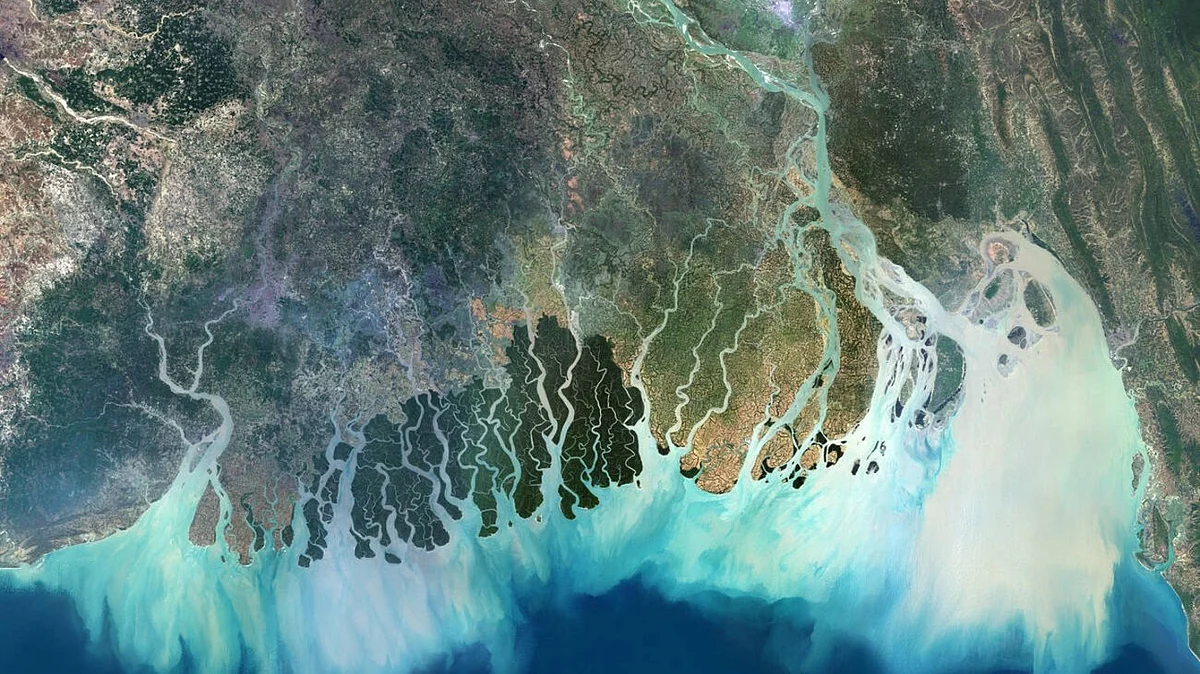


An international team of scientists has reported widespread land subsidence across India’s major river deltas, driven predominantly by human activity rather than natural geological processes, as per a report in The Hindu.
The project was launched in response to a global evidence gap: despite supporting more than 340 million people, river deltas remain poorly mapped in terms of high-resolution subsidence data. To address this, the researchers analysed interferometric synthetic aperture radar measurements from the European Space Agency’s Sentinel-1 satellites, spanning 2014–2023. Their assessment covered 40 significant deltas worldwide — including six in India — at a resolution of 75 metres.
The satellite data were then paired with a random forest machine-learning model to examine correlations between subsidence trends and three key pressures: groundwater depletion (derived from NASA–German GRACE satellite measurements), changes in sediment supply, and urban expansion.
The findings are stark. The Ganges-Brahmaputra, Brahmani, Mahanadi, Godavari, Cauvery, and Kabani deltas are all sinking, with more than 90 per cent of the Ganges-Brahmaputra, Brahmani, and Mahanadi deltas’ total area affected. In the Ganges, Brahmani, Mahanadi, Godavari and Kabani deltas, average land-loss rates already surpass local rates of sea-level rise — a critical threshold for long-term habitability.
The study highlighted especially rapid subsidence in eastern India: 77 per cent of the Brahmani delta and 69 per cent of the Mahanadi delta are sinking at over 5 mm per year. For the Godavari delta, even under the most pessimistic climate scenario, the upper-end (95th-percentile) subsidence rates are projected to exceed future global sea-level rise.
As per the The Hindu report, Kolkata is subsiding at or above the Ganges-Brahmaputra delta’s own average, reflecting the combined effects of urban mass and intensive resource use in driving the city further below relative sea level.
Such changes have direct consequences: higher coastal and river flood risk, permanent land loss, saltwater intrusion into freshwater aquifers and farmland, degradation of agricultural productivity, competition over shrinking resources, climate-linked migration pressures, and damage to ports, roads, and other infrastructure.
The researchers also identified different subsidence signatures across systems. Unsustainable groundwater extraction dominates in the Ganges-Brahmaputra and Cauvery deltas, while rapid urbanisation is the main driver in the Brahmani. The Mahanadi and Kabani deltas are affected by a mix of groundwater withdrawal, reduced sediment delivery, and population pressure.
In a broader characterisation of risk, the team noted that the Ganges-Brahmaputra delta has shifted from a “latent threat” during the 20th century to an “unprepared diver” in the 21st — signalling a steep rise in vulnerability without matching institutional capacity.
Their study, published in Nature on 14 January, stresses that all deltas naturally compact over time as recently deposited sediments and organic material are compressed, and as tectonics and isostatic adjustments reshape the landscape. However, the authors argue that human actions have dramatically accelerated this timeline, “transforming a gradual geological process into an urgent environmental crisis”.
The paper also acknowledges data limitations, including coarse groundwater estimates for smaller deltas due to GRACE’s resolution, outdated sediment-flux figures, and the fact that the 40 deltas examined, despite representing a large share of global deltaic land and population, are not globally representative.
With media inputs
Join our official telegram channel (@nationalherald) and stay updated with the latest headlines