


Scientist quits Lucknow Ganga panel, alleges ecological concerns ignored over Gomti projects
Venkatesh Dutta says crucial project documents were not shared with committee members and objects to construction of highways and embankments on floodplain


Senior environmental scientist Prof Venkatesh Dutta has resigned from the District Ganga Committee (DGC), Lucknow, alleging that his concerns over the protection of the Gomti River and its floodplain were being ignored and that he was excluded from crucial decisions on infrastructure projects in eco-sensitive areas.
Dutta, who teaches environmental science at Babasaheb Bhimrao Ambedkar University (BBAU), submitted his resignation to DGC chairman and Lucknow District Magistrate Vishak G and member secretary Sitanshu Pandey.
In his resignation letter, Dutta said he could not justify his continued association with the committee if the views of river ecologists and scientists were not given due consideration and project documents were not made available for informed deliberation.
He specifically referred to the proposed expansion of the Lucknow Green Corridor project along the Gomti floodplain. Dutta said he had opposed the proposal but it was subsequently pushed through by other members of the committee without his knowledge.
“If the observations and recommendations of river ecologists and scientists are not being given due consideration and if project-related documents such as the DPR and EIA are not made available to committee members for informed deliberation, I find it difficult to justify my continued association with the committee,” he said in the letter.
The Lucknow Green Corridor is a four-lane road and embankment project planned along a roughly 28-km stretch of the Gomti. According to the Lucknow Development Authority, the project is intended to provide non-stop connectivity between the eastern and western parts of the city and ease traffic congestion.
However, the project has faced criticism over its potential impact on the river and its floodplain. The project has also undergone several changes in its conception and description over the years, having earlier been associated with plans for riverfront development.
Also Read: Gomti: A river in trouble
Dutta has argued that construction on floodplains can alter the natural movement of water and reduce the area's capacity to absorb excess flows during floods.
He said the Gomti had already suffered significant ecological damage from earlier interventions, including the 2015 riverfront project, which he alleged restricted parts of the floodplain through the construction of deep diaphragm walls.
The scientist also raised objections to proposed highways, embankments and other four-lane road infrastructure on the floodplain and in fragile river ecosystems. According to Dutta, such interventions could alter the river's hydrology and weaken its natural flood-management capacity.
He also flagged the continuing discharge of sewage into the Gomti and expressed concern over project proponents seeking environmental clearances after construction activity had already begun.
“It is distressing to note that several statutory clearances appear to be pursued only after the project has already progressed through two phases,” Dutta said, according to reports.
The resignation comes against the backdrop of continuing scrutiny of construction activities along the Gomti. In July, the National Green Tribunal reportedly halted construction related to the Green Corridor project, citing concerns over compliance with environmental norms in sensitive areas.
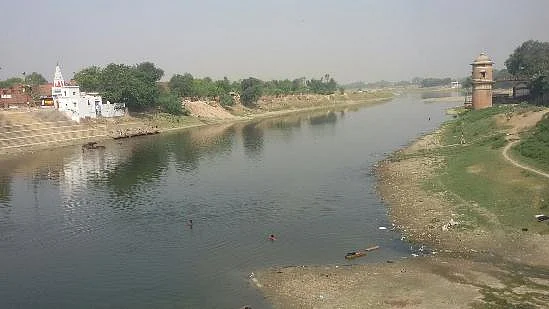
The Gomti, a major tributary of the Ganga, flows through Lucknow before joining the Ganga in Uttar Pradesh. Its ecological condition has been a longstanding concern, with sewage pollution, encroachment and changes to the river's floodplain affecting the waterway and surrounding ecosystem.
The District Ganga Committees were established under the Centre's Namami Gange programme to facilitate local participation in the rejuvenation and management of the Ganga and its tributaries. Their responsibilities include monitoring pollution and effluent discharge, while balancing developmental activity with environmental protection.
Dutta's resignation has raised questions over the role of scientific expertise in decisions concerning infrastructure projects along river ecosystems.
The scientist has maintained that floodplains are not merely vacant land available for construction but perform an important role in absorbing excess water and maintaining the ecological functioning of rivers.
His objections also centre on the need for committee members to have access to detailed project reports and environmental impact assessments before decisions are taken.
The controversy over the Green Corridor is not new. The project has its origins in plans conceived during the previous Samajwadi Party government and has since been repeatedly revised. Earlier phases of Gomti riverfront development had also attracted allegations of irregularities and were subject to investigations.
Dutta's resignation now brings renewed attention to the environmental implications of large infrastructure projects along the Gomti, particularly construction on its floodplain and the balance between improving urban connectivity and protecting the river's natural ecosystem.
Join our official telegram channel (@nationalherald) and stay updated with the latest headlines