


SC-appointed panel to inspect Aravalli region in Rajasthan’s Vagad from 11 Oct
The committee will consult tribal communities, villagers, environmentalists and other stakeholders on environmental concerns and livelihood impacts
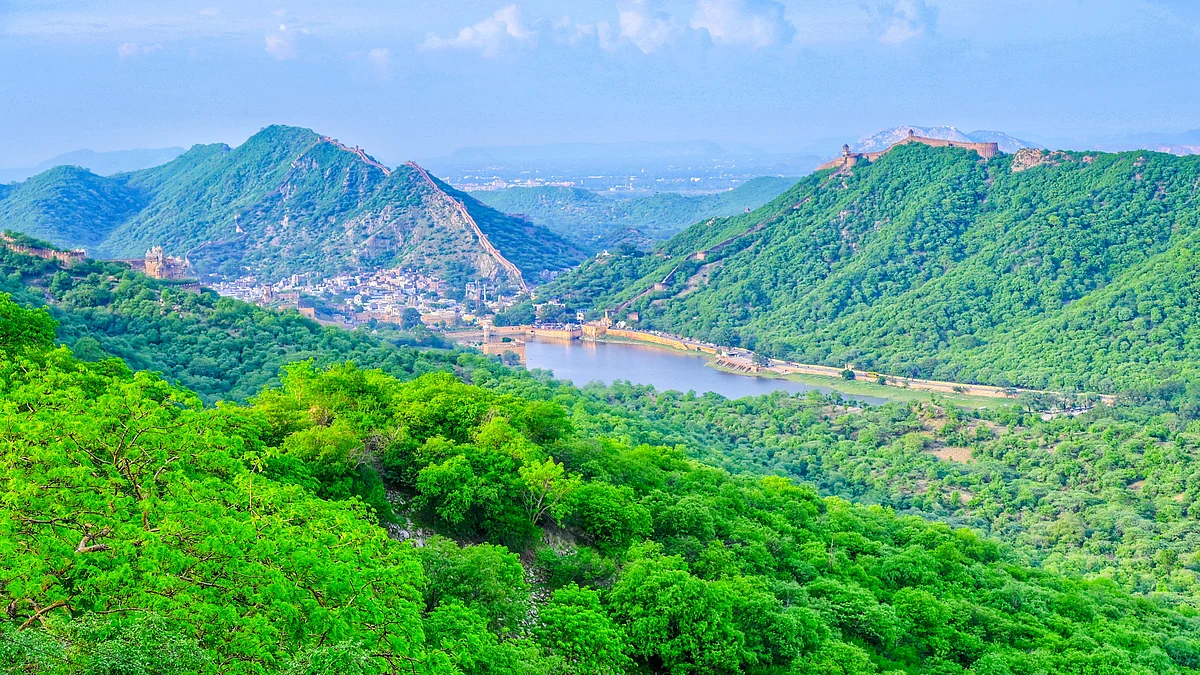


A Supreme Court-appointed panel will inspect Rajasthan’s Vagad region from 11–13 October to assess the Aravalli range’s ecology, mining activities and land use
The committee will consult tribal communities, villagers, environmentalists and other stakeholders on environmental concerns and livelihood impacts
The five-member panel, led by ICFRE’s director general, must submit its report on the Aravalli range’s definition, demarcation and conservation to the Supreme Court by 30 November 2026
A Supreme Court-appointed High-Powered Committee (HPC) will visit Rajasthan’s Vagad region from 11 to 13 October to assess the ecological condition of the Aravalli mountain range, examine mining and land-use practices, and study their impact on local communities, particularly tribal populations.
The five-member committee will inspect the Paldeval-Sarkan area in Dungarpur district on 11 October and the Kevadiya-Kothara area in Banswara district on 12 October. The final day of the visit, 13 October, will be devoted to concluding the scheduled assessment and related consultations.
The visit follows the panel’s inspection of the Aravalli region in Gujarat from 8 to 10 October. The committee’s findings will contribute to a comprehensive report on the definition, demarcation and conservation of the mountain range, which the Supreme Court has directed it to submit by 30 November 2026.
During the Rajasthan visit, the committee will examine mining and quarrying activities, including stone-crushing operations, forest cover, water sources, land-use patterns and the broader ecological conditions of the region.
The panel will also assess how mining activities and changes in land use affect the environment and the livelihoods of people living in the area. Particular attention will be given to tribal communities, farmers, labourers and other residents whose lives and livelihoods are closely linked to the Aravalli landscape.
Field inspections will be accompanied by consultations with villagers, environmentalists, subject experts, mining leaseholders and other stakeholders. Evening meetings are planned in both districts, with approximately three hours set aside each day for discussions with local residents and representatives of affected communities.
The consultations are intended to give the committee a clearer understanding of ground realities and ensure that local perspectives are considered alongside ecological and technical assessments.
The Supreme Court constituted the five-member High-Powered Committee through an order dated 25 May 2026. Chaired by the Director General of the Indian Council of Forestry Research and Education (ICFRE), the panel was tasked with independently examining the previously formulated definition of the Aravalli range and the methodology used to identify and demarcate its hills.
The exercise seeks to assess the mountain range’s ecological characteristics and address concerns surrounding its protection, including the implications of mining, forest degradation and land-use changes.
The committee’s work is significant because the definition and demarcation of the Aravalli hills influence how the region’s ecological features and conservation requirements are assessed. Its recommendations are expected to provide the Supreme Court with a broader evidentiary basis for considering issues concerning the range.
The committee had earlier conducted a five-day tour of Rajasthan, during which it carried out field inspections and consulted stakeholders at several locations. However, concerns were subsequently raised that participation in the consultations had been inadequate, particularly among rural residents and tribal communities.
These concerns prompted calls for a further ground-level assessment in southern Rajasthan, with greater emphasis on hearing directly from people who could be affected by decisions concerning the Aravalli region.
In an order dated 7 September, the Supreme Court clarified that the committee must provide sufficient opportunities for all relevant stakeholders, including tribal communities in Rajasthan and Gujarat, to present their views.
The forthcoming visit is expected to provide an additional opportunity for the panel to gather local evidence and document concerns relating to environmental protection, mining operations and community livelihoods.
The Rajasthan government has mobilised the Forest Department and local officials in preparation for the committee’s visit. A senior Forest Department official will serve as field coordinator, while deputy conservators of Forests and other field personnel from Dungarpur and Banswara will accompany the panel during inspections.
The officials are expected to facilitate site visits, provide relevant field information and coordinate meetings with residents and other stakeholders.
The committee’s schedule begins with inspections in Dungarpur’s Paldeval-Sarkan area on 11 October, followed by visits to the Kevadiya-Kothara area in Banswara on 12 October. Consultations with local communities and other stakeholders will form part of the programme in both districts.
The 11–13 October visit is expected to help the panel document the region’s environmental conditions, mining-related concerns and socio-economic realities. Its findings will be incorporated into the broader assessment of the Aravalli range’s definition, demarcation and conservation before the final report is submitted to the Supreme Court by 30 November 2026.
With IANS inputs
Join our official telegram channel (@nationalherald) and stay updated with the latest headlines