


Aravallis face ‘gravest threat’ from Modi govt’s redefinition move: Cong
Congress leader opposes proposed redefinition of the hill range, says it could open the door to mining and other projects


Jairam Ramesh says the Aravallis face a “gravest” threat from proposed redefinition.
He hopes the Supreme Court-appointed panel rejects the Centre’s proposed changes.
The panel has been given until 30 November to submit its report.
Senior Congress leader and former environment minister Jairam Ramesh on Sunday said the Aravallis were under the “gravest of threats” from the Centre’s moves to redefine the mountain range, and hoped that a Supreme Court-appointed high-powered committee would reject the proposed changes.
“The Aravallis are under the gravest of threats by the Modi Govt's moves to have them redefined so as to allow mining, real estate and other projects,” Ramesh said in a post on X.
He alleged that the government was “hellbent” on redefining the Aravallis and said he hoped the Supreme Court would “stand firm”.
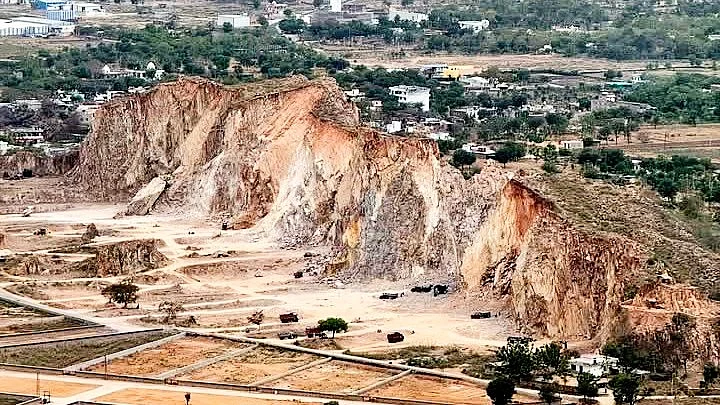
Ramesh's remarks came after a three-part PTI report examined the environmental impact of mining across the Aravalli range.
He also referred to the high-powered committee constituted by the Supreme Court to examine the definition and demarcation of the Aravalli Hills and Ranges.
The court has directed the panel to submit its report by 30 November after rejecting its request for an extension until February 2027.
“Hopefully the High Powered Committee set up by the Supreme Court and given a deadline of Nov 30, 2026, to submit its report will reject the Modi govt's moves to redefine the Aravallis. Otherwise, there will be more such ecocides,” Ramesh said.
The Supreme Court's May order tasked the panel with, among other things, identifying areas that would fall outside the proposed definition and assessing whether mining in newly demarcated areas could cause adverse ecological consequences.
The Aravallis stretch from Delhi through Haryana and Rajasthan to Gujarat and are considered an important ecological and water-recharge system in north-west India. Experts cited by PTI said natural cracks and fissures in the hills can allow up to two million litres of water per hectare to enter the ground each year.
Decades of mining of sedimentary rocks, including limestone and marble, have led to numerous quarries and stone crushers along the range. Environmental concerns have also been raised over mining near riverbeds and water bodies and the impact of mining dust on local communities.
Ramesh's comments come as the Supreme Court-appointed panel continues its examination of the ecological and regulatory implications of redefining the Aravalli range.