


SC rejects Aravalli panel’s 6-month extension plea, sets 30 Nov deadline
Court asks High-Powered Committee to submit issue-specific interim reports and warns it may reconstitute the panel if it fails to meet the revised deadline
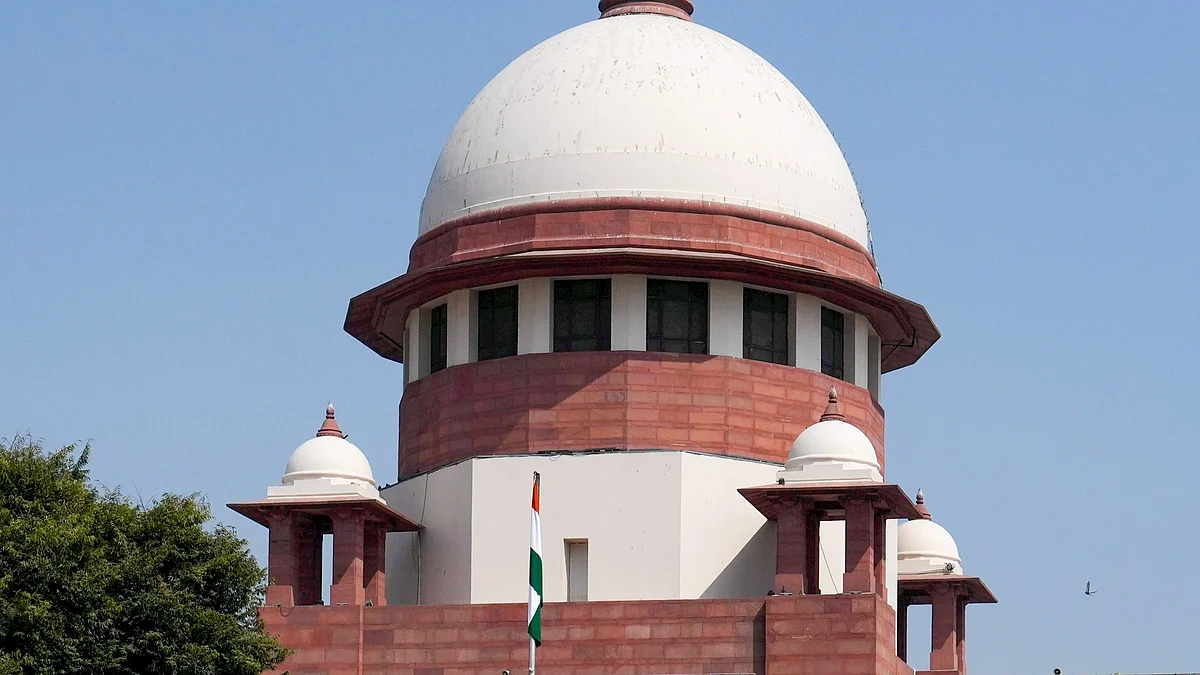


The Supreme Court on Monday rejected a plea by the High-Powered Committee (HPC) examining the definition and protection of the Aravalli Hills seeking a six-month extension to submit its final report, and directed it to complete the exercise by 30 November.
A bench headed by Chief Justice Surya Kant and comprising Justices Joymalya Bagchi and V Mohana also directed the panel to submit issue-specific interim reports so that the court can address urgent questions concerning the Aravallis without waiting for the completion of the entire exercise.
The court warned that it could reconstitute the committee if it failed to meet the new deadline. “Let the panel work day and night to submit a report on the Aravalli issue, if they are unable to do that in two months, we will reconstitute the whole panel,” the CJI observed.
The bench also questioned the timing of the extension request, with the CJI observing that the committee had sought more time “with the first stroke of the pen” and appeared to be waiting for his retirement.
The matter was listed for further hearing on December 2.
The court said the committee should hear all stakeholders, including tribal communities in Rajasthan and Gujarat, while preparing its assessment. It allowed the panel to submit separate reports on specific issues where findings are ready, enabling the court to consider those questions independently.
The HPC had sought an extension until February 28, 2027, arguing that it needed additional time to prepare a “comprehensive and defensible” assessment of the Aravalli range. Its deadline for submitting the final report had expired on August 31.
In its compliance report, the committee said its work involved bringing together spatial, ecological, geological, hydrological and socio-economic evidence along with inputs from stakeholders. It said additional time was required for geospatial assessment, sensitivity analysis, expert examination, field validation, stakeholder consultations and synthesis of the evidence.
The committee also maintained that the Aravalli issue went beyond technical delineation and could not be adequately addressed through “a single terrain-based criterion or a single source of evidence”.
The controversy stems from the Supreme Court’s November 20, 2025 ruling on mining activities in the Aravalli region. A bench headed by then Chief Justice of India B R Gavai had accepted an elevation-based criterion proposed by an expert committee to identify the Aravalli Hills and Range for regulating mining.
Under that criterion, a landform in an Aravalli district would qualify as an Aravalli Hill if it rose at least 100 metres above the surrounding local terrain. Two or more such hills within 500 metres of each other would be treated as part of the Aravalli Range.
The court had endorsed restrictions on mining in core and ecologically sensitive areas but declined to impose a blanket ban, reasoning that an outright prohibition could encourage illegal mining and criminalise activities that could instead be regulated.
The definition subsequently drew strong criticism from environmentalists and other stakeholders, who argued that the elevation-based test could leave large portions of the Aravallis outside legal protection and potentially expose them to mining.
Concerns were also raised that more than 90 per cent of the Aravalli region could effectively fall outside the safeguards under the proposed definition.
Against this backdrop, the Supreme Court revisited its decision. On December 29, 2025, a bench headed by CJI Surya Kant put the November 20 ruling on hold and suspended implementation of the earlier expert committee’s recommendations.
The court noted that some concerns appeared to stem from uncertainty or a lack of clarity in its earlier directions and indicated that an independent assessment of the ecological consequences of the proposed demarcation could be necessary.
It subsequently decided to constitute a fresh expert body to examine the issue and recommend an appropriate methodology for identifying and defining the Aravalli Hills and Range.
Also Read: How green was my Aravalli
Join our official telegram channel (@nationalherald) and stay updated with the latest headlines