


Environmentalists say SC-appointed Aravalli panel's online consultation excludes rural communities
Activists seek village-level outreach, longer feedback window and on-ground consultations before panel submits report
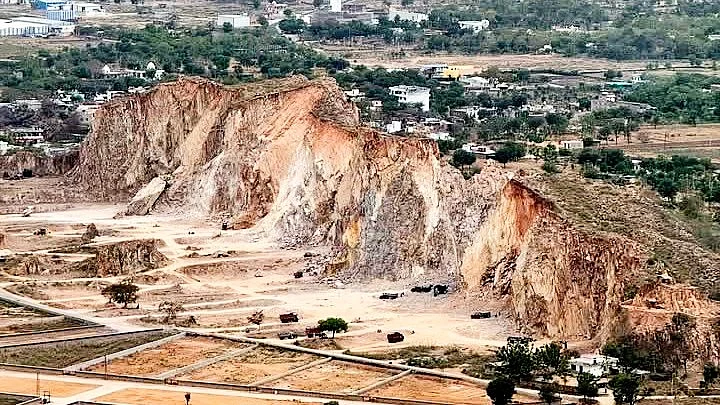


Environmentalists and activists have raised concerns over the Supreme Court-appointed committee's decision to invite public feedback on issues related to the Aravalli hills through email and Google Forms, arguing that the process excludes rural communities that are most directly affected by decisions concerning the ecologically sensitive range.
The high-powered committee, constituted by the Supreme Court on 25 May, has been tasked with conducting an independent review of the Centre's report on the definition and delineation of the Aravalli hill range. It is required to submit its report by 31 August.
Activists contend that the online consultation mechanism is inaccessible to many people living in the Aravalli region, particularly those with limited literacy or digital access.
Kusum Rawat, a member of the pan-India Adivasi Samanvay Manch Bharat, said the online submission process was not designed with rural communities in mind.
"A villager in the Aravalli belt cannot navigate a complex email address or Google Form, let alone ensure it reaches the right inbox without a typographical error," Rawat said in a statement.
She urged the committee to display public notices in local languages at panchayat bhawans, community halls, government schools and anganwadis across Aravalli districts in the five states through which the hill range passes.
Environmentalists have also questioned the committee's 21-day consultation period, arguing that it is too short to gather meaningful feedback from dispersed rural communities.
Lokesh Bhiwani, founder of Stand With Nature, said the timeline was inadequate to engage people living deep within the Aravalli belt.
"Getting these communities to participate in any meaningful way will be a manual, time-intensive process. There are no shortcuts, and decent coverage of voices within this timeline is simply not possible," he said.
Activists have further urged the committee to undertake field visits to villages in the Aravalli region instead of relying solely on written submissions.
Diwan Singh, convener of the Ridge Bachao Andolan, alleged that many licensed mining operations across Haryana, Rajasthan and Gujarat were violating environmental norms and adversely affecting local communities.
"Most of the licensed mining leases running today across the states of Haryana, Rajasthan and Gujarat are blatantly flouting rules and norms, causing deep damage to the health and livelihoods of local communities," Singh said.
He added that written submissions alone could not adequately reflect the impact of environmental degradation on people dependent on the Aravallis for their livelihoods.
Join our official telegram channel (@nationalherald) and stay updated with the latest headlines