


Is Aravalli commission working independently? Experts place doubts before SC
Scientists, former forest officers and environmental groups have questioned independence and expertise of SC-appointed committee reviewing definition of the Aravalli
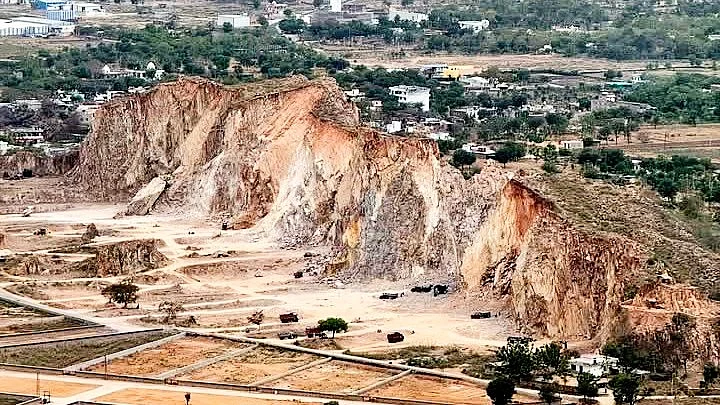


Scientists, former Indian Forest Service officers and environmental groups have urged the Supreme Court to reconstitute the newly appointed High-Powered Committee (HPC) tasked with reviewing the definition of the Aravalli hill range, arguing that its current composition raises concerns about independence, expertise and impartiality.
In separate letters sent to the Chief Justice of India on 18 and 19 June, the signatories said the committee comprises current and former government officials, making an independent assessment of the issue difficult.
The Supreme Court had on 3 June constituted a five-member HPC to review the definition of the Aravalli hill range. The Director General of the Indian Council of Forestry Research and Education (ICFRE) was named ex-officio chairperson, while former Forest Survey of India Director General Subhash Ashutosh, former Geological Survey of India Director Rajendra Kumar Sharma, former Union environment ministry Joint Secretary Brij Mohan Singh Rathore and former Delhi University professor Ashok K. Bhatnagar were appointed as members. The court also directed that an officer not below the rank of Director in the Ministry of Environment, Forest and Climate Change be nominated as Member Secretary.
The court additionally designated professors Jagdish Krishnaswamy of the Indian Institute for Human Settlements and Laxmikant Sharma of the Central University of Haryana as special invitees.
The groups argued that both the chairperson and member secretary of the HPC function within institutions that operate under the administrative control of the Union environment ministry, whose earlier report on the issue is now under review.
They noted that the Secretary of the Ministry had headed the previous committee appointed by the court, which accepted a controversial definition of the Aravalli range that environmentalists argued could open large parts of the region to mining and other activities.
“Consequently, the present Chairperson functions within the administrative hierarchy of the very Ministry whose earlier report is required to be independently examined,” one of the letters stated.
Questions over expertise and representation
Former Principal Chief Conservator of Forests Prakriti Srivastava, in her letter to the Chief Justice, argued that none of the retired forestry officials on the committee had field experience in Haryana, Rajasthan or the National Capital Region, which face the greatest development and mining pressures in the Aravalli region.
She said the committee lacked experts in wildlife, Geographic Information Systems (GIS), hydrology, microecology and other disciplines necessary for a comprehensive review.
“The Aravallis are a unique socio-political-economic biophysical and regulatory environment and it is necessary that the committee members should be persons with local field experience and expertise,” she wrote.
The letters also pointed out that the identification, demarcation and mapping of forests, ordered by the Supreme Court in earlier rulings, had not yet been completed and should be treated as a prerequisite before redefining the Aravallis.
Demand for independent oversight
Among the demands made to the court are the appointment of an independent chairperson and member secretary, direct submission of the committee's report to the Supreme Court rather than through any government ministry, and the inclusion of experts from fields such as ecology, wildlife conservation, hydrology, occupational health and GIS mapping.
The signatories also urged the court to extend the committee's current deadline of 31 August, arguing that more time would be needed to engage with communities affected by mining and environmental degradation across the Aravalli region.
The letters further called for a comprehensive inquiry into the conduct of officials of the Union environment ministry following observations by the court's Amicus Curiae in February that the ministry had “entirely suppressed” findings contained in a 2025 Forest Survey of India report relating to the Aravallis.
Scientist Ravi Chopra, who chaired two committees appointed by the Supreme Court on environmental matters, said he supported the demand for an inquiry.
“In both cases it was my disappointing experience that serving and retired government officials and scientists from government-funded institutions on the committees never voted against the views of the government in power, despite orally expressing opinions to the contrary during discussions,” Chopra wrote.
Among those who have written to the Chief Justice are environmentalist Prafulla Samantara, policy expert Sagar Dhara, geologist C.P. Rajendran and several environmental organisations, including Vanshakti, We Support Our Farmers, Vetal Tekdi Bachav Kruti Samiti, Save Pune Hills and the United Conservation Movement.
She said the committee lacked experts in wildlife, Geographic Information Systems (GIS), hydrology, microecology and other disciplines necessary for a comprehensive review.
“The Aravallis are a unique socio-political-economic biophysical and regulatory environment and it is necessary that the committee members should be persons with local field experience and expertise,” she wrote.
The letters also pointed out that the identification, demarcation and mapping of forests, ordered by the Supreme Court in earlier rulings, had not yet been completed and should be treated as a prerequisite before redefining the Aravallis.
Demand for independent oversight
Among the demands made to the court are the appointment of an independent chairperson and member secretary, direct submission of the committee's report to the Supreme Court rather than through any government ministry, and the inclusion of experts from fields such as ecology, wildlife conservation, hydrology, occupational health and GIS mapping.
The signatories also urged the court to extend the committee's current deadline of 31 August, arguing that more time would be needed to engage with communities affected by mining and environmental degradation across the Aravalli region.
The letters further called for a comprehensive inquiry into the conduct of officials of the Union environment ministry following observations by the court's Amicus Curiae in February that the ministry had “entirely suppressed” findings contained in a 2025 Forest Survey of India report relating to the Aravallis.
Scientist Ravi Chopra, who chaired two committees appointed by the Supreme Court on environmental matters, said he supported the demand for an inquiry.
“In both cases it was my disappointing experience that serving and retired government officials and scientists from government-funded institutions on the committees never voted against the views of the government in power, despite orally expressing opinions to the contrary during discussions,” Chopra wrote.
Among those who have written to the Chief Justice are environmentalist Prafulla Samantara, policy expert Sagar Dhara, geologist C.P. Rajendran and several environmental organisations, including Vanshakti, We Support Our Farmers, Vetal Tekdi Bachav Kruti Samiti, Save Pune Hills and the United Conservation Movement.
Join our official telegram channel (@nationalherald) and stay updated with the latest headlines