


Water security at risk as Himalayas face ‘snow drought’
Scientists warn shrinking snow cover and faster melt could reshape rivers, ecosystems and disaster risks across the region
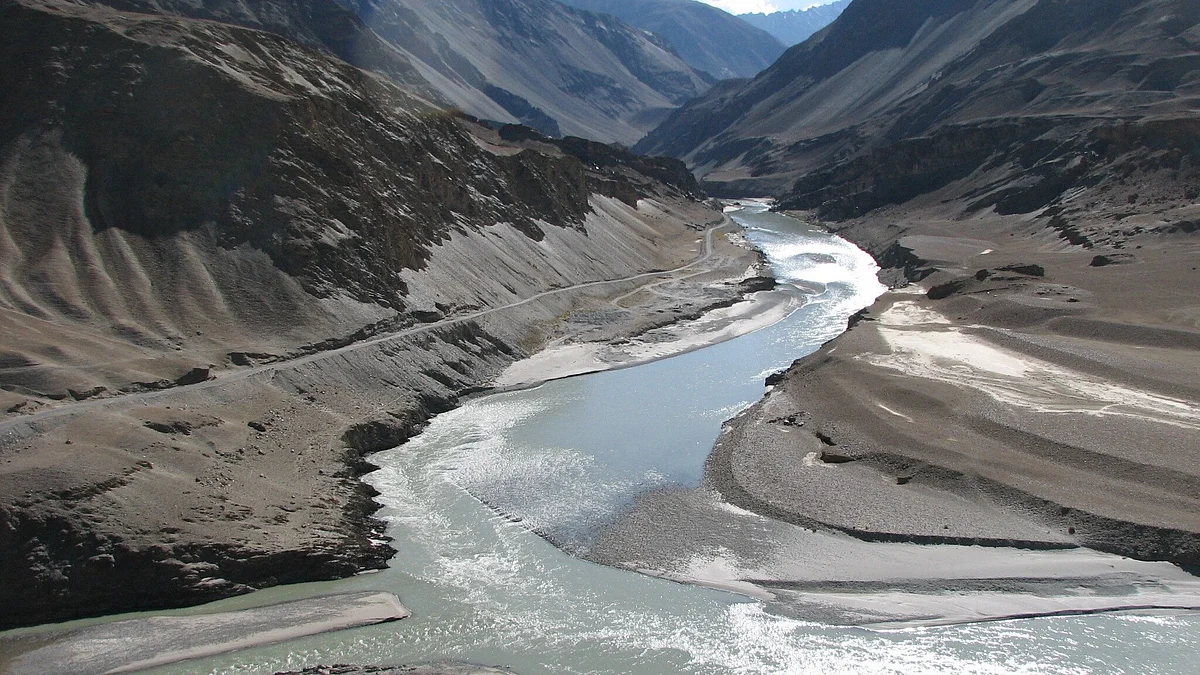


Winter snowfall across the Himalayas has fallen sharply in recent years, leaving many mountain ranges bare and rocky in a season that should normally see them cloaked in snow. The decline, observed across large parts of India, Nepal and Pakistan, is being linked to rising temperatures, weakening weather systems and the growing impact of climate change.
Data from multiple agencies show that most winters over the last five years have recorded significantly lower snowfall than the long-term average between 1980 and 2020. Experts say the trend has already begun to alter water availability, increase disaster risks and threaten the livelihoods of hundreds of millions of people who depend on Himalayan rivers.
The IMD (Indian Meteorological Department) has recorded almost no precipitation — rainfall or snowfall — in large parts of northern India in December, and forecasts suggest that many areas in Uttarakhand, Himachal Pradesh, Jammu and Kashmir and Ladakh could see up to 86 per cent below-normal precipitation between January and March this year.
A growing pattern, not a one-off
Meteorologists stress that the shortfall is not an isolated anomaly.
“There is now strong evidence across different datasets that winter precipitation in the Himalayas is indeed decreasing,” Kieran Hunt, principal research fellow in tropical meteorology at the University of Reading in the UK was quoted in a BBC report.
A study co-authored by Hunt in 2025 analysed four major climate datasets from 1980 to 2021 and found a consistent decline in precipitation across the western and parts of the central Himalayas.
Using ERA-5 reanalysis data, Hemant Singh, a research fellow at the Indian Institute of Technology, Jammu, said snowfall in the north-western Himalayas has fallen by around 25 per cent in the last five years compared to the 40-year average from 1980 to 2020.
Nepal has seen an equally worrying trend.
“Nepal has recorded almost zero rainfall since October, and the rest of this winter also looks largely dry,” Binod Pokharel, associate professor of meteorology at Tribhuvan University in Kathmandu told BBC.
“This has been the case in most winters over the last five years.”
While the region has witnessed a few heavy snowfalls in recent years, scientists note these have been isolated extreme events, not the steady, widespread snowfall that historically replenished glaciers and snowfields.
Snow persistence hits record lows
Another critical indicator is snow persistence — the length of time snow remains on the ground before melting. According to the ICIMOD (International Centre for Integrated Mountain Development), the winter of 2024-25 saw a 23-year record low in snow persistence, nearly 24 per cent below normal across the HKH (Hindu Kush Himalaya) region.
Four of the last five winters between 2020 and 2025 recorded below-normal snow persistence, ICIMOD said in a recent assessment.
“This is consistent with decreasing winter precipitation and snowfall across large parts of the HKH,” Sravan Shrestha, senior associate for remote sensing and geoinformation at ICIMOD, was quoted.
A 2025 study co-authored by Singh also found that snow droughts — prolonged periods of unusually low snow — are becoming increasingly common at elevations between 3,000 and 6,000 metres.
Why less snowfall rings alarms
The implications go far beyond the changing appearance of the mountains.
Snow accumulated during winter melts gradually in spring, feeding rivers that sustain agriculture, drinking water and hydropower across South Asia. ICIMOD estimates that snowmelt contributes about one-fourth of the annual runoff in 12 major river basins of the region, affecting water security for nearly two billion people.
With snowfall declining and temperatures rising, the snow that does fall is also melting faster, reducing the steady flow of water that rivers rely on during dry months.
Scientists warn of a cascading impact:
Water shortages in the near term as snowmelt becomes erratic
Higher disaster risks, including landslides, rockfalls and glacial lake outburst floods, as ice and snow that stabilise slopes disappear
Greater wildfire risk, as dry winters leave forests parched and vulnerable to fires
Long-term stress on hydropower and irrigation, crucial for Himalayan states and downstream regions
Accelerated glacier melt has already been flagged as a major crisis for Himalayan countries. Declining winter snowfall, experts say, is now compounding that threat.
What is driving the change?
Most meteorologists point to weakening westerly disturbances — low-pressure systems that travel from the Mediterranean and bring winter rain and snow to northern India, Pakistan and Nepal.
“In the past, these systems delivered the bulk of winter precipitation,” Hunt explained. “Now we think two things are happening: they are becoming weaker and, with less certainty, tracking slightly further north. Both limit their ability to draw moisture from the Arabian Sea, resulting in weaker snowfall.”
The IMD has already described this winter’s westerly disturbances as “feeble”, noting that they have generated only minimal rainfall and snowfall.
While studies differ on whether the frequency of these systems has changed, scientists broadly agree that rising temperatures linked to global warming are intensifying their impact by turning snowfall into rainfall at lower elevations and speeding up melt at higher altitudes.
The IPCC (Intergovernmental Panel on Climate Change) has warned that mountain regions worldwide are warming faster than the global average, making the Himalayas particularly vulnerable.
A dual crisis for the Himalayas
Experts say the region now faces a dangerous combination: rapidly shrinking glaciers and declining snowfall.
“This double trouble has huge consequences,” said a senior climate scientist involved in Himalayan cryosphere research. “When you lose both long-term ice storage and short-term snow reserves, you destabilise the entire hydrological system.”
What worries researchers most is the speed of change. Snow droughts that were once rare are becoming more frequent, and record-low snow persistence is no longer an exception.
Scientists say more research is underway to fully understand the shifting behaviour of winter weather systems. But the warning signs are already clear.
Just as the Himalayas are losing their glaciers, they are also losing their winter snow — a shift that could redefine water security, disaster risk and ecological balance across South Asia for decades to come.
Join our official telegram channel (@nationalherald) and stay updated with the latest headlines