


What is mistaken identity, which reduced Swiss to 10 men?
Argentina’s extra-time win in quarters under scanner again after the refereeing controversy of Egypt match
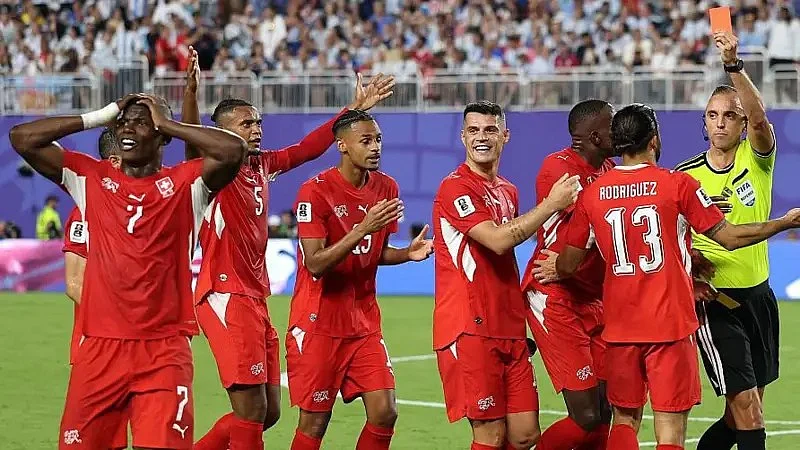


After the drama surrounding their Round of 16 clash against Egypt, defending champions Argentina benefited from the tournament's new "mistaken identity" VAR rule as Switzerland were left to rue Breel Embolo's red card in Sunday's World Cup quarterfinal. Argentina eventually secured a hard-fought 3-1 extra-time victory, setting up a mouth-watering semifinal against England, but only after Embolo's dismissal proved a turning point that ultimately cost the spirited Swiss dearly.
Portuguese referee João Pinheiro's decision to show Breel Embolo a second yellow card — automatically resulting in his dismissal — left Switzerland with 10 men and without a recognised attacking outlet for the remainder of normal time and extra time. Pinheiro applied the tournament's new 'mistaken identity' VAR protocol, introduced following a proposal by Pierluigi Collina. However, the interpretation appeared harsh, and in a high-stakes match such as a World Cup quarterfinal, greater reliance on the referee's discretion might have produced a different outcome.
What exactly transpired that led to Embolo's dismissal moments after Switzerland's equaliser? Portuguese referee João Pinheiro initially showed a yellow card to Argentina's Leandro Paredes for what appeared to be a clumsy challenge. However, the video assistant referee (VAR) intervened and sent Pinheiro to the pitch-side monitor. After reviewing the incident, the referee concluded that Embolo had simulated the contact, rescinded Paredes' booking and instead showed Embolo a second yellow card, resulting in his dismissal.
Embolo, 29, left the pitch in Kansas City in tears, consoled by his teammates. “There was absolutely no reason to issue a yellow card,” Swiss coach Murat Yakin said after the match. “It was a harmless situation, and the referee should have let play continue.” The incident occurred near the right touchline, well away from any dangerous area in Argentina's final third.
“We were punished because of a rule that is unacceptable. I don’t understand it. The fact that they intervened unnecessarily is extremely hurtful. It’s a rule that has nothing to do with football,” he said — a sentiment that many observers would argue was not without merit.
What is mistaken identity?
The new rule states that if a player is cautioned or sent off, and a VAR review subsequently establishes that the offence was actually committed by an opposing player, the referee can correct the mistaken identity and amend the disciplinary decision. Had Paredes not initially been booked for the challenge, the 'mistaken identity' protocol would not have come into play and Embolo would have remained on the pitch.
The first use of the new law came earlier in the tournament when USA defender Tim Ream conceded a free kick and was shown a yellow card for what was initially deemed a foul on Miguel Almirón. After the free kick was taken, Dutch referee Danny Makkelie was called to the pitch-side monitor by the VAR and overturned his decision — something referees had not previously been permitted to do under the old protocol.
After rescinding Ream's booking, Makkelie instead cautioned former Newcastle United forward Miguel Almirón for simulation. While, on the face of it, the rule is a positive step by FIFA to curb diving, its implementation also opens the door to greater scrutiny over consistency and risks making football increasingly reliant on VAR. It will be interesting to see how the new protocol is applied if the player accused of simulation happens to be Lionel Messi, Harry Kane or Kylian Mbappé.
While allegations of favouritism towards Argentina resurfaced on social media, television pundits were divided over the incident. “I feel for Embolo’s teammates; I don’t feel for him. He may have cost his team a place in the semifinals,” former Major League Soccer striker Bradley Wright-Phillips said on ITV.
Join our official telegram channel (@nationalherald) and stay updated with the latest headlines