


World Cup a 64-team affair from 2030? FIFA show haste but UEFA not ready
European body, which boasts of Spain as winners, in collision course with FIFA as president Ceferin skips the final



The dust has still not settled down on the first edition of the 48-team FIFA World Cup, but the FIFA supremo Gianni Infantino is already talking up chances of having a 64-team affair from the 2030 edition itself. A plan, which has not quite met the approval of UEFA – easily the most influential continental body which has produced the world champions in Spain on Sunday.
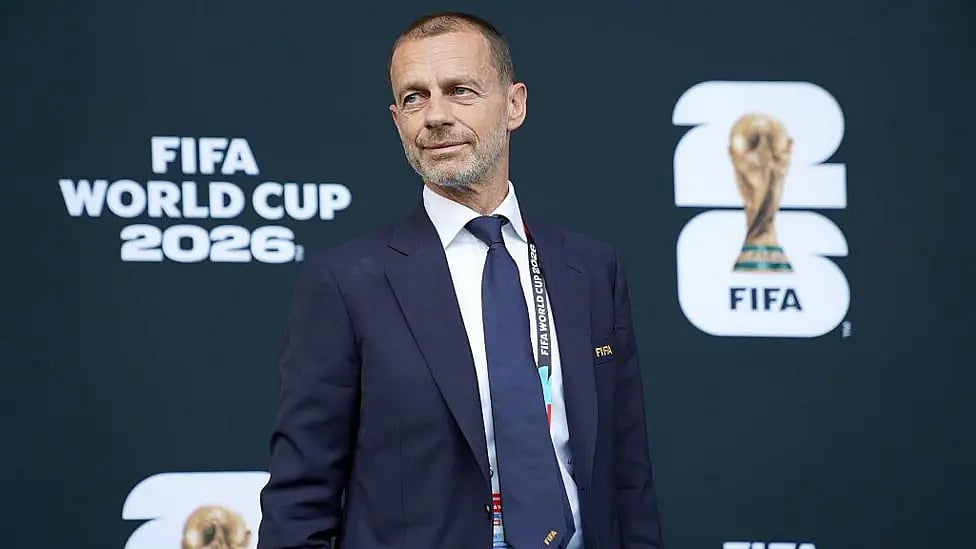
Two of the most powerful entities of the sport seem to be on a collision course as UEFA president Aleksander Ceferin, who had been extremely vocal about FIFA acting at the beck and call of the US President Donald Trump, did not attend the final between Argentina and Spain in protest against the world body’s decisions. While the Slovenian travelled to Mexico City for the opening game between the co-hosts and South Africa, he snubbed the trip to New Jersey on Sunday.
“I don’t think it’s a good idea for the World Cup itself (64 teams) and it’s not a good idea for our qualifiers either. So, I’m not supporting that idea,” Ceferin said last year. The European governing body’s position has not changed since then while the Asian Football Confederation (AFC) president, Sheikh Salman Bin Ibrahim Al Khalifa, has also voiced opposition - questioning where further expansion might end. UEFA's clout in football heirarchy is a no-brainer - what with Spain holding both the world and European champions' tag.
The plans spell greed and undue haste on part of FIFA’s current regime, which had taken 28 years between increasing the number of teams to 32 in 1998 and now 48 in North America. If the World Cup is increased to 64 teams, the number of matches will have to be increased from 104 to 128 at one go in this format – leading to a logistical nightmare and downplaying the valuation of the qualifiers from each continent.
If the qualification is made easier for many of the game’s biggest nations, a 64-team tournament could reduce the commercial value of qualifying competitions while increasing the importance of FIFA’s own flagship event. If broadcasters place less value on qualifying campaigns, soccer’s six regional confederations would become increasingly dependent on FIFA’s own distributions, potentially shifting more financial influence and power towards the global governing body.
Plans are in place for Spain, Portugal and Morocco to stage most of the 2030 finals with Uruguay, Argentina and Paraguay each hosting a single opening round match to mark the tournament’s centenary. Accommodating 64 teams across six host nations presents a formidable organisational challenge – while doing so in a single country could prove even more demanding.
Saudi Arabia, due to host the tournament alone in 2034, already faces significant scheduling questions. Ramadan is expected to begin in mid-November that year, making the November-December window used for the 2022 World Cup in neighbouring Qatar difficult to replicate and potentially forcing another reshaping of the global football calendar.
Infantino’s refrain, meanwhile, has been as follows: ‘’I think it is important that when you want to organise a World Cup, you do it for the whole world — not just Europe and South America. If you don’t give smaller countries a chance to participate in the World Cup, they’ll lack the incentive to keep improving.”
The potential increase of teams in future is not the only reason the European boss had shunned the final as they had reacted strongly after US striker Folarin Balogun escaped a suspension following an intervention from Trump. Ceferin had, on that occasion, called the decision unprecedented, incomprehensible and unjustifiable. ‘’When the certainty of rules is no longer guaranteed by its guardians, the integrity of the game is at stake and the credibility of a competition is undermined,’’ Uefa had said in a statement.
The European lobby had also expressed resentment at the treatment meted out to Iran with unfair visa strictures while they made a statement by inviting Somalian referee Omar Artan to officiate the Super Cup between Paris St Germain and Aston Villa on 12 August. Artan, incidentally, was one of the countless members of support staff, media and even tourists refused entry to the US.
Join our official telegram channel (@nationalherald) and stay updated with the latest headlines