


World Cup: Infantino’s FIFA a Trump stooge? Balogun ban reversal says so
US president’s interference to make their key striker available for last 16 tie kicks up a storm
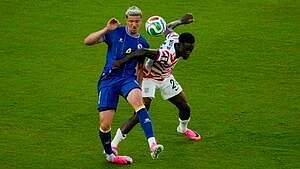


The fault lines within FIFA under Gianni Infantino — a body often hailed as the benchmark for sports governance despite its own share of controversies — are showing starkly at this World Cup. If its handling of Iran, whose campaign was severely hampered by US government restrictions, raised questions, reports that FIFA overturned the suspension of top US goalscorer Folarin Balogun following his red card take the controversy to another level.
A red card at the FIFA World Cup has, since its introduction in the 1974 edition, invariably carried an automatic suspension for the next match or more, depending on the severity of the offence. The list of suspended players includes several illustrious names, but none received a reprieve after being sent off until Garrincha, Brazil's legendary winger and Pelé's teammate, was exonerated following his dismissal in 1962, reportedly at the insistence of the Brazilian government.
However, it has been 66 years since then, and at a time when FIFA increasingly relies on cutting-edge technology to minimise errors in decisions ranging from fouls to offside calls, such a U-turn is a severe embarrassment to its credibility. Unsurprisingly, the backlash has already begun. The Belgian Football Association — a direct stakeholder, as Balogun is now eligible to play in their Round of 16 clash later today — has called the decision a direct contravention of FIFA's own rules.
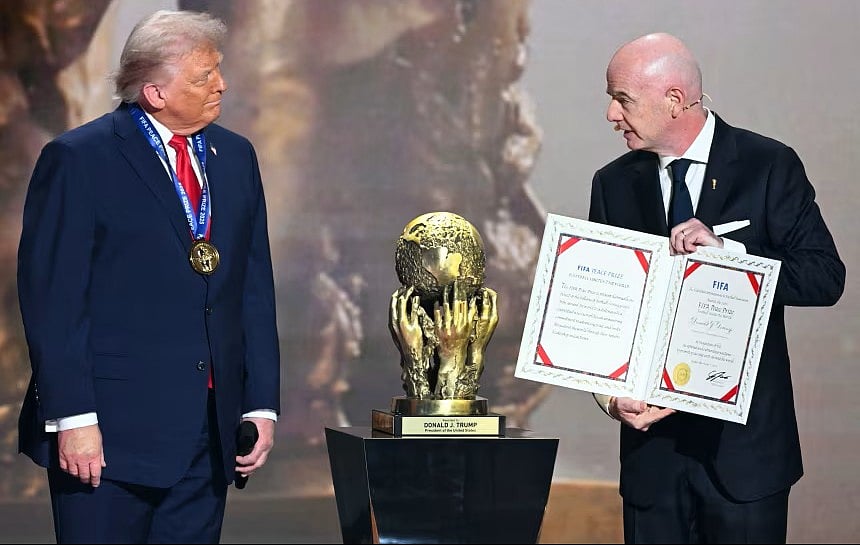
Significantly, the Norwegian Football Federation had already joined an ethics complaint against FIFA president Gianni Infantino, alleging that he breached the organisation's statutes on political neutrality by awarding US President Donald Trump a peace prize during the World Cup draw. Infantino has described himself as a "friend" of the American president and has frequently lavished him with praise and gifts in a manner unprecedented in FIFA's 122-year history.
Once news of Balogun's reinstatement emerged, Trump posted on X: "Thank you to FIFA for doing what was right and reversing a great injustice." The move intensified allegations of political interference after Trump reportedly called Infantino following the US team's Round-of-32 match against Bosnia and Herzegovina, urging him to reconsider Balogun's red-card suspension so he could feature in the Round of 16.
A New York Times report says the Trump administration swung into action immediately after the red card, with commerce secretary Howard Lutnick and Andrew Giuliani, executive director of the White House Task Force on the World Cup, engaging lawyers to help the US Soccer Federation appeal the suspension despite FIFA's clearly laid-out rules barring such appeals.
Scott Goodwin, a hedge fund manager and major donor to US Soccer, brought to the attention of Trump officials allegations that referee Raphael Claus had been involved in match-fixing in Brazil by issuing irregular red cards, according to the New York Times. Incidentally, neither the Brazilian authorities nor FIFA found any evidence of wrongdoing by Claus. Nevertheless, the report says Trump raised those allegations during his call with Infantino.
Claus, it may be noted, did not initially call a foul on Balogun but was asked to review the incident by officials monitoring the replays—a motley group from Venezuela, Colombia and France.
Was Balogun's red card harsh in the first place? Many would argue it was. Television replays showed the striker accidentally bringing his foot down on Bosnian defender Tarik Muharemović's ankle while challenging for the ball. However, intent is often considered irrelevant in such cases, with the final judgment typically left to the VAR officials, as it remains a subjective call.
During the group stage of the tournament, Qatar's Assim Madibo was involved in an incident that left Canada's midfielder Ismaël Koné with a broken leg. Madibo had not even made a challenge; the injury occurred accidentally rather than as a result of the nature of the tackle. FIFA, however, handed him a five-match ban — three games more than the standard suspension for serious foul play.
Does Balogun's reprieve, then, set a dangerous precedent—one that could make FIFA's task even more difficult in the days ahead? What about the 11 other cases at this World Cup in which players served suspensions without receiving similar relief? The Belgian Football Association has already indicated it will explore all legal avenues, and an appeal to the Court of Arbitration for Sport (CAS) is almost certain to be among them.
Meanwhile, a sense of contempt and derision is growing within football circles, with FIFA citing Article 27 of its Disciplinary Code, which allows it "to fully or partially suspend the implementation of a disciplinary measure". What justified a suspended sanction for Balogun, while other red-carded players were denied even the opportunity to appeal, remains anybody's guess.
As former England defender and BBC Sport pundit Micah Richards put it: "To have it suspended for a year makes a mockery of the whole tournament. It has left a bad taste in a lot of people's mouths."
Is FIFA listening?
Join our official telegram channel (@nationalherald) and stay updated with the latest headlines