


Ali Khamenei laid to rest as US and Iran inch towards full scale war
US strikes on Iran and Tehran's measured retaliation against US bases in GCC raise the risk of an all-out war
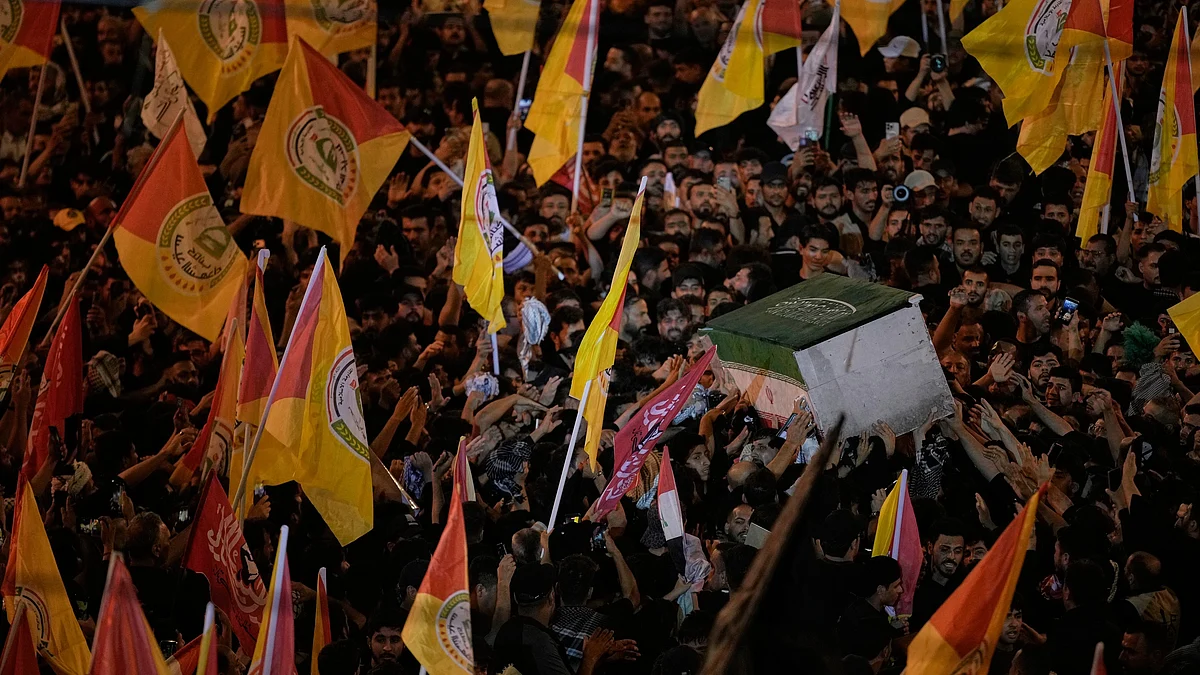


Millions of people converged on Mashhad, Iran, for the final prayers on Thursday, 9 July, before former supreme leader Ali Khamenei, who was assassinated in February 2026, was laid to rest after a week-long funeral.
The size of the crowds throughout the week surprised both Iranians and the US, with President Donald Trump reportedly conceding that he was stunned by the turnout because he believed Iranians hated Khamenei. Experts believe the new Iranian rulers, too, were taken aback by the scale of public support and the display of strength. They had expected people to rally, but not on this scale.
Strategic affairs expert Professor Mohammad Marandi underlined that Iran and Iraq were experiencing peak summer heat. Yet millions, dressed in black, walked several kilometres and waited for hours to attend the mourning ceremonies. Many mourners also carried red flags, symbolising a call for revenge. The public mood was both solemn and angry, with mourners demanding revenge against the US and Israel. They chanted slogans calling for the "death" of the US and Israel.
The US Central Command carried out airstrikes on 90 targets in Iran in retaliation for Iran's attack on three commercial ships passing through the Strait of Hormuz without Tehran's permission. The US had earlier attacked three commercial tankers that allegedly ignored its blockade, killing three Indian sailors in the process. The strikes, however, have continued, with the US targeting Chabahar and Bushehr in an apparent attempt to degrade Iran's ability to strike back.
The view from Tehran, explained Vali Nasr, professor at Johns Hopkins University in the US, is that the US is engaged in a concerted effort to wrest control of the Strait out of Iran's hands, weaken its position in Lebanon, and regain its own strength to exert even greater pressure on Iran or return to war. "The memorandum of understanding became, in reality, a memorandum without real understanding," concurred commentator Ali Hashem. It was only a matter of time before the two sides resumed fighting. "The war never truly stopped; it merely slowed after the April 8 ceasefire," Hashem pointed out.
Renewal of air strikes by the US has confirmed Iran’s long-held suspicion that negotiating with the US is futile. The US and Israel, Tehran believes, have never reconciled to the Islamic revolution of 1979. Both allies have tried to choke Iran’s economy with sanctions and restrictions on other countries to trade with it and actively sought regime-change operations. In the last one and a half years alone, as many as 139 Iranian leaders, IRGC commanders and top scientists are said to have been killed without any provocation.
The assassinations and unilateral US strikes on Iran in June 2025 and in February 2026, it was believed, would lead to the collapse of the Iranian state, following by a spontaneous uprising by the people. It was a miscalculation as the ‘mosaic system of administration, succession and military command’ put in place by Iran allowed the next leaders in line to step up immediately. US and Israeli Intelligence were caught by surprise at the sophistication and resilience of the Iranian state and its capabilities to defend itself.
Reports suggest that the latest US airstrikes have not been confined to southern parts of Iran but have included civilian targets in other parts of the country. Part of a bridge part of the railway connection between Iran and Turkmenistan was struck besides another bridge connecting Tehran with Mashaad. This is seen as a signal that the US is expanding its targeting of Iranian transportation and connectivity infrastructure. Iranian analysts are convinced that a renewed naval blockade of Iran is on the cards and will be accompanied by strikes on the infrastructure that enables the Iranian economy to function under blockade conditions.
The conflict has entered another dangerous phase and any escalation in the next 48 hours have the potential to disrupt global economy. With the US determined to crush Iran after suffering a strategic and military defeat, the future of peace in the region looks bleak.
Join our official telegram channel (@nationalherald) and stay updated with the latest headlines