


Awami League questions ‘special treatment’ for BNP’s Tarique Rahman after return from exile
Ruling party alleges legal violations and unequal application of law as senior BNP leader resumes political activity ahead of elections
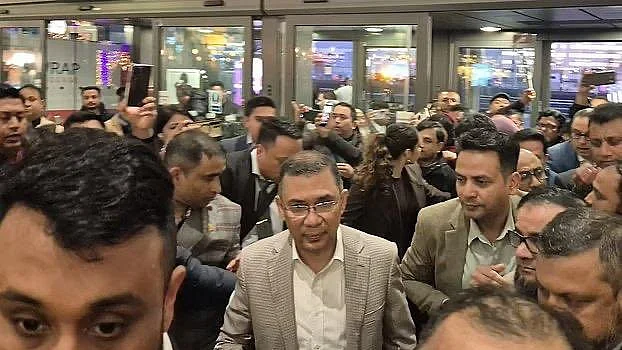


The Bangladesh Awami League has raised sharp objections over what it termed “repeated privileges” being extended to Bangladesh National Party (BNP) acting chairman Tarique Rahman following his return to the country after 17 years in self-imposed exile, questioning whether the law is being applied equally under the interim government led by Muhammad Yunus.
Rahman arrived in Bangladesh on Thursday, days after the Election Commission announced that the country’s 13th parliamentary election, along with a referendum on the July Charter, would be held on 12 February next year. He is also reported to be completing formalities to register as a voter.
In a strongly worded statement issued on Saturday, the Awami League said that Rahman, who was previously convicted in multiple cases, appeared to be receiving exceptional concessions that amounted to violations of existing laws. The party asked whether legal standards that apply to ordinary citizens were being relaxed in his case.
The ruling party cited several instances to support its claims, including allegations that Rahman did not pay tolls at designated points upon entering the country, an offence punishable under law for the general public. It also questioned how Rahman could seek voter registration after the election schedule had already been announced, noting that such registrations are legally barred during this period.
Further concerns were raised over the timing of the alleged voter registration process, which, according to the Awami League, was carried out on a Saturday, a weekly government holiday. The party demanded clarity on how the process was conducted, under whose authority it was approved, and whether due legal procedure was followed.
Describing these developments as part of a broader pattern rather than isolated incidents, the Awami League warned that the perception of separate rules for a political leader could undermine public faith in the rule of law. “If minor violations are normalised through the use of power, it inevitably encourages larger crimes,” the party said, adding that the issue went beyond an individual and called the integrity of the state system into question.
The Awami League concluded by cautioning that unless clear answers were provided, public confidence in the constitutional principle that the law is equal for all would face a deeper crisis.
With IANS inputs
Join our official telegram channel (@nationalherald) and stay updated with the latest headlines