


Bangladesh no longer a ‘submissive country’: Yunus in farewell address
Bangladesh is confident, protects its interests, and no longer follows other nations’ “instructions”, says Yunus
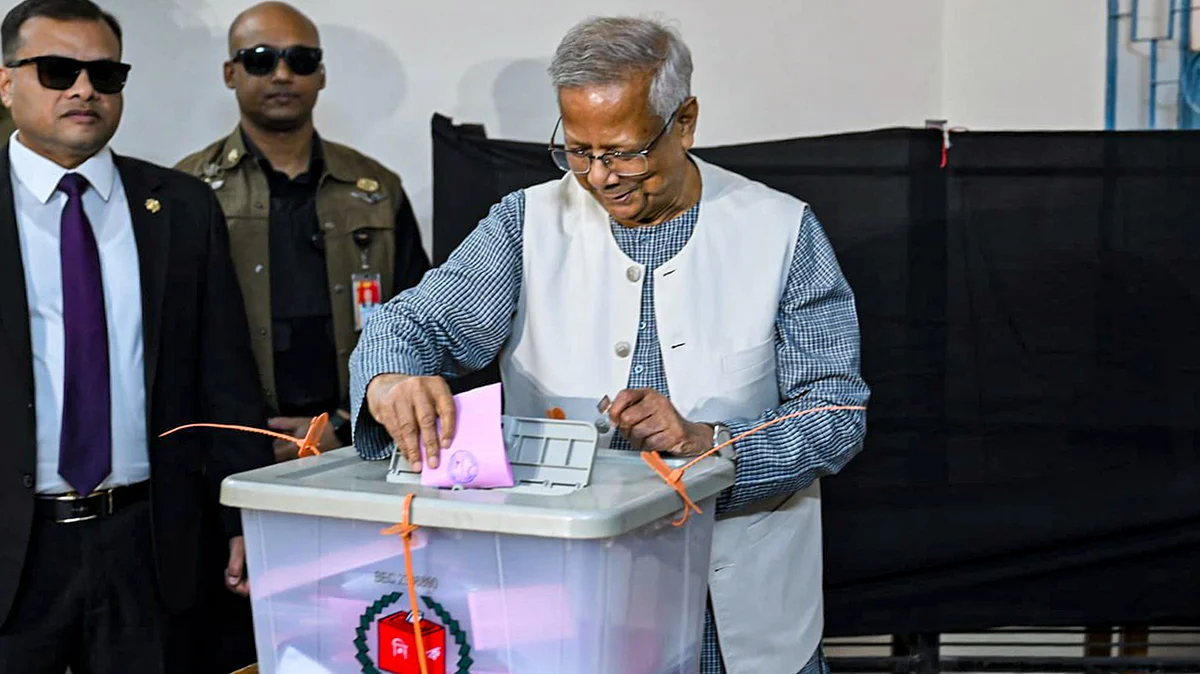


Muhammad Yunus bade farewell to the nation with a flourish of conviction on Monday, declaring that his 18-month stewardship had restored what he called the three bedrock principles of Bangladesh’s foreign policy — “sovereignty, national interests, and dignity” — and lifted the country from what he described as a posture of submission.
In a televised address on the eve of relinquishing office, Yunus said that “today’s Bangladesh is confident, active, and responsible in protecting its independent interests”, insisting the nation was no longer beholden to the “instructions and advice of other countries”. His interim administration, launched in August 2024 amid political flux, now gives way to a new elected government after an unscheduled tenure.
That transition comes with the swearing-in of a government led by the Bangladesh Nationalist Party (BNP), which secured a commanding two-thirds majority in the 13th parliamentary elections held on 12 February. The party, chaired by Tarique Rahman, won 209 of 297 seats, paving the way for a decisive return to power.
Calling for unity beyond partisan and social divides, Yunus urged citizens “regardless of party, creed, religion, caste and gender” to continue striving for a just, humane and democratic Bangladesh. He departed, he said, with “great optimism”.
During his tenure as chief adviser — effectively the prime minister — Yunus cast the country’s open sea as a “strategic asset,” a maritime gateway to economic expansion and regional integration. He spoke of untapped possibilities in deeper cooperation with Nepal, Bhutan and India’s northeastern states, portraying connectivity as the compass guiding Bangladesh’s next chapter of growth.
Listing his administration’s achievements, Yunus said nearly 130 new laws had been enacted, hundreds amended, and around 600 executive orders issued — the majority already implemented. He defended controversial agreements with international port management firms, arguing that elevating efficiency to global standards was essential if Bangladesh was to keep pace with regional competitors.
The day unfolded with ritual and symbolism: meetings with senior bureaucrats, a farewell photo session with his office staff, and a courtesy call from army chief Gen Waker-Uz-Zaman, whom Yunus thanked for the armed forces’ cooperation during the election. On Sunday, he had convened his final advisory council meeting, drawing the curtain on a transitional chapter.
Yet his legacy remains contested. Under Yunus, relations between Dhaka and New Delhi cooled markedly, with India voicing concern over attacks on minorities, particularly Hindus, following the December killing of radical youth leader Sharif Osman Hadi. Analysts say political tensions seeped into economic ties, stalling efforts to ease trade barriers and invigorate bilateral commerce.
Some foreign policy observers argue Bangladesh gained little diplomatic ground during the interim period, even as ties with Pakistan showed a sudden thaw — a shift critics say lacked broad domestic consensus. Others contend the administration left behind a fragile and polarised political landscape, with sharper ideological divides and the emboldening of hardline elements.
As Yunus exits the stage, he leaves behind a nation poised between assertion and uncertainty — buoyed by electoral mandate, yet navigating delicate regional equations and the enduring test of democratic consolidation.
With PTI inputs
Join our official telegram channel (@nationalherald) and stay updated with the latest headlines