


Bangladesh police say Hadi killing was ‘political vengeance’, name 17 accused
Murder sparked unrest and anti-India conspiracy theories, but probe points to Awami League-linked actors
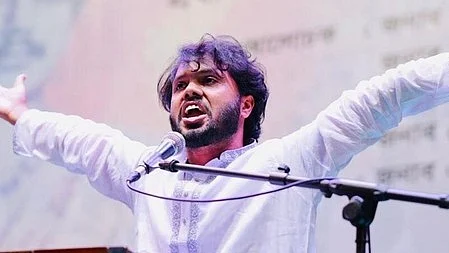


Bangladesh police on Tuesday said student leader Sharif Osman Hadi was murdered as an act of “political vengeance”, allegedly carried out at the behest of the now-banned Awami League, as they filed a chargesheet against 17 people in the case.
Addressing a press briefing in Dhaka after submitting the chargesheet to court, Md Shafiqul Islam, additional commissioner of the detective branch of Dhaka Metropolitan Police (DMP), said investigators had established a clear political motive behind the killing.
“Through public rallies and social media, Hadi had strongly criticised the past activities of the Awami League and the Chhatra League. His outspoken remarks enraged leaders and activists of the Chhatra League and its affiliated groups,” Islam said, as quoted by tbsnews.net.
The Bangladesh Chhatra League is the student wing of the Awami League, the party led by former Prime Minister Sheikh Hasina, whose government was toppled during mass protests in August 2024.
“Considering the political identities of both the accused and the victim, and Hadi’s past political statements, the investigation has revealed that he was shot dead due to political vengeance,” Islam said.
Anti-India conspiracy theories gain ground
Hadi’s murder has also fed a surge in anti-India sentiment in parts of Bangladesh’s political and social media ecosystem, with rumours and conspiracy theories circulating that New Delhi had a hidden role in the killing.
These claims — spread largely online and at street protests — appear to stem from long-standing suspicions about India’s perceived proximity to the former Awami League government and its role in regional politics.
No evidence has been presented to support these allegations, and the police chargesheet makes no reference whatsoever to India. Nevertheless, the narrative has gained traction among sections of protesters, further inflaming an already volatile atmosphere in the wake of Hadi’s death.
Charges, arrests and political links
The chargesheet names 17 accused, including prime suspect Faisal Karim Masud, Dhaka Tribune reported. Police said 12 of the accused have been arrested so far, while five remain absconding.
Hadi (32), a spokesperson of the political platform Inqilab Moncho, rose to national prominence during the July–August 2024 mass protests that culminated in the fall of the Hasina government. He was shot in the head on 12 December 2025 while campaigning in Dhaka ahead of the 12 February parliamentary elections, in which he was also a candidate. He was airlifted to Singapore for treatment but succumbed to his injuries on 18 December.
Police said the alleged shooter, Masud, was directly linked to the Chhatra League. Another accused, Taizul Islam Chowdhury Bappi, allegedly helped Masud and another prime suspect Alamgir Sheikh flee after the killing. Bappi was president of the Pallabi Thana unit of the Chhatra League and also an Awami League–nominated ward councillor, Islam said. According to the police, Hadi was killed on Bappi’s instructions.
Also Read: Time to shed historical baggage
On Monday, 5 January, home affairs adviser Jahangir Alam Chowdhury had told reporters after a meeting of the Advisory Council on law and order that the final chargesheet would be submitted on 7 January. Police, however, filed it a day earlier, amid protests in Dhaka by Inqilab Moncho demanding swift justice.
“The chargesheet was submitted after the allegations against the accused were proven during the investigation,” Islam said.
Violence after the killing
Hadi’s death triggered widespread unrest in the capital. In the days that followed, mobs went on the rampage in Dhaka, setting fire to the main offices of Prothom Alo and The Daily Star, as well as the premises of progressive cultural organisations Chhayanat and Udichi Shilpi Goshthi. In a separate incident, Hindu factory worker Dipu Chandra Das was lynched by a mob in central Mymensingh.
With police now formally attributing the murder to political retribution, and conspiracy theories further polarising public discourse, the Hadi case has become a stark test of Bangladesh’s fragile post-Hasina transition — and of whether accountability can withstand both entrenched power networks and an increasingly combustible street narrative.
With PTI inputs
Join our official telegram channel (@nationalherald) and stay updated with the latest headlines