


Bangladesh’s Jamaat-e-Islami unveils poll manifesto pledging women in cabinet
Jamaat chief Shafiqur Rahman pledged a cabinet with a “significant number of women” if elected, despite fielding no female candidates
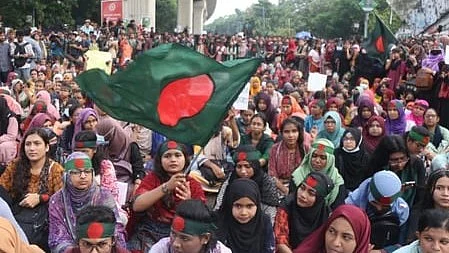


Bangladesh’s main Islamic party, Jamaat-e-Islami, on Wednesday unveiled a sweeping 41-point manifesto ahead of the February 12 elections, striking a note of reform and inclusion as it pledged greater representation for women alongside changes to the justice and economic sectors.
Announcing the manifesto, Jamaat chief Shafiqur Rahman said the party would ensure a “significant number of women” in the cabinet if voted to power — an assurance that stood out even as the party has fielded no female candidates in the polls.
“The cabinet will reflect the diversity of the nation,” the manifesto declared, promising representation for religious and ethnic minorities and other historically marginalised communities. It also pledged to guarantee women a safe working environment while upholding their dignity.
Among the proposals was a commitment to reduce working hours for women during maternity to five hours a day, subject to the mother’s consent.
The emphasis on women’s rights comes days after controversy erupted over a social media post involving women that briefly appeared on Rahman’s verified X account before being deleted, with the party claiming the account had been hacked.
Economically, Jamaat set out an ambitious vision, vowing to transform Bangladesh into a USD 2 trillion economy by 2040 and raise per capita income to USD 10,000. At present, Bangladesh’s economy stands at roughly USD 475 billion in nominal terms, though estimates based on purchasing power parity place it at about USD 1.78 trillion. Per capita income, according to official statistics from early 2026, is approximately USD 2,820.
The manifesto was unveiled against the backdrop of a dramatically altered political landscape. Following a violent uprising that toppled former prime minister Sheikh Hasina’s Awami League, the party was subsequently disbanded by the interim government led by Muhammad Yunus.
In the vacuum left behind, the Bangladesh Nationalist Party (BNP) — once led by the late Khaleda Zia and now headed by her son Tarique Rahman — has emerged as the frontrunner. Jamaat-e-Islami, previously a BNP ally, has positioned itself as the party’s principal challenger.
The BNP is yet to release its election manifesto for what is expected to be a pivotal vote, one that will bring an end to the interim and unscheduled tenure of Yunus’ government.
With PTI inputs
Join our official telegram channel (@nationalherald) and stay updated with the latest headlines