


Netanyahu cites global ties — including Modi — to defend Gaza war leadership
The PM says Israel is courted by major powers and sought after across the Middle East, Far East, Latin America and Africa
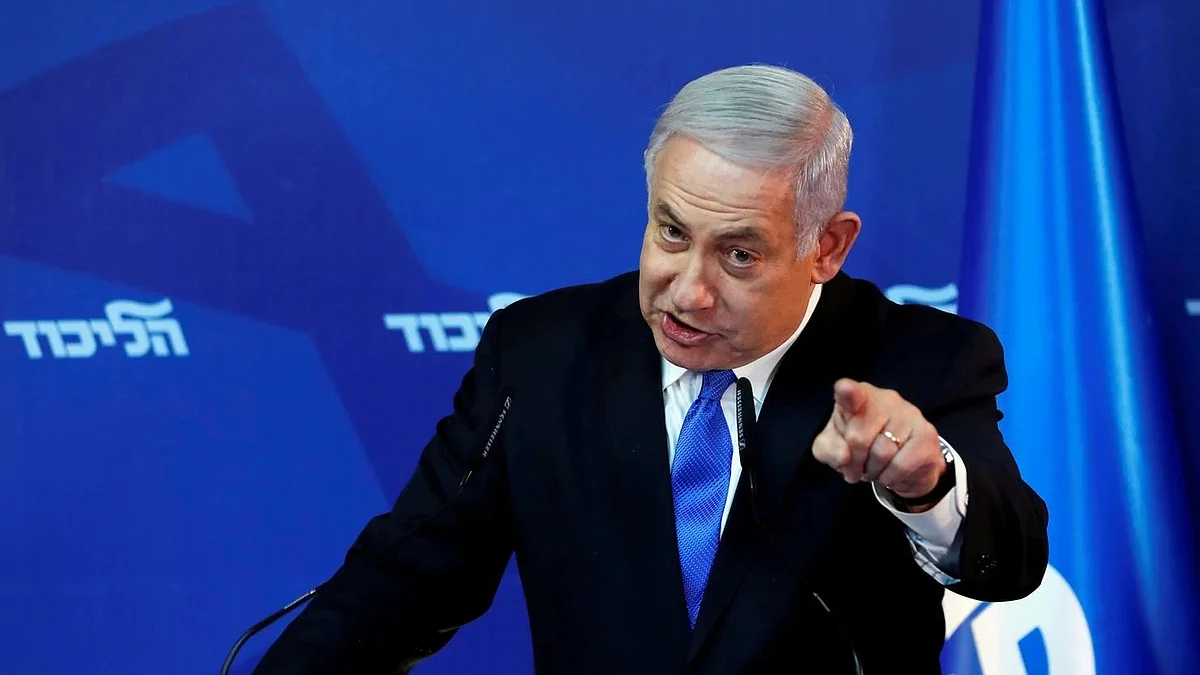


Israeli Prime Minister Benjamin Netanyahu, in a fiery and theatrical address at the Knesset on Monday, mounted a sweeping defence of his leadership, insisting that Israel — despite a storm of global criticism and a surge of anti-Semitism — stands taller and stronger on the world stage than ever before. And at the heart of that diplomatic resilience, he said, lie his close personal ties with global heavyweights, among them Prime Minister Narendra Modi, US President Donald Trump, and Russian President Vladimir Putin.
The debate unfolded under the Knesset’s “40-signature” mechanism, a tool crafted for the opposition to summon the Prime Minister once a month. Netanyahu, encountering a barrage of attacks from Opposition lawmakers, responded with a performance both combative and triumphant, weaving together defence, defiance and political theatre.
“Israel is stronger than ever,” he declared, dismissing claims of diplomatic isolation as nothing less than “a detachment from reality.” He argued that despite two grinding years of war with Hamas, Israel remains a dominant force — militarily, economically, and strategically — across the Middle East and even beyond. The war, officially renamed by his government as the ‘War of Revival’, has, he said, only underscored Israel’s resilience.
Netanyahu accused critics of ignoring the deepening global alliances his government has nurtured. “Many states and many world leaders are seeking us out,” he said, while acknowledging that Israel faces “challenges,” particularly a rising tide of anti-Semitism sweeping across Western nations. He blamed these trends on two sources: radical elements within Muslim immigrant communities in Europe and a virulent stream of online incitement, amplified by anti-Zionist governments and organisations.
His government, he said, is fighting that tide “around the world,” having allocated NIS 2.35 billion (USD 725 million) to Israel’s Foreign Ministry to counter disinformation and anti-Israel propaganda — a scale of investment he portrayed as unprecedented.
Yet Netanyahu’s speech was not merely defensive. It was also a grand showcase of his global relationships. He highlighted the imminent visit of German Chancellor Friedrich Merz, stressing that the request came from Merz himself. He spoke warmly and at length about his “old friend,” India’s Prime Minister Narendra Modi, noting their frequent conversations and their plan to meet soon.
“India — a country of a billion and a half people — wants to deepen ties with us,” he said with unmistakable pride.
And then, turning almost teasingly toward the Opposition, he pointed to his upcoming trip to Washington. “At the end of the month, I will meet again with my friend, President Trump,” he said, noting this will be their sixth meeting since January, more than Trump has held with any other world leader. The opposition’s narrative of a looming rift with Trump, he said, is a “fixed ritual,” one that always collapses after meetings yield positive outcomes.
“Israel has no better ally than the US, and the US has no better ally than Israel,” he said, adding that while disagreements inevitably arise, he has never hesitated to “stand up for our vital interests.”
Netanyahu also spoke of his enduring relationship with Russian President Vladimir Putin, describing their regular contact as a powerful safeguard of Israel’s strategic interests. “This personal relationship over decades protects our vital interests,” he said.
He painted a portrait of Israel as a nation courted by world powers — the US, India, Germany, Russia — and sought after across the Middle East, the Far East, Latin America and Africa. Far from collapsing diplomatically, he insisted, Israel’s global footing has only “strengthened following the war.”
But while Netanyahu touted Israel’s global embrace, the opposition countered with accusations of domestic failure: mishandling the Gaza war, refusing accountability for the intelligence collapse of October 7, 2023, dividing Israeli society, weakening the judiciary, and blocking the creation of an independent state commission of inquiry.
Netanyahu attempted to deflect these criticisms by announcing that the government would establish its own probe into the 7 October failures, with committee appointments split evenly between coalition and opposition members. The move, however, drew immediate suspicion.
“Who could oppose this? Only someone who does not want to reveal the truth,” Netanyahu said, casting himself as a leader committed to transparency.
But the opposition, unconvinced, insists that only a fully independent state commission — a mechanism traditionally used after national disasters — can truly uncover the failures that led to the deadliest attack on Israeli soil.
As Netanyahu’s voice thundered through the Knesset chamber, the political battle lines remained sharply drawn: an embattled Prime Minister portraying himself as Israel’s indispensable global statesman, and an opposition convinced that the same man is leading the country into deeper crisis.
With PTI inputs
Join our official telegram channel (@nationalherald) and stay updated with the latest headlines