


BRICS flags attacks on civilian, nuclear facilities; warns of nuclear risks
BRICS declaration also highlights the role of nuclear-weapon-free zones in strengthening the global nuclear non-proliferation regime
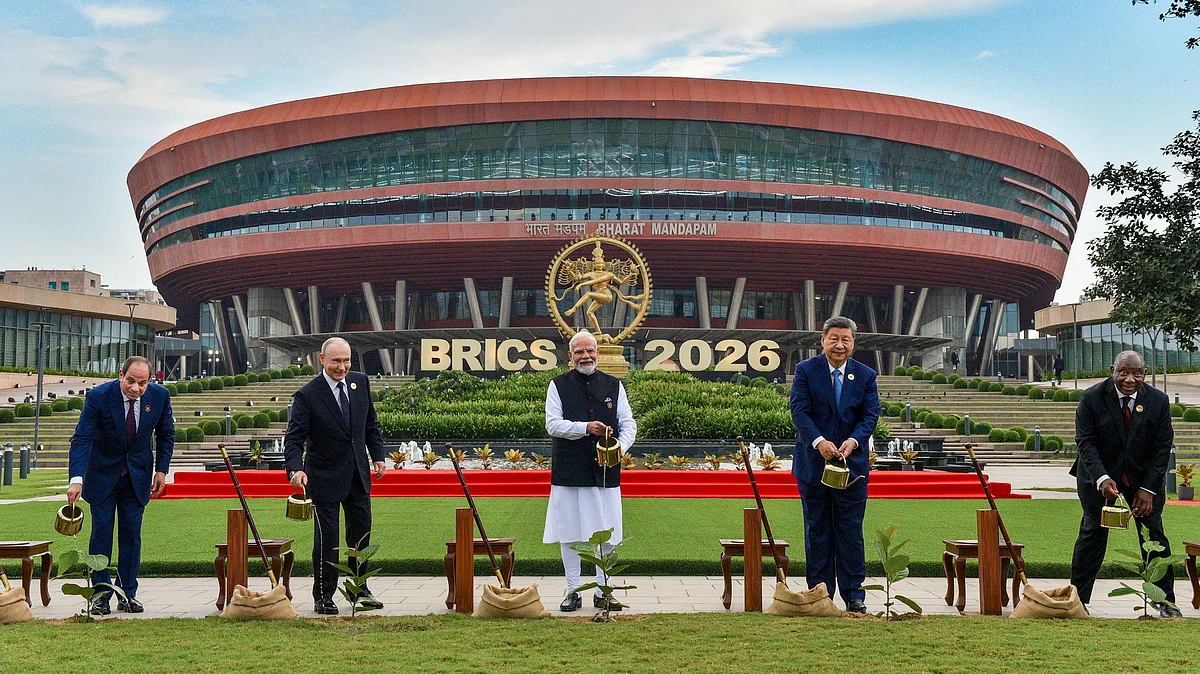


BRICS leaders have voiced serious concern over what they described as “deliberate attacks” on civilian infrastructure and peaceful nuclear facilities operating under full safeguards of the International Atomic Energy Agency (IAEA), stressing that nuclear safety and security must be protected even during armed conflicts.
The issue featured prominently in the New Delhi Declaration, adopted on Saturday on the opening day of the two-day BRICS Summit being hosted by India.
Prime Minister Narendra Modi announced the adoption of the joint declaration at the end of the first day’s deliberations, in the presence of Chinese President Xi Jinping, Russian President Vladimir Putin, Iranian President Masoud Pezeshkian, Abu Dhabi Crown Prince Mohamed bin Zayed Al Nahyan and other leaders.
The declaration did not name any country while expressing concern over attacks on protected civilian and nuclear infrastructure. The leaders said such attacks could violate international law and relevant IAEA resolutions.
“Nuclear safeguards, safety, and security must always be upheld, including in armed conflicts,” the leaders said, underlining the need to protect people and the environment from the consequences of attacks on nuclear facilities.
The adoption of the declaration marked a significant diplomatic achievement for India, as BRICS members managed to reach consensus despite differences between the UAE and Iran over the ongoing conflict in West Asia.
The document, however, avoided directly referring to US strikes on Iran or Iranian military attacks on Gulf Arab nations, allowing the grouping to reach agreement on the broader issue of nuclear safety and regional stability.
The leaders also expressed concern over the “growing risks of nuclear danger and conflict” and called for renewed efforts on disarmament, arms control and nuclear non-proliferation.
They stressed that the existing international disarmament and non-proliferation framework must remain effective to support global stability, peace and security.
The BRICS declaration also highlighted the role of nuclear-weapon-free zones in strengthening the global nuclear non-proliferation regime.
The leaders reaffirmed their support for existing nuclear-weapon-free zones and associated assurances against the use or threat of use of nuclear weapons.
They further backed efforts to establish a Middle East zone free of nuclear weapons and other weapons of mass destruction, calling on all invited parties to participate in the relevant UN-backed conference in good faith and engage constructively.
The declaration also welcomed the adoption of UN General Assembly Resolution 79/241 on a comprehensive study of nuclear-weapon-free zones and noted the consensus conclusion of that study.
BRICS originally comprised Brazil, Russia, India, China and South Africa. The grouping expanded in 2024 to include Egypt, Ethiopia, Iran, the UAE and Saudi Arabia, while Indonesia joined in 2025.
Belarus, Bolivia, Kazakhstan, Cuba, Malaysia, Nigeria, Thailand, Uganda, Uzbekistan and Vietnam were added as partner countries last year.
The declaration’s focus on nuclear safety and the risks of escalation comes against the backdrop of heightened tensions in West Asia, adding weight to calls within the expanded bloc for greater adherence to international law and safeguards protecting civilian and nuclear infrastructure.
With PTI inputs
Join our official telegram channel (@nationalherald) and stay updated with the latest headlines