


BRICS calls for IMF, World Bank reforms, hits unilateral tariffs and sanctions
New Delhi Declaration demands greater representation for emerging economies and warns that protectionist trade measures could disrupt global commerce and supply chains
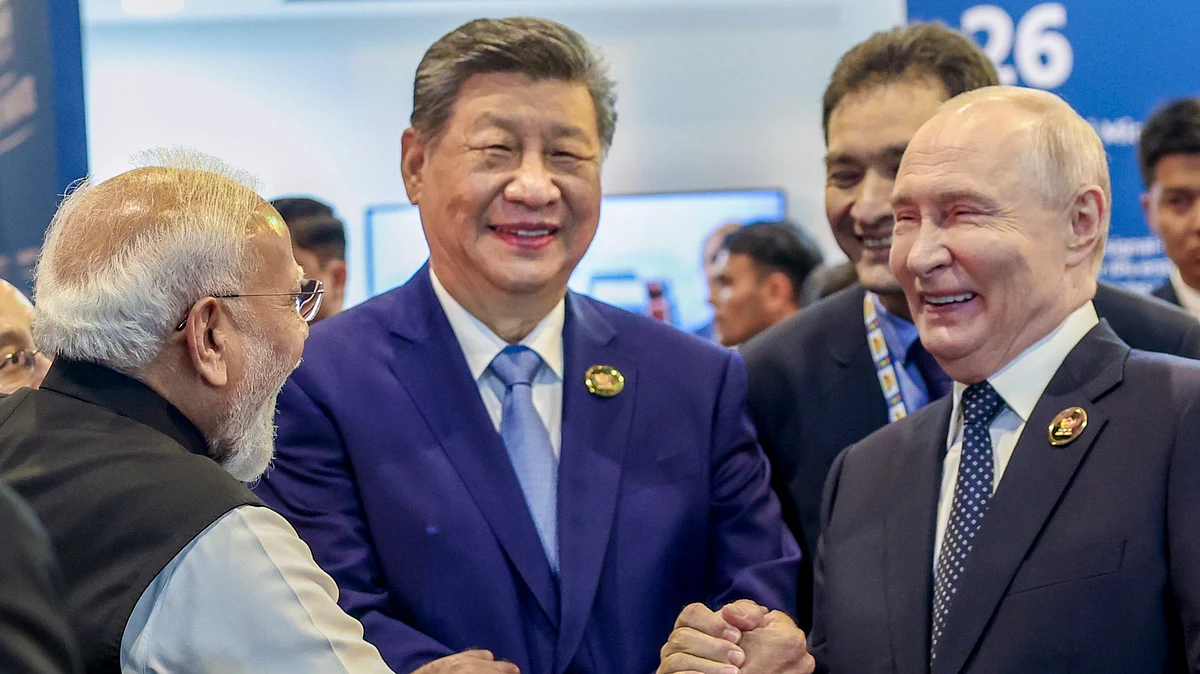


BRICS leaders on Saturday called for sweeping reforms to the global financial architecture to give emerging markets and developing economies a greater voice in the International Monetary Fund (IMF) and World Bank, while strongly criticising unilateral tariffs, trade restrictions and economic sanctions.
In the New Delhi Declaration, the grouping warned that rising protectionism and unilateral trade measures posed a threat to global commerce and supply chains.
“We voice serious concerns about the rise of unilateral tariff and non-tariff measures which distort trade and are inconsistent with WTO rules,” BRICS said.
The bloc warned that trade-restrictive measures could “further reduce global trade, disrupt global supply chains, and introduce uncertainty into international economic and trade activities”.
BRICS reaffirmed its support for a rules-based multilateral trading system centred on the World Trade Organization (WTO) and called for the immediate restoration of its dispute-settlement mechanism.
“We strongly advocate for the immediate restoration of an accessible, effective, fully functioning, two-tier binding WTO dispute settlement mechanism as a foundation for trust and predictability for all WTO members,” the declaration said.
It also called for the appointment of new members to the WTO Appellate Body “without further delay”.
The grouping said it would coordinate more closely on WTO reform and work towards strengthening the organisation’s authority, effectiveness and relevance.
BRICS also backed Ethiopia and Iran’s bids to join the WTO and acknowledged China’s move to expand zero-tariff treatment to 53 African countries with which it has diplomatic ties.
Opposition to unilateral sanctions
The bloc strongly condemned unilateral economic and secondary sanctions, particularly those not authorised by the UN Security Council.
“We condemn the imposition of unilateral coercive measures that are contrary to international law,” the declaration said.
BRICS said such measures have “far-reaching negative implications” for human rights, development, health and food security among populations in targeted countries.
“We call for the elimination of such unlawful measures, which undermine international law and the principles and purposes of the UN Charter,” it said.
The criticism comes against the backdrop of an expansion of US tariff measures under President Donald Trump, who has made tariffs a central part of his trade policy through broad reciprocal duties and country-specific measures.
Push for greater say in IMF, World Bank
BRICS also called for changes to the governance structures of the Bretton Woods Institutions, principally the IMF and World Bank, arguing that they should reflect changes in the global economy since the institutions were established.
“BWI governance structure should be reformed to reflect the transformation of the global economy since their establishment,” the declaration said.
“The voice and representation of emerging markets and developing economies (EMDEs) in the BWI must reflect their relative position in the global economy.”
The grouping also called for changes to the process of selecting the leadership of the IMF and World Bank.
It urged a “merit-based, inclusive and transparent selection process” that would increase regional diversity and representation of developing economies in the leadership of both institutions.
BRICS reaffirmed its support for the BRICS Rio de Janeiro Vision for IMF Quota and Governance Reform and called for a stronger and adequately funded IMF to remain at the centre of the global financial safety net.
The bloc urged the implementation of quota increases agreed under the 16th General Review of Quotas without further delay and called for approaches to meaningful quota realignment under the 17th General Review.
It said the realignment should increase the quota and voting shares of emerging markets and developing economies while protecting poorer developing countries.
“Quota realignment should reflect countries' relative positions in the global economy, increase the quota and voting shares of EMDEs and should not come at the expense of developing countries,” the declaration said.
BRICS also said voluntary financial contributions to the IMF should not influence countries’ quota allocation, governance representation or voting power.
On the World Bank, the grouping said its 2025 Shareholding Review should help strengthen the institution and address the historic under-representation of developing economies.
“In line with the Lima Principles, we reaffirm that BRICS countries should continue to advocate for the increased voice and representation of developing countries,” the declaration said.
Join our official telegram channel (@nationalherald) and stay updated with the latest headlines