


Bulgaria adopts Euro as official currency with brief transition period
Levs circulate alongside Euro in January as country becomes 21st member of eurozone
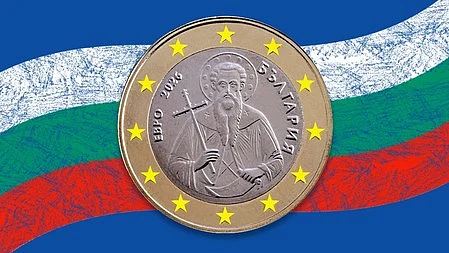


Bulgaria officially joined the eurozone on New Year’s Day, adopting the Euro as its legal tender and becoming the 21st member of the Euro area.
To ensure a smooth transition, the Bulgarian Lev will continue to circulate alongside the Euro throughout January. From 1 February, the Euro will become the sole legal currency in the country.
Banks and post offices will allow free exchanges of Levs for Euros until June 30, after which a nominal fee will apply. The Bulgarian National Bank confirmed that it will continue to exchange Levs for Euros indefinitely, but dual pricing of goods and services in both currencies will end on 8 August 2026.
Officials expressed confidence in the transition process. Vladimir Ivanov, Chairman of Bulgaria's State Commission on Commodity Exchanges and Markets, described 2025 as a year of market stabilisation and said 2026 was expected to start smoothly, with transaction costs reduced thanks to the Euro.
Retailers, from large chains to small shops, have also prepared extensively for the change, said Nikolay Valkanov, Executive Director of the Association for Modern Trade.
Euro adoption has been a long-standing goal for Bulgaria since it joined the European Union in 2007. The European Commission confirmed on 4 June 2025, that Bulgaria met all convergence criteria, and the Council of the European Union formally approved Euro adoption on 8 July 2025.
The Eurozone was launched on 1 January 1999, with 11 founding members, including France, Germany, and Austria. Among the 27 EU nations today, six – Sweden, Poland, the Czech Republic, Hungary, Romania, and Denmark – have yet to adopt the Euro.
With IANS inputs
Join our official telegram channel (@nationalherald) and stay updated with the latest headlines