


Chinese embassy offers Beijing playbook as Delhi chokes on winter smog
Posting before-and-after images, embassy outlines how China’s capital cut pollution, but experts say Delhi needs local solutions
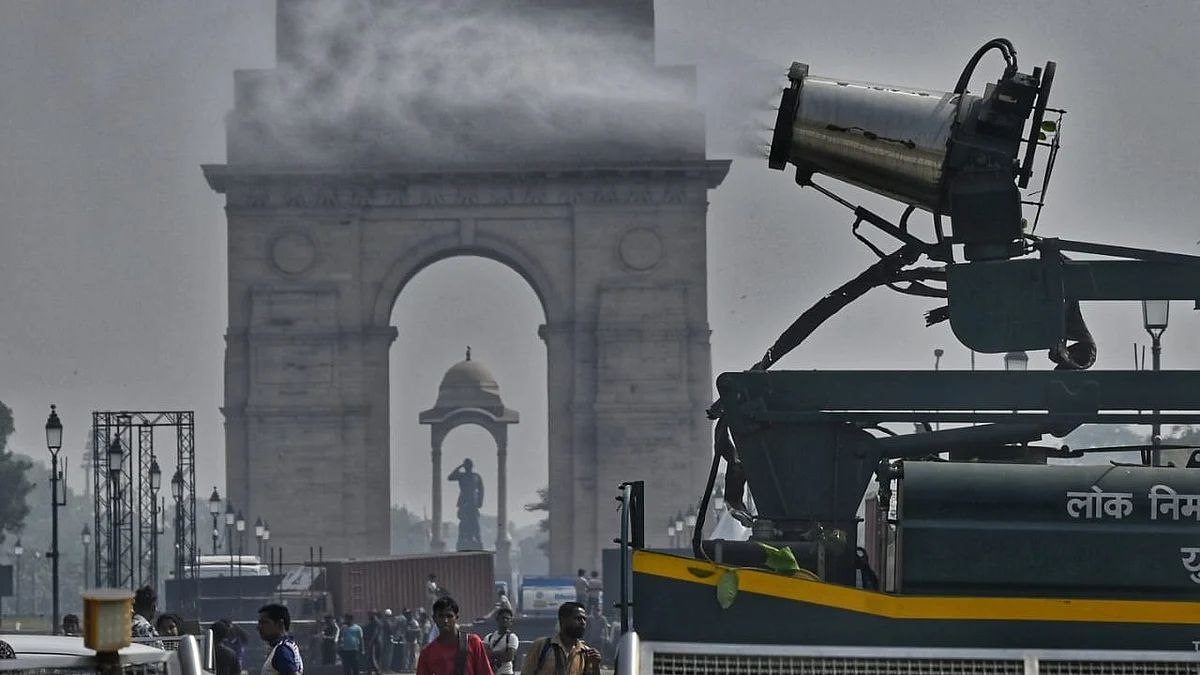


With Delhi’s air remaining in the “severe” category for most of the week, the Chinese embassy in India on Tuesday offered what it described as a practical roadmap, sharing a detailed account of how Beijing tackled its pollution crisis.
In a long post on X, Chinese embassy spokesperson Yu Jing said both India and China have grappled with air pollution amid rapid urbanisation, but cleaner air was achievable with sustained policy action. The post included before-and-after images of Beijing and screenshots of air quality readings from December 15, showing Delhi at an AQI of 447 compared to Beijing’s far lower 67.
“Cleaner air doesn’t happen overnight — but it is achievable,” Jing wrote, laying out Beijing’s multi-pronged strategy.
Crackdown on vehicular pollution
Detailing steps to curb vehicular emissions, Jing said Beijing adopted ultra-strict emission standards comparable to Euro-6 norms and phased out older, high-polluting vehicles.
Measures such as licence-plate lotteries, odd-even and weekday driving restrictions, and massive investments in metro and bus networks were also key, along with a rapid push towards electric mobility.
Vehicular emissions remain a major contributor to Delhi’s smog. While India mandated BS-VI emission norms for vehicles manufactured after April 1, 2020, enforcement has been patchy. Delhi banned the entry of non-BS-VI vehicles and refuelling of overage vehicles only earlier this week, even as pollution levels had remained hazardous since Diwali.
Delhi has also experimented with the odd-even scheme, but with limited impact on overall air quality.
Jing underlined that Beijing’s success was aided by coordinated policies across the wider Beijing–Tianjin–Hebei region, preventing pollution spillover from neighbouring areas — a challenge Delhi continues to face.
Industrial restructuring
The embassy also highlighted Beijing’s industrial overhaul, noting that more than 3,000 heavy industries were shut down or relocated.
Relocating Shougang, one of China’s largest steelmakers, alone reduced inhalable particulate matter by 20 per cent, Jing said.
Vacated industrial sites were converted into parks, commercial zones and cultural hubs, with the former Shougang complex later serving as a major venue during the 2022 Winter Olympics.
Beijing also shifted wholesale markets, logistics hubs, and some educational and medical institutions to surrounding cities, while retaining high-value research and service sectors in the capital.
Why the Beijing model is hard to replicate
Experts caution that while many of the steps outlined are familiar to Delhi, replicating Beijing’s turnaround is easier said than done. Beijing launched a five-year national action plan in 2013, shutting coal-fired boilers, expanding public transport and accelerating a shift to green energy — a long-term, centrally driven effort.
In contrast, Delhi’s responses have largely been reactive, triggered during pollution emergencies. Persistent stubble burning in Punjab, Haryana and Uttar Pradesh, coupled with inter-state blame games, continues to undermine coordinated action, despite repeated Supreme Court interventions.
Specialists say addressing Delhi’s air crisis will require integrating rural agricultural policies to curb stubble burning, expanding public transport year-round, and enforcing compliance more strictly. A 2023 CAG audit found over 1.08 lakh vehicles were issued pollution-under-control certificates despite failing emission tests, highlighting systemic enforcement gaps.
While the Chinese embassy’s suggestions offer a reference point, experts stress that Delhi will need solutions tailored to its own political, administrative and social realities to break its annual cycle of winter smog.
With PTI inputs
Join our official telegram channel (@nationalherald) and stay updated with the latest headlines