


Conflicting signals on Islamabad talks as ceasefire ends tomorrow
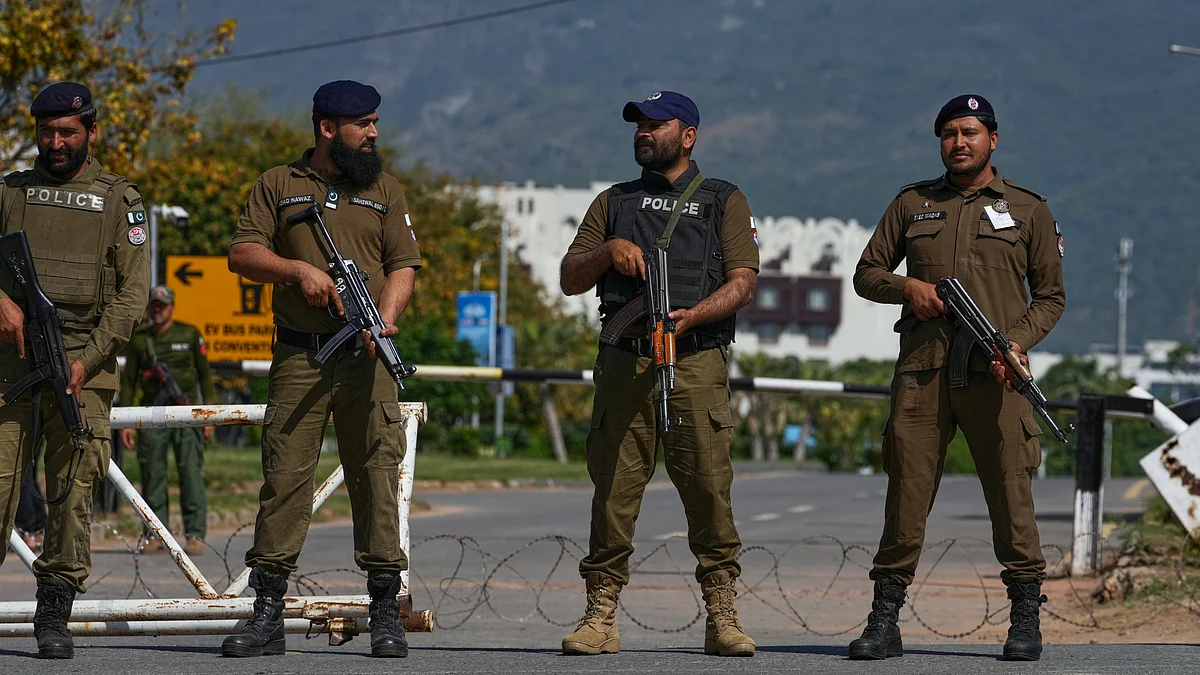
Pakistan’s foreign minister Ishaq Dar’s telephonic conversation with his Iranian counterpart stresses dialogue; no clarity on resumption of Islamabad talks


“I advise US vice-president J.D. Vance to unpack his suitcases and not to head to Islamabad. With the current delusional and unrealistic demands and the continued naval blockade, no one in Tehran is willing to negotiate with him,” posted Seyed Mohammad Marandi, an interlocutor for the Iranian government, at 2.31 am on 21 April 2026.
Minutes later at 2.54 am the speaker of Iran’s parliament and head of Iran’s negotiating team M.B. Ghalibaf posted on X, “Trump, by imposing a siege and violating the ceasefire, seeks to turn this negotiating table — in his own imagination — into a table of surrender or to justify renewed warmongering. We do not accept negotiations under the shadow of threats, and in the past two weeks, we have prepared to reveal new cards on the battlefield.”
At 7.20 am, however, UK based Middle East analyst and journalist Sulaiman Ahmed posted on X, “The supreme leader of Iran, Mojtaba Khamenei has given the green light for the Iranian negotiation team to head to Pakistan. J.D. Vance will attend on behalf of the US team, alongside President Trumps' envoys, Steve Witkoff and Jared Kushner.”
There was no confirmation from Iranian news outlets IRNA, Mehr News or Tasnim. The last post till 8.30 am on 21 April was IRNA reposting Ghalibaf as saying, “By enforcing a siege and breaking the truce, Trump delusionally aims to either turn talks into capitulation or excuse fresh hostilities. We will not hold negotiations under threat, and in the last two weeks, we have prepared to play new cards on the battle field”.
The posts seemed designed to deny multiple reports in the American media including The New York Times and Wall Street Journal that Iran plans to send a negotiating team to Islamabad on Tuesday, 21 April for a second round of talks. Farnaz Fassihi reported in NYT that Iran’s Parliament speaker M.B. Ghalibaf would travel to Pakistan only if the US vice-president J.D. Vance is also present.
With the ceasefire ending on Wednesday, 22 April, both the sides appear to be doubling down. US President Donald Trump has delivered a barrage of conflicting statements on Iran, shifting within hours from claiming Tehran had agreed to all US demands to threatening that the entire country would be blown up if it refused a deal. His remarks included renewed threats to destroy Iran’s infrastructure and warnings that bombs would start falling if the ceasefire collapses.
While Trump claimed US officials were heading to Islamabad, US sources confirmed that no US delegation had yet departed, and Iran stated it had no plans to attend. Trump once again claimed on Monday that the US had effectively achieved regime change in Iran and that its military and navy had been decimated, with statements asserting Tehran has little to no remaining capabilities. He simultaneously insisted a deal could be reached quickly, even telling Fox News it would be signed by Monday night.
However, President Massoud Pezeshkian of Iran asserted in a public post, “…they seek Iran's surrender. The people of Iran will not bow to coercion”. “Our assessment is that Trump effectively lacks both a coherent plan and the capacity to secure even a temporary agreement. His decision-making appears to be grounded in Israeli political and security assessments, conveyed to him on a daily basis,” claimed an unnamed Iranian official to Drop Site News. “There hasn’t been any real progress. Both sides are just signalling behind the scenes that they’re open to reaching an agreement,” he was quoted as saying.
Iran considers US actions after the ceasefire on 8 April 2026 to be acts of bad faith: the naval blockade of Iranian ports imposed on 13 April and maintained despite Iran calling it a ceasefire violation, Trump’s public claims that Iran had agreed to surrender its enriched uranium — which Tehran denied, the brief Hormuz opening on 17 April that collapsed within hours after the US said the blockade would stay, Trump’s Truth Social threats to destroy Iranian power plants and bridges while talks were supposedly ongoing; and the seizure of the Iranian cargo ship Touska on Sunday.
A lead negotiator of the US during the 2015 JCPOA agreement with Iran Robert Malley summed up the bleak assessment of the negotiations in a media interview. “There’s no process on the American side. It’s entirely in the hands of one person who is whimsical, unpredictable, impulsive, subject to extraordinary mood swings,” he said. “A lot of the things that Iran is being asked to do are concrete, tangible, irreversible. And the commitments that, in theory, they would get from the US — sanctions relief or the unfreezing of assets — those are spaced in time and highly reversible…”.
Join our official telegram channel (@nationalherald) and stay updated with the latest headlines