


Cuba braces for fallout as US action in Venezuela upends decades-old alliance
Havana fears loss of vital oil lifeline after Maduro’s removal; Trump warns of tougher line as critics decry new era of US interventionism in Latin America
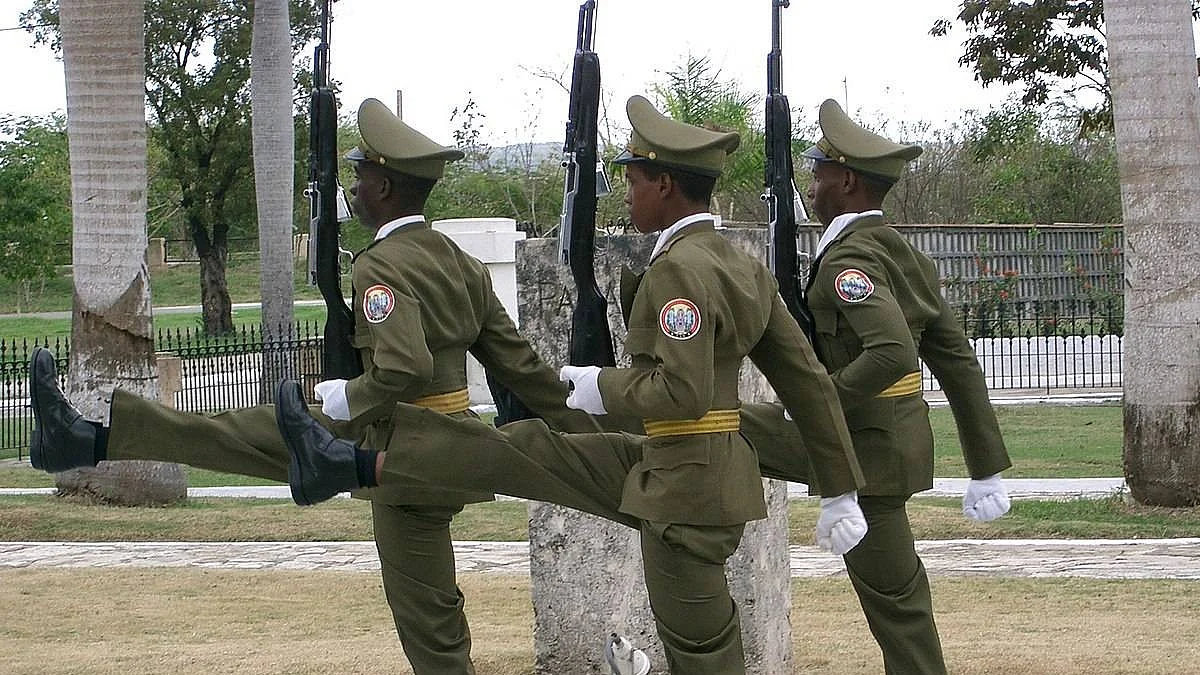


Cuba has emerged as one of the countries most affected by the upheaval in Venezuela following the removal of President Nicolás Maduro, with officials in Havana warning that the US operation in Caracas threatens to unravel a political and economic partnership that has shaped the Caribbean for more than two decades.
Since the late 1990s, Cuba and Venezuela have shared a close ideological and strategic alliance rooted in state-led socialism.
The relationship was cemented in 1999, when Venezuelan presidential candidate Hugo Chávez met Cuban revolutionary leader Fidel Castro in Havana, beginning a partnership under which Venezuelan crude oil flowed to the communist-run island in exchange for Cuban doctors, medics and technical personnel.
After the deaths of Chávez and Castro, Maduro — widely seen as having been politically trained and advised in Cuba — became Chávez’s chosen successor, a decision viewed in Havana as essential to preserving continuity in both the Venezuelan and Cuban revolutions. His forcible removal from power by US special forces has now cast doubt over the future of that alliance.
Havana condemns raid, declares mourning
The Cuban government has strongly denounced the US action in Venezuela as illegal and announced two days of national mourning for 32 Cuban nationals it says were killed during the operation. Cuban officials said the deaths underlined a long-suspected reality: that Maduro’s personal security detail was largely composed of Cuban bodyguards, and that Cuban nationals were embedded in parts of Venezuela’s intelligence and military structures.
While Havana has historically denied maintaining active soldiers or security agents in Venezuela, former political prisoners in the country have repeatedly claimed they were interrogated by officials with Cuban accents during their detention.
Behind the public declarations of solidarity, however, differences have surfaced within Venezuela’s political establishment over the years. Officials close to Havana have been accused by rivals of allowing an increasingly unequal relationship, with critics arguing that Venezuela now receives little in return for its energy support.
Venezuela is believed to have supplied around 35,000 barrels of oil a day to Cuba — a figure that dwarfs contributions from Havana’s other energy partners, including Russia and Mexico.
Energy crisis fears in Cuba
The prospect that this oil flow could be curtailed under Venezuela’s new leadership has heightened anxiety in Cuba, which is already grappling with its worst economic crisis since the Cold War. The Trump administration’s recent policy of seizing sanctioned Venezuelan oil tankers has begun to aggravate fuel shortages on the island, worsening an electricity crisis that has seen rolling blackouts for months.
Cuba has faced prolonged power cuts, disrupted food supplies and mounting public health challenges. Officials and medical workers report a recent surge in mosquito-borne diseases such as dengue fever and chikungunya, with the healthcare system — once a flagship of the Cuban revolution — struggling to cope.
Also Read: US confirms China maintains spy base in Cuba
Government officials fear that if acting Venezuelan President Delcy Rodríguez moves to placate Washington following the US operation against her predecessor, the consequences for Cuba could be severe.
Washington turns up pressure
President Donald Trump has insisted that the United States is now “calling the shots” in Venezuela, a claim later tempered by Secretary of State Marco Rubio, though officials in Washington acknowledge that the administration expects full cooperation from Rodríguez’s government.
Trump has warned of further consequences if Caracas fails to comply, language that has alarmed critics who say the White House is reviving a form of US interventionism unseen in Latin America since the Cold War.
Opponents of the operation argue that Maduro’s removal amounts to kidnapping and that the criminal case against him in the United States should be dismissed. Trump has rejected such criticism and has even suggested similar action could be taken elsewhere in the region, including Colombia, if US interests are challenged.
The president has described the emerging US posture in Latin America as the “Donroe Doctrine”, a play on the 19th-century Monroe Doctrine, which asserted Washington’s primacy in the Western Hemisphere. Rubio echoed that sentiment in television interviews, referring to the region as America’s “backyard”.
Cuba at the centre of next phase
Rubio, a Cuban-American and former Florida senator whose parents fled the island, has long argued for a tougher approach towards Havana. He has said the strategy of removing Maduro and setting firm conditions for a more compliant leadership in Caracas could be pivotal to reshaping Cuba’s political future.
The US economic embargo on Cuba, in place for more than six decades, has failed to dislodge the island’s communist leadership, but Washington officials now suggest that tightening pressure through Venezuela could alter that equation.
Cuban President Miguel Díaz-Canel has struck a defiant tone, paying tribute to the Cubans killed in Venezuela as “brave combatants” who died “taking on the terrorists in imperial uniforms”. Trump, speaking aboard Air Force One, responded sharply, declaring that “Cuba is ready to fall”.
Uncertain road ahead
For Cuba, the fall of Maduro has removed a critical pillar of economic and political support at a moment of acute domestic strain. Officials in Havana warn that without Venezuelan oil, the island’s energy, healthcare and food systems face further destabilisation.
Analysts say the coming months will test not only Cuba’s resilience but also the broader balance of power in Latin America, as the US asserts a more muscular role and regional governments grapple with the consequences of a rapidly shifting order in the Caribbean and beyond.
Join our official telegram channel (@nationalherald) and stay updated with the latest headlines