


Maduro pleads innocent in New York as Venezuela faces turmoil
Maduro, his wife, son, and three others face life in prison over alleged cocaine trafficking, though links to cartels remain disputed
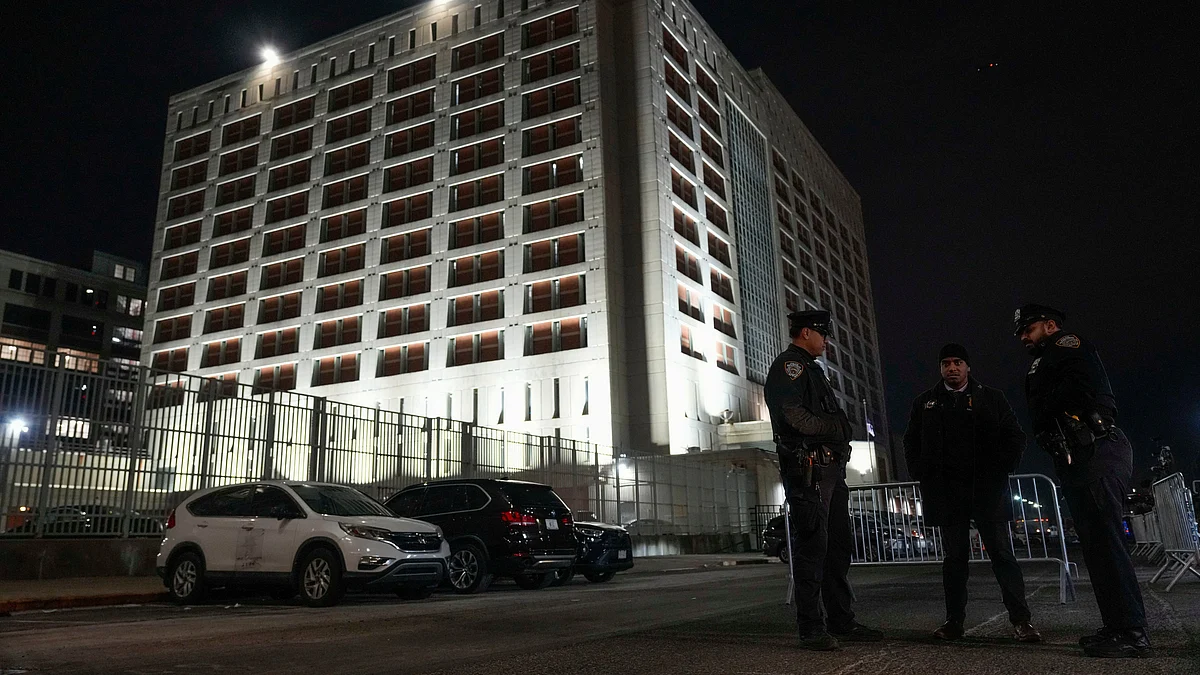


In a courtroom packed with anticipation in New York City on Monday, Venezuelan President Nicolas Maduro made his first public statements since a daring US operation seized him from his home in Caracas, asserting his innocence and describing himself as a “decent man” who had been “kidnapped”, the Al Jazeera reported.
Maduro, who appeared alongside his wife Cilia Flores, faced a federal arraignment on charges of “narcoterrorism” and related conspiracies. Handcuffed and clad in blue jail uniforms, the couple was escorted under heavy guard into the court of US district judge Alvin K. Hellerstein, wearing headsets to follow the English proceedings translated into Spanish.
Addressing the judge, Maduro maintained his not-guilty plea and declared, “I was kidnapped. I am innocent and a decent man, the president of my country.”
The courtroom drama unfolded against a backdrop of political tension and protest. Across the street, authorities kept a small but vocal crowd of demonstrators separated, as supporters and opponents of the US action clashed over Venezuelan flags and chants.
Maduro, his wife, son, and three others face the possibility of life imprisonment if found guilty of allegedly facilitating the shipment of cocaine through drug cartels — a claim contested by observers who point to the lack of concrete evidence linking Maduro to cartel activities, the Al Jazeera reported.
His legal team immediately challenged the legitimacy of his capture, asserting that as a sitting head of state, Maduro enjoys immunity from prosecution under international law. They signalled a coming deluge of pretrial filings to contest both the charges and the circumstances of the US military operation, described by critics as an illegal abduction.
Images circulated showing the couple being flown under heavy security from a detention facility to the court, two days after they were forcibly removed from Caracas in a striking operation by US special forces.
The unfolding saga drew swift international attention. At an emergency United Nations Security Council session, Secretary-General Antonio Guterres voiced grave concern over the US action, warning that it violated core principles of international law: “The Charter enshrines the prohibition of the threat or use of force against the territorial integrity or political independence of any state… The maintenance of international peace and security depends on adherence to these provisions.”
Venezuelan ambassador Samuel Moncada echoed the condemnation, describing the operation as an illegal armed attack, citing the bombing of civilian infrastructure, loss of life, and the “kidnapping” of the nation’s leaders. Russia and China, Venezuela’s staunchest allies, similarly demanded Maduro’s release, while US partners France and Colombia expressed unease over the erosion of international legal norms.
In contrast, the US ambassador to the UN, Mike Waltz, defended the action as a “law enforcement operation,” branding Maduro a narcotrafficker responsible for destabilising the Western Hemisphere and attacking US interests, the Al Jazeera reported.
As the drama in New York unfolded, Venezuela’s political machinery moved swiftly. Vice President Delcy Rodriguez, a seasoned labour lawyer and longtime ally of Maduro, was sworn in as interim president in a ceremony overseen by her brother Jorge, head of the National Assembly. Rodriguez, once a staunch critic of the US seizure, signalled willingness to “collaborate” with Washington—an apparent nod to pragmatic politics in the face of overwhelming external pressure.
Domestically, the response was charged and symbolic. Some 2,000 Maduro supporters, including armed riders on motorcycles, rallied in Caracas, waving flags and chanting slogans in solidarity. Lawmakers in the National Assembly opened sessions with cries of “Let’s go, Nico!” denouncing the abduction and asserting Venezuela’s sovereignty. “The president of the United States claims to be the prosecutor, the judge, and the policeman of the world,” declared senior lawmaker Fernando Soto Rojas. “You will not succeed. We will deploy all our solidarity to see our legitimate president return victorious to Miraflores,” he proclaimed, referencing the presidential palace.
Rodriguez, who has overseen Venezuela’s oil-dependent economy and intelligence services, now appears at the helm alongside a cadre of senior officials, maintaining a delicate balance between domestic authority and US pressure. While Washington insists it does not seek regime change, the ultimate objective appears to be a compliant government to facilitate access to Venezuela’s vast oil reserves.
In the streets of Caracas, amid the rising tension, the drama of Maduro’s capture, his defiant courtroom plea, and the political maneuvering around Rodriguez underscores a stark reality: Venezuela, a nation rich in natural resources yet scarred by political upheaval, is poised on the knife-edge of international power plays, legal battles, and the enduring struggle for sovereignty.
Join our official telegram channel (@nationalherald) and stay updated with the latest headlines