


Trump opposes Israeli annexation of West Bank as global outcry mounts
European Union, too, condemns the move, with EU spokesperson Anouar el Anouni calling it “another step in the wrong direction”
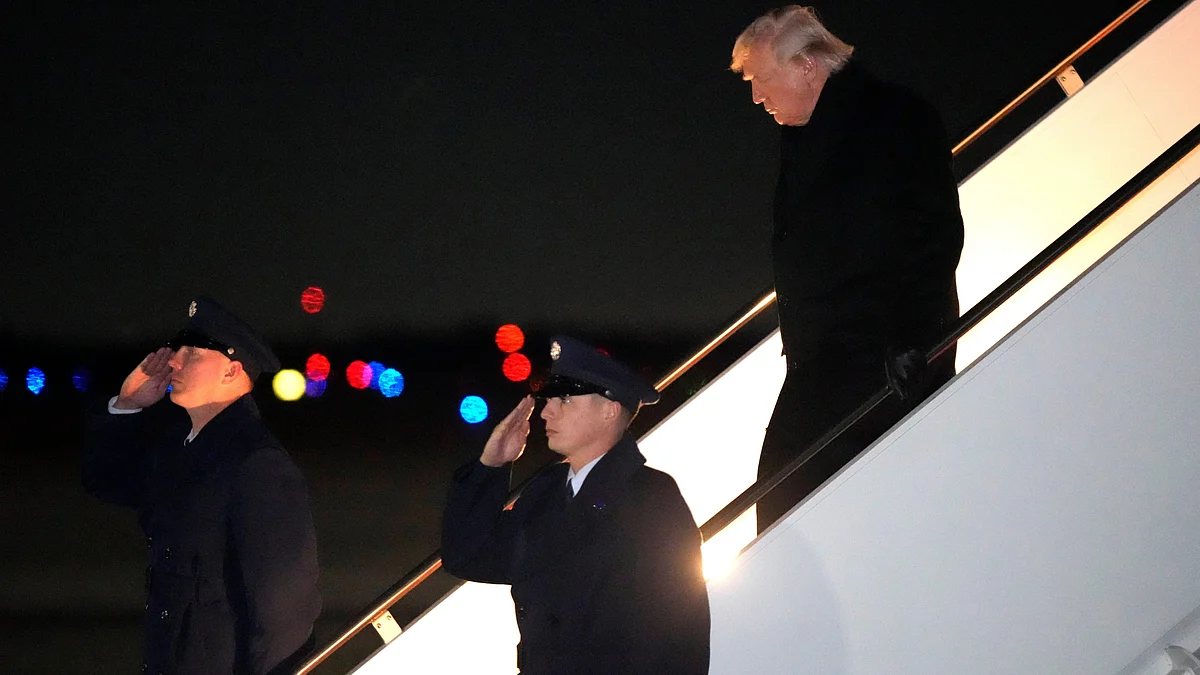


The United States has signalled its opposition to Israel’s move towards annexing the occupied West Bank, even as international criticism of the decision swells across capitals from Europe to the Middle East, the Al Jazeera reported.
US President Donald Trump does not support Israel’s annexation of the West Bank, a White House official said on Monday, stressing that stability in the territory remains central to regional security. “A stable West Bank keeps Israel secure, and is in line with this administration’s goal to achieve peace in the region,” the official said, according to Reuters.
The White House’s remarks came a day after Israel’s far-right finance minister Bezalel Smotrich and defence minister Israel Katz unveiled a series of measures that significantly extend Israeli administrative and legal control over occupied Palestinian land. The steps also ease restrictions on Israeli access to land for new settlements — widely regarded as illegal under international law.
The announcement triggered swift condemnation from across the Muslim world. Eight Muslim-majority nations — Egypt, Indonesia, Jordan, Pakistan, Qatar, Saudi Arabia, Turkiye and the United Arab Emirates — issued a joint statement denouncing what they described as “illegal Israeli decisions and measures” aimed at imposing unlawful sovereignty over Palestinian territory.
The countries warned that the move would entrench settlement expansion and impose a new legal and administrative reality in the West Bank, accelerating what they called Israel’s illegal annexation drive and the displacement of the Palestinian people.
The United Nations, the United Kingdom and Spain also joined the chorus of criticism. UN secretary-general Antonio Guterres warned that Israel’s actions were destabilising and eroding the already fragile prospects of a two-state solution, his spokesperson Stéphane Dujarric said.
Pressed at a UN briefing in New York on whether the measures amounted to a “de facto annexation”, Dujarric said the decisions were pushing the region further away from peace. “They are driving us further and further away from a two-state solution and from the ability of the Palestinian Authority and the Palestinian people to control their own destiny,” he said.
Asked what the UN chief could do to deter Israel, Dujarric replied that Guterres would continue to press for respect for international law and advocate a two-state solution, while urging the broader international community to act. “He can’t do it alone,” he said.
London also voiced sharp criticism, calling on Israel to reverse its decision. “The UK strongly condemns the Israeli Security Cabinet’s decision to expand Israeli control over the West Bank,” the British government said, warning that any unilateral change to the territory’s geographic or demographic character would violate international law.
Spain echoed those concerns, saying the measures threaten to inflame violence and undermine ongoing peace and ceasefire efforts. “Any attempt at annexation is unacceptable,” Spain’s foreign ministry said, urging Israel to comply with its obligations under the Fourth Geneva Convention and rein in settler expansion.
The controversial measures include transferring authority over building permits in Hebron — the West Bank’s largest city — from the Palestinian Authority to Israeli control. They also strengthen Israel’s hold over two major religious sites in the southern West Bank: Rachel’s Tomb near Bethlehem and the Cave of the Patriarchs in Hebron.
Smotrich made little attempt to soften the intent behind the policy shift. Speaking on Sunday, he said the steps were aimed at “deepening our roots in all regions of the Land of Israel and burying the idea of a Palestinian state”.
The European Union, too, condemned the move, with EU spokesperson Anouar el Anouni calling it “another step in the wrong direction”.
As diplomatic opposition gathers momentum, critics warn that Israel’s latest measures risk entrenching occupation, hardening divisions and pushing the long-promised vision of a two-state solution further out of reach.
Join our official telegram channel (@nationalherald) and stay updated with the latest headlines