


Donald Trump orders navy to ‘shoot and kill’ Iranian mine-laying boats
US now appears to become a promoter of terrorism, murder, and mass violence, says Iranian foreign ministry spokesman Esmaeil Baqaei
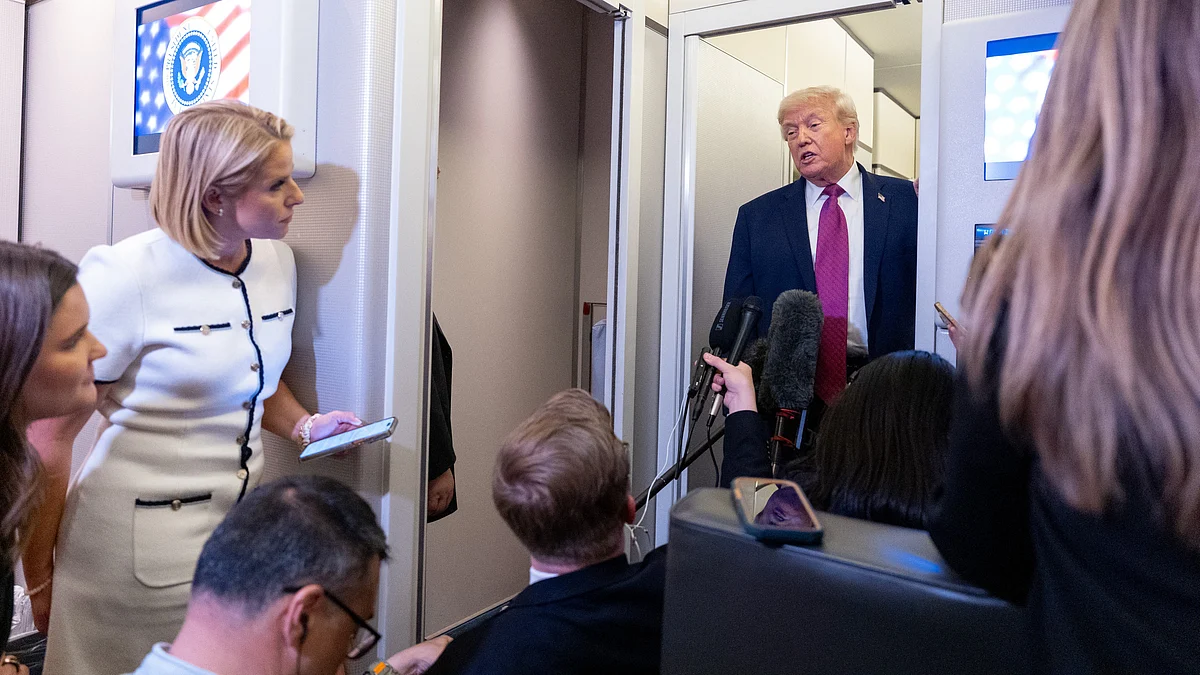


President Donald Trump on Thursday ordered the US Navy to “shoot and kill” any Iranian boat allegedly laying mines in the Strait of Hormuz, sharply escalating rhetoric as Pakistan intensified diplomatic efforts to revive US–Iran talks.
In a social media post, Trump said he had instructed naval forces to act without hesitation. “I have ordered the United States Navy to shoot and kill any boat, small boats though they may be… that is putting mines in the waters of the Strait of Hormuz. There is to be no hesitation,” he said.
He also claimed the US had “total control” over the key shipping route. “It is ‘Sealed up Tight,’ until such time as Iran is able to make a DEAL,” Trump added, saying no vessel could enter or exit without US approval.
Trump further claimed US mine-sweeping operations were underway. “Our mine ‘sweepers’ are clearing the Strait right now… I am hereby ordering that activity to continue, but at a tripled up level!” he said.
The remarks came a day after Iran’s Revolutionary Guards reportedly intercepted and transferred two vessels to Iranian territorial waters for inspection of cargo, documents and records.
Trump also launched a political attack on Tehran’s leadership, saying Iran was struggling with internal confusion. “They just don't know! The infighting is between the ‘Hardliners,’ who have been losing BADLY on the battlefield, and the ‘Moderates,’ who are not very moderate at all… is CRAZY!” he posted.
Iranian leaders rejected the claim. President Masoud Pezeshkian and Parliament speaker Mohammad Bagher Ghalibaf said, “We are all Iranians and revolutionaries… With ironclad unity of nation and state and obedience to the supreme leader, we will make the aggressor regret. One God, one nation, one leader, one path; victory for Iran, dearer than life,” according to posts re-shared by foreign minister Abbas Araghchi.
Responding to Trump’s broader statements, Iranian foreign ministry spokesman Esmaeil Baqaei accused Washington of hypocrisy. The US, he said, “now appears to become a promoter of terrorism, murder, and mass violence”. He asked, “What should one call this, if not a profound moral failure?”
US Central Command said American forces had directed 33 vessels to turn around or return to port since the start of what it described as a blockade against Iran. Separately, the US Department of War said it intercepted a sanctioned Iranian oil tanker in the Indian Ocean during a maritime boarding operation.
Diplomatic push amid rising tensions
Meanwhile, Pakistan has stepped up diplomatic engagement to revive stalled US–Iran talks. Interior Minister Mohsin Naqvi held an “important meeting” with US Chargé d’Affaires Natalie Baker, where they discussed regional developments and possible arrangements for a second round of negotiations, according to the interior ministry.
It was the second such meeting this week amid uncertainty over the proposed talks. Pakistan has also engaged Chinese and Canadian diplomats on the evolving situation.
Chinese Ambassador Jiang Zaidong met Prime Minister Shehbaz Sharif, discussing West Asia tensions and Pakistan’s peace efforts. Canadian High Commissioner Tarik Ali Khan also met Foreign Minister Ishaq Dar, expressing support for Pakistan’s role in facilitating dialogue.
Naqvi said Trump’s move to extend the ceasefire was a “welcome development” that had helped reduce tensions. “We also hope for positive progress from Iran’s side,” he said, adding that Prime Minister Shehbaz Sharif and chief of Defence Forces Field Marshal Asim Munir were making “all-out efforts at every level” for a peaceful outcome.
Iran, however, has not confirmed participation in the next round of talks. Foreign Ministry spokesman Esmaeil Baqaei said Tehran has yet to decide on attending Pakistani-mediated discussions in Islamabad.
Security preparations have intensified in Pakistan, with over 10,000 personnel reportedly deployed for the proposed talks.
The first round of US–Iran talks on 11–12 April ended without a breakthrough, prompting renewed diplomatic efforts to prevent further escalation in the region.
With PTI inputs
Join our official telegram channel (@nationalherald) and stay updated with the latest headlines