


Trump outlines different options for destroying Iran’s enriched uranium
US president says enriched uranium — which he describes as “Nuclear Dust!” — will not remain under Iranian control
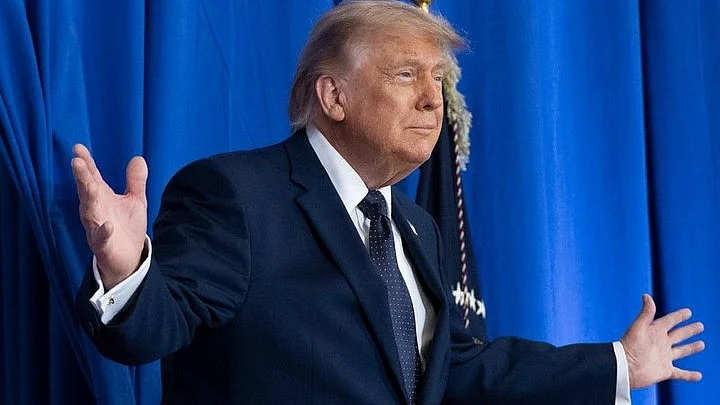


US President Donald Trump on Monday said Iran’s enriched uranium would either be handed over to the United States for destruction or eliminated under international supervision, amid continuing negotiations between Washington and Tehran over a broader regional agreement.
In a post on Truth Social, Trump said the enriched uranium — which he described as “Nuclear Dust!” — would not remain under Iranian control.
“The Enriched Uranium (Nuclear Dust!) will either be immediately turned over to the United States to be brought home and destroyed or, preferably, in conjunction and coordination with the Islamic Republic of Iran, destroyed in place or, at another acceptable location,” Trump wrote.
He added that the process would take place under the observation of the “Atomic Energy Commission, or its equivalent,” in an apparent reference to international nuclear oversight bodies.
Trump did not specify the quantity of enriched uranium involved. The International Atomic Energy Agency (IAEA) has long monitored Iran’s nuclear programme under various inspection arrangements.
However, Tehran swiftly pushed back against reports suggesting it had agreed to transfer enriched uranium outside the country.
Iran’s semi-official Tasnim news agency denied claims aired by Saudi-based Al Hadath that Tehran was prepared to remove highly enriched uranium from its territory as part of a potential agreement with Washington.
Tasnim described the reports as inaccurate and insisted no such commitment exists in the current draft understanding between the two sides.
“In the text of the MoU that exists to this day, there is no statement declaring Iran’s readiness to remove nuclear materials,” Tasnim reported.
“Iran has essentially made no commitment regarding nuclear actions in the memorandum,” it added.
The conflicting statements highlight the fragile and highly sensitive nature of ongoing US-Iran negotiations, which come amid heightened military tensions in the Gulf and continued economic pressure on Tehran.
Meanwhile, The Washington Post, citing an Iranian official, reported that the first phase of a possible agreement could involve the release of $12 billion in frozen Iranian assets by Washington, the beginning of minesweeping operations in the Strait of Hormuz, and the lifting of the US naval blockade on Iran.
According to the report, however, the proposed arrangement would stop short of a formal nuclear agreement.
The developments come as both countries attempt to prevent a further escalation that could disrupt global energy markets and destabilise the wider West Asia.
With IANS inputs
Join our official telegram channel (@nationalherald) and stay updated with the latest headlines