


Donald Trump puts tariffs at the heart of US economic policy
US president frames tariffs as more than an industrial tool, portraying them as a lucrative revenue stream
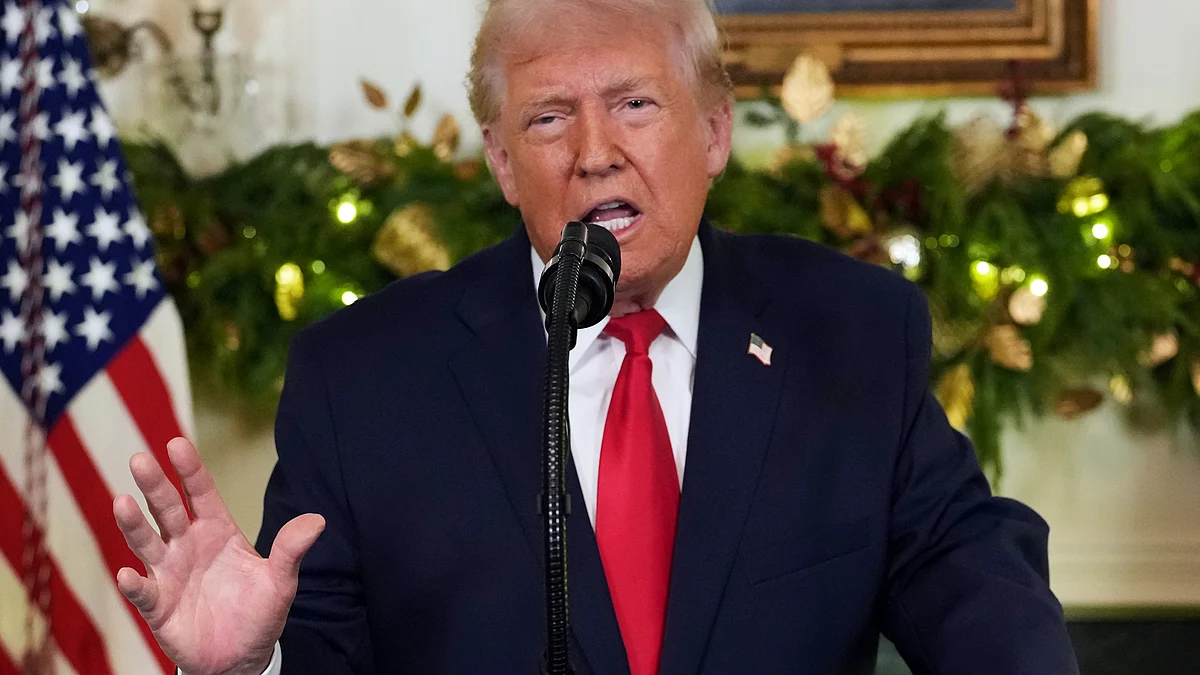


US President Donald Trump has doubled down on tariffs as the beating heart of his economic vision, declaring that import duties will remain a permanent fixture of American policy — a stance likely to strain trade relations as Washington intensifies pressure on companies to bring manufacturing back home.
In his year-end address to the nation on Wednesday night (local time), Trump returned repeatedly to tariffs as a source of national revival, crediting them with igniting investment, fueling factory construction and restoring jobs. Far from a temporary bargaining chip, he cast tariffs as a lasting instrument to redraw the contours of global trade in America’s favour.
“Much of this success has been accomplished by tariffs,” Trump said, calling them his “favourite word” and insisting that companies are returning to US soil in “record numbers” because goods made domestically are shielded from import duties.
The president claimed tariffs have already helped unlock a “record-breaking $18 trillion of investment” into the United States, portraying the inflows as a direct consequence of trade barriers designed to reward domestic production while penalising imports.
“If they build in America, there are no tariffs,” Trump said, declaring an end to what he described as decades of trade practices that favoured foreign exporters over US industry.
The remarks sharpen expectations that scrutiny of imports will only intensify, including shipments from key partners such as India. Indian exports to the United States span pharmaceuticals, steel, aluminium, auto components, chemicals, textiles and information technology hardware — all sectors that could feel the weight of a tougher trade posture.
For Indian companies, Trump’s message offers a stark choice: absorb rising trade costs or deepen manufacturing and assembly footprints within the United States.
Trump also framed tariffs as more than an industrial lever, portraying them as a lucrative revenue stream. He said collections from import duties have helped fund tax cuts and new spending initiatives, including a recently announced “Warrior Dividend” payment for US military personnel.
“We made a lot more money than anybody thought because of tariffs,” he said, underscoring the administration’s belief that trade barriers can serve domestic fiscal priorities.
Beyond economics, Trump cast reshoring as a matter of national security, linking factory openings to “far greater national security” and arguing that private-sector job creation — not government expansion — underpins American strength.
For India, which has sought to position itself as an alternative manufacturing hub amid shifting global supply chains, Washington’s inward turn sends mixed signals. While companies may look to diversify production away from certain regions, Trump made clear that his preferred destination for investment remains firmly within US borders.
India and the United States have deepened cooperation across defence, technology and critical supply chains in recent years, yet trade has remained among the most sensitive fault lines in the relationship.
The US remains India’s largest trading partner, and American officials increasingly describe New Delhi as a key ally in efforts to diversify supply chains and reduce economic concentration risks. India, for its part, has pushed for wider access for its goods and services while resisting pressure to sharply slash tariffs across the board.
Trump’s remarks suggest that tariffs will remain a central and contentious theme in any future trade negotiations — a defining feature of Washington’s economic diplomacy in the years ahead.
With IANS inputs
Join our official telegram channel (@nationalherald) and stay updated with the latest headlines