


Trump says he can easily fix UN funding crisis as US withholds $4 billion in dues
Antonio Guterres warned UN missions of an “imminent financial collapse” without naming the United States
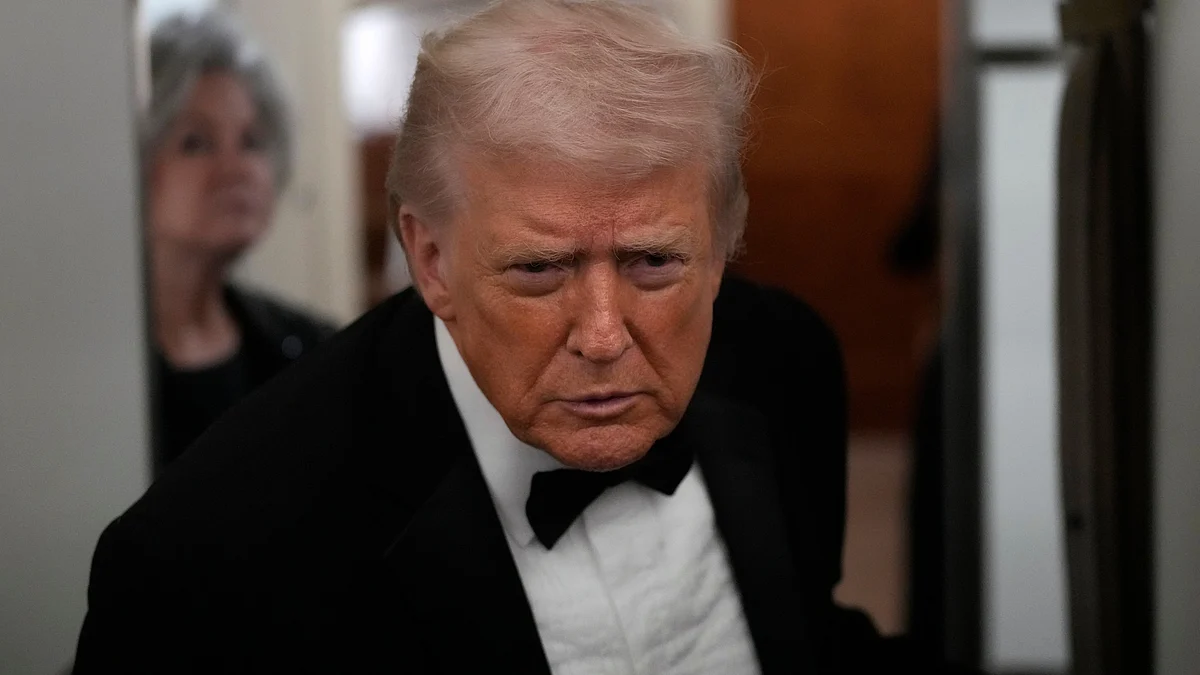


As the United Nations teeters on the brink of a deepening financial crisis — its coffers drained in part by nearly $4 billion in unpaid US dues — President Donald Trump has breezily claimed he could fix the problem “very easily”, even as he stopped short of pledging to release the money Washington owes.
In an interview with Politico on Sunday, Trump struck a characteristically confident note, presenting himself as a potential saviour of the cash-strapped world body. Yet he offered no indication that the United States, whose arrears lie at the heart of the crisis, would settle its outstanding bills.
The warning signs could hardly be starker. In a letter to heads of UN missions, secretary-general Antonio Guterres cautioned that the organisation faces “imminent financial collapse”, though he did not single out the United States by name. Behind the diplomatic phrasing lies a sobering reality: according to UN officials, Washington owes $2.196 billion to the regular budget and another $1.8 billion to the peacekeeping fund. Excluding its 2026 assessment, which is not yet overdue, the US’s outstanding arrears total about $1.429 billion.
As the UN’s largest contributor — responsible for 22 per cent of the regular budget under a General Assembly formula — the US exerts an outsized influence, and its non-payment reverberates sharply through the organisation’s finances.
Despite a long record of hostility toward the UN, including withdrawing from several of its agencies, Trump adopted a softer tone in the interview, framing the institution as a pillar of his imagined legacy. “When I’m no longer around to settle wars, the UN can,” he said. “It has tremendous potential. Tremendous.”
The president, who has repeatedly claimed to have ended eight wars singlehandedly, has promoted alternative mechanisms — such as the UN-backed Board of Peace overseeing Gaza’s ceasefire and reconstruction — as proof that the organisation can work when pushed in the right direction. He reiterated his belief in the UN’s promise even as speculation swirled about whether it might one day leave New York.
“The UN is not leaving New York, and it’s not leaving the United States,” Trump said. “Because the UN has tremendous potential.”
Behind the scenes, however, austerity has already set in. To cut costs, the UN has shifted some functions to less expensive locations abroad and is weighing the relocation of others. Trump told Politico that compelling countries to pay their dues would take him only minutes. “All I have to do is call these countries,” he said. “They would send checks within minutes” — a claim echoed by his assertion that he once browbeat NATO allies into boosting defence spending.
Yet the comparison is imperfect. Unlike NATO, where members can raise military budgets at will, UN contributions are fixed by the General Assembly. Trump cannot unilaterally alter the assessment formula. And while smaller countries such as Mexico and Venezuela are also in arrears, their unpaid dues pale in comparison to the sums owed by Washington. Other major contributors, including China — which accounts for 18 per cent of the budget — are up to date on payments for previous years.
Guterres, in his letter, laid out the stark choice ahead: either all member states honour their obligations in full and on time, or the UN must undertake a fundamental overhaul of its financial rules to avert collapse. Such reform would require the consent of a majority of the UN’s 193 members — a daunting diplomatic mountain to climb.
For now, the central question remains unanswered: will the United States pay what it owes?
A UN official warned that without fresh funds, the organisation could run out of money by July, casting doubt on whether it could even host its annual high-level General Assembly session in September, when world leaders descend on New York. In a worst-case scenario, the UN’s iconic glass headquarters itself could be forced to shut its doors.
With IANS inputs
Join our official telegram channel (@nationalherald) and stay updated with the latest headlines