


Donald Trump threatens devastating strikes on Iran over deadline
Trump warns of widespread destruction, saying Iran’s power plants and bridges could be reduced to rubble
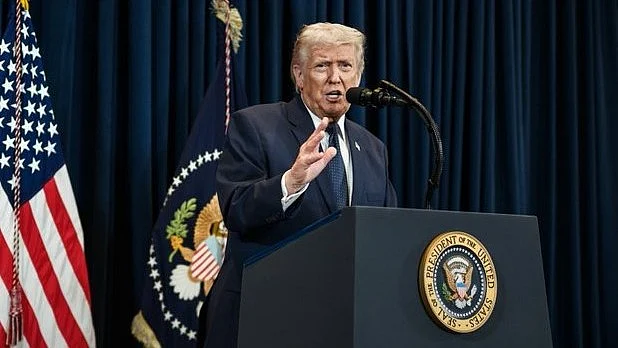


In a stark and commanding declaration, US President Donald Trump signalled the prospect of sweeping strikes against Iran, warning that Tehran could face the annihilation of its critical infrastructure if it fails to heed US demands.
Speaking to The Wall Street Journal, Trump painted a vivid picture of potential devastation, invoking a scenario in which the nation’s power plants and bridges could crumble under the weight of American resolve.
“If they don’t act by Tuesday evening, they won’t have any power plants and they won’t have any bridges standing,” Trump cautioned, the words echoing with unmistakable gravitas. He further amplified the warning, suggesting that the entirety of Iran’s industrial backbone could be at risk, stating that the country could lose “every power plant and every other plant they have in the whole country.”
These ominous remarks arrive amid escalating tensions over the Strait of Hormuz, the narrow but globally vital chokepoint through which roughly one-fifth of the world’s oil supply flows. Recent days have seen a tempest of military maneuvers, threats, and diplomatic overtures, as Washington presses Tehran to reopen the critical waterway.
Despite his uncompromising stance, Trump left a slender opening for dialogue, hinting that Iranian leaders may still be willing to negotiate. “We have it under control, seriously under control,” he asserted, projecting confidence even as the shadow of potential conflict loomed large.
Analysts observing the unfolding drama note that Trump’s warnings represent a delicate interplay between pressure and diplomacy, a strategy that combines the threat of sweeping destruction with the faint promise of talks. The president’s articulated timeline imbues the situation with a palpable urgency, underscoring the high stakes for both nations.
The confrontation is part of a long and fractious history between the United States and Iran, encompassing disputes over nuclear ambitions, regional influence, and maritime security. In this latest chapter, the Strait of Hormuz again emerges as both a symbol and a fulcrum of geopolitical tension, with every word and action holding the potential to tip the fragile balance between deterrence and escalation.
As the world watches, the rhetoric alone shapes expectations, casting the unfolding standoff in stark relief against the backdrop of a volatile region where the margins for miscalculation are perilously thin.
With IANS inputs
Join our official telegram channel (@nationalherald) and stay updated with the latest headlines