


Donald Trump vows 100% tariff on Canada if China deal goes ahead
US president warns that Canada cannot serve as a “drop-off port” for Chinese goods bound for United States
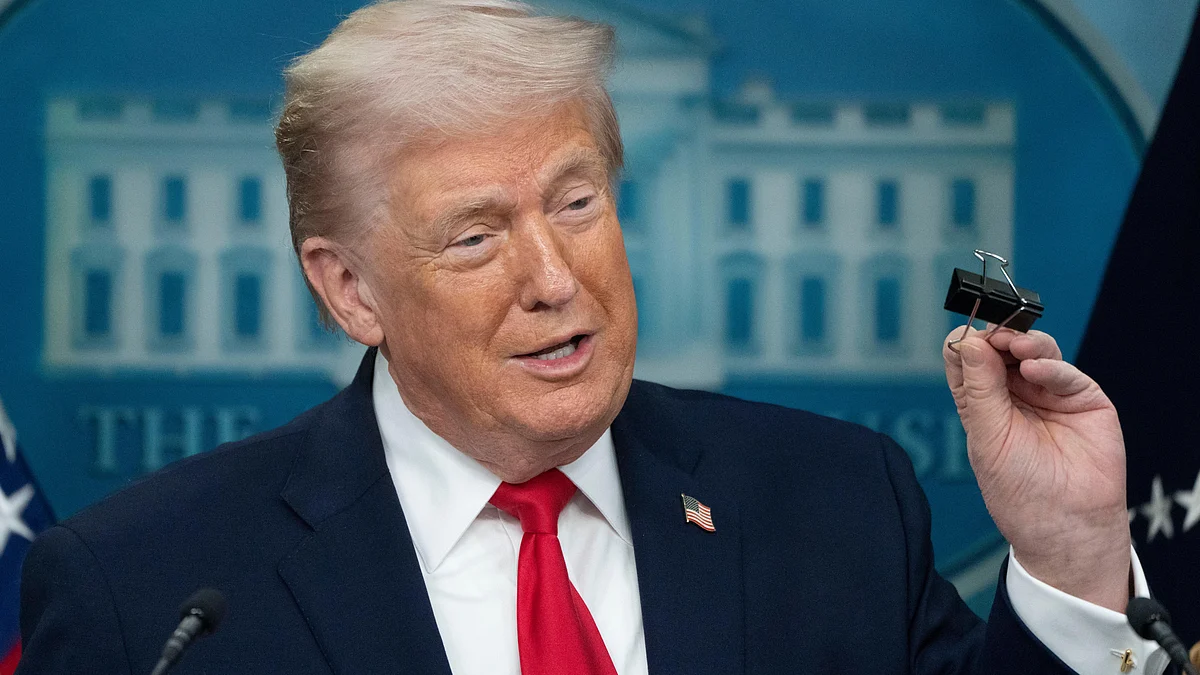


US President Donald Trump has once again rattled the foundations of North American trade ties, threatening to slap a sweeping 100 per cent tariff on Canadian goods if Prime Minister Mark Carney presses ahead with a trade arrangement involving China, the Al Jazeera reported.
In a sharply worded post on Truth Social on Saturday, Trump warned that Canada would not be allowed to function as a “drop-off port” for Chinese goods bound for the United States. Should Ottawa move closer to Beijing, he said, all Canadian exports to the US would be hit with an immediate 100 per cent tariff, pointedly referring to Carney as “governor” rather than prime minister.
Carney’s office offered no immediate response to the remarks.
Seeking to temper the fallout, Canada’s minister for Canada-US trade, Dominic LeBlanc, later said on X that Ottawa is not pursuing a free trade agreement with China. Instead, he characterised a deal announced last week as a narrowly focused resolution of “several important tariff issues,” stressing that Canada’s new government is intent on fortifying its domestic economy while broadening its global trading partnerships.
Trump’s latest warning comes against the backdrop of escalating tensions between Washington and Ottawa, sparked in part by Carney’s address at the World Economic Forum in Davos. In that speech, the Canadian leader spoke of a world in “rupture” rather than transition and urged middle powers to close ranks against economic coercion — comments widely seen as a veiled rebuke of the Trump administration. The US president bristled in response, declaring that “Canada lives because of the United States,” and later revoked Carney’s invitation to join his proposed “Board of Peace.”
Since before returning to office in January 2025, Trump has repeatedly threatened steep tariffs on Canadian goods and has revived his provocative suggestion that Canada should become America’s “51st state,” driving relations between the two neighbours to their lowest point in decades.
As the relationship frays, Carney has moved to redraw Canada’s economic map, seeking stronger ties beyond the United States with partners including China, the European Union and Qatar. Analysts say the strategy reflects a deliberate effort to loosen Canada’s long-standing reliance on its southern neighbour.
That shift was underscored last week when Ottawa announced a new strategic partnership with Beijing following Carney’s visit to China. The agreement envisages lower Chinese tariffs on Canadian agricultural exports such as canola, in exchange for Canada opening its market to as many as 49,000 Chinese electric vehicles.
“At its best, the Canada-China relationship has created massive opportunities for both our peoples,” Carney said after the announcement.
Join our official telegram channel (@nationalherald) and stay updated with the latest headlines