


Dubai airport passenger traffic drops 66% in March amid geopolitical tensions
Chief executive officer Paul Griffiths expresses confidence in recovery, saying airport is ready for a traffic rebound as capacity returns
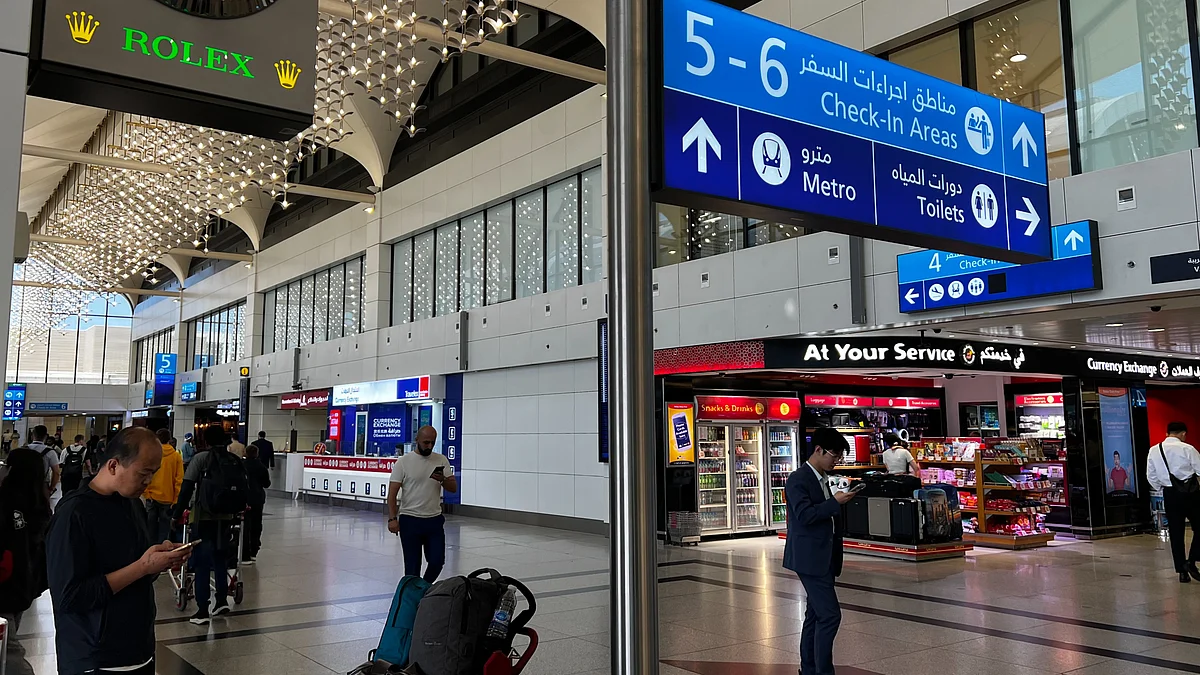


The tremors of geopolitical unrest in West Asia — set in motion in February — have rippled across the skies, casting a shadow over one of the world’s busiest aviation corridors. At the heart of this turbulence, Dubai International Airport witnessed a dramatic ebb in passenger traffic, with March volumes reportedly plunging by a staggering 66 per cent amid disruptions linked to the conflict in Iran.
The sharp contraction weighed heavily on quarterly performance, pulling first-quarter footfall down to nearly 25 lakh passengers — a decline of 21 per cent compared to the same period last year. The airport, long celebrated as a global crossroads of connectivity, found its rhythm disrupted by a series of operational setbacks, including precautionary shutdowns triggered by drone-related incidents in nearby areas. These episodes sent shockwaves through regional airspace, grounding flights and dampening travel demand across West Asia.
Yet, beneath the cloud of uncertainty, there remains a quiet resilience. Authorities have signalled that the underlying appetite for travel endures, waiting to rebound as stability returns. Chief executive officer Paul Griffiths expressed confidence in recovery, noting that the airport stands ready to accommodate a resurgence in traffic as capacity is gradually restored — reaffirming its stature as a vital artery of global aviation.
India continued to anchor the airport’s traffic base, emerging as the largest source market with 25 lakh passengers, followed by Saudi Arabia, the United Kingdom, and Pakistan. Among destinations, London led the charts with 7.52 lakh passengers, trailed by Mumbai and Jeddah.
The fragility of the moment was underscored in March, when flights were briefly suspended after a drone struck a fuel tank in the vicinity of the airport. In a swift response prioritising safety, operations were halted, with passengers advised to remain in close contact with their airlines for updates.
Amid the flux, airlines have begun cautiously stitching back their networks. Air India Express resumed services to Qatar and Bahrain, while maintaining operations to key Gulf destinations including Dubai, Abu Dhabi, Sharjah, Ras Al Khaimah, Al Ain, Muscat, Riyadh, Dammam, and Doha. Services to Kuwait, too, remain woven into its Gulf network.
For now, the skies over West Asia carry both the weight of conflict and the promise of recovery — an aviation landscape poised between disruption and renewal.
With IANS inputs
Join our official telegram channel (@nationalherald) and stay updated with the latest headlines