


Geneva talks deferred until US and Iran decide how to deal with defiant Israel
Fresh Israeli strikes in Lebanon delay US-Iran talks in Geneva, exposing the fragility of the Islamabad MoU


Preparations in Geneva for the aborted US-Iran talks continued on Friday even as Switzerland's foreign ministry confirmed that the meeting at the Burgenstock mountaintop resort had been "postponed". Swiss military and police officials continued patrolling around the luxury hotel set high on a mountain overlooking Lake Lucerne, and a media centre had already become functional, it was reported.
Iranian officials, however, didn’t travel as planned to Switzerland, insisting that the fighting in Lebanon must stop before the talks can take place, according to the officials, who spoke on condition of anonymity to discuss the ongoing mediation to try to get the talks rescheduled. US vice-president J.D. Vance also cancelled his trip.
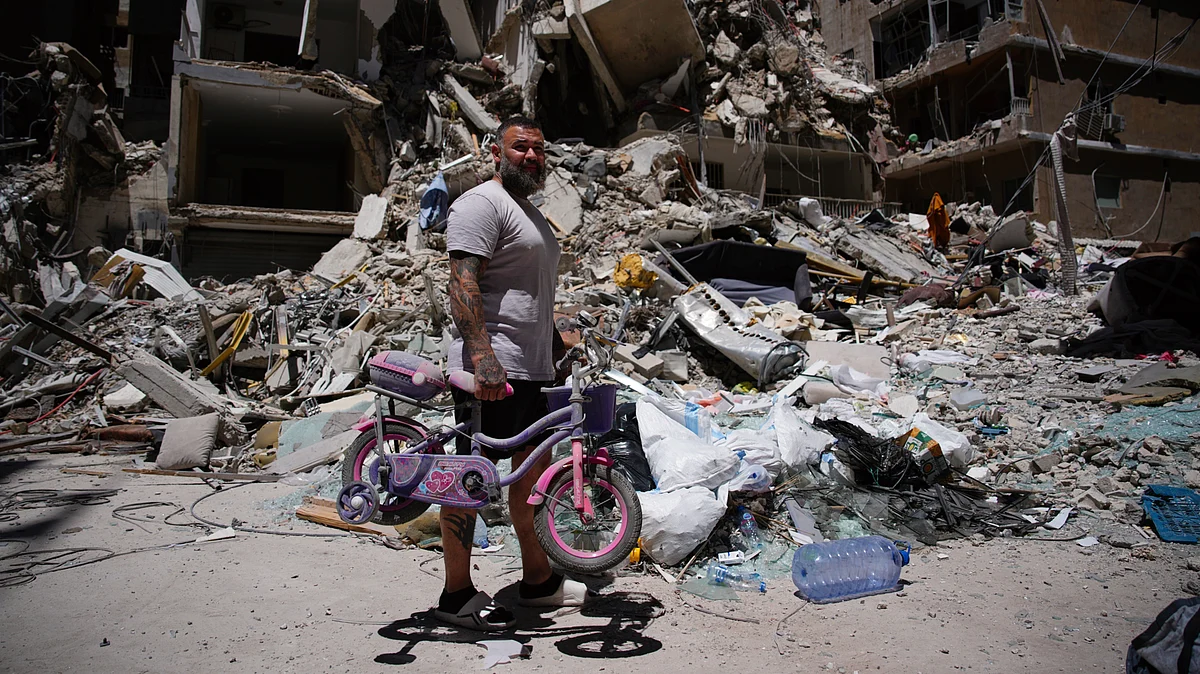
While Israel confirmed killing 18 civilians in southern Lebanon since Thursday and accused Hezbollah of ceasefire violations, it admitted that four of its own soldiers were also killed. Islamic resistance Hezbollah claimed to have destroyed four Israeli tanks, killing four and injuring 18 more Israeli soldiers and claimed that it had merely retaliated to Israeli attacks and infiltration.
On Friday, Israeli national security minister Ben-Gvir defiantly stated “for every tear of an Israeli mother, a thousand Lebanese mothers must weep. All of Lebanon must burn”. Israeli Prime Minister Benjamin Netanyahu also doubled down on continuing with the occupation of south Lebanon. In a statement on Friday, he stated, “My directive is clear: Israel will not tolerate attacks on our soldiers or our territory… Israel will remain in the security zone in southern Lebanon for as long as necessary to protect the northern communities."
While confirming that Iran had stopped its delegation from travelling to Geneva until Israel stops the war in Lebanon, a condition laid out in the first clause of the MoU, it held out a grim warning to Israel. “In the event of bad faith, breach of contract, and excessive demands by the opposing side, we have no hesitation in delivering a crushing response to the enemy. They were once slapped during the war; if they wish to tread that path again, they will receive an even harder slap,” posted lead negotiator M.B. Ghalibaf on X.
In a positive development, however, Iran announced that in view of the agreement signed electronically, ships passing through the Strait of Hormuz would not have to pay any fee for the next 60 days. As Iran begins taking out naval mines from the main shipping channel, there is a scramble for the stranded ships to get out of the Persian Gulf.
Nearly 600 vessels have been anchored in the Persian Gulf since February, creating a massive shipping backlog that industry analysts say may not fully clear before the end of the year. To bypass the heavily mined central channel, ships are forced to navigate the narrower, alternative southern route hugging Oman’s coastline.
While the tanker owner trade body Intertanko confirmed that several vessels began exiting the strategic chokepoint on Thursday following the US-Iran ceasefire memorandum, maritime experts warn that a return to normal commercial traffic is unlikely in the near future. Iran also warned that for security reasons the ships should get in touch with Iranian authorities and provide required information at least 48 hours before approaching the channel.
Join our official telegram channel (@nationalherald) and stay updated with the latest headlines