


Gulf in crosshairs as Iran intensifies air strikes
Reports suggest thousands of missiles and drones have been launched, many targeting UAE, making it among the hardest hit
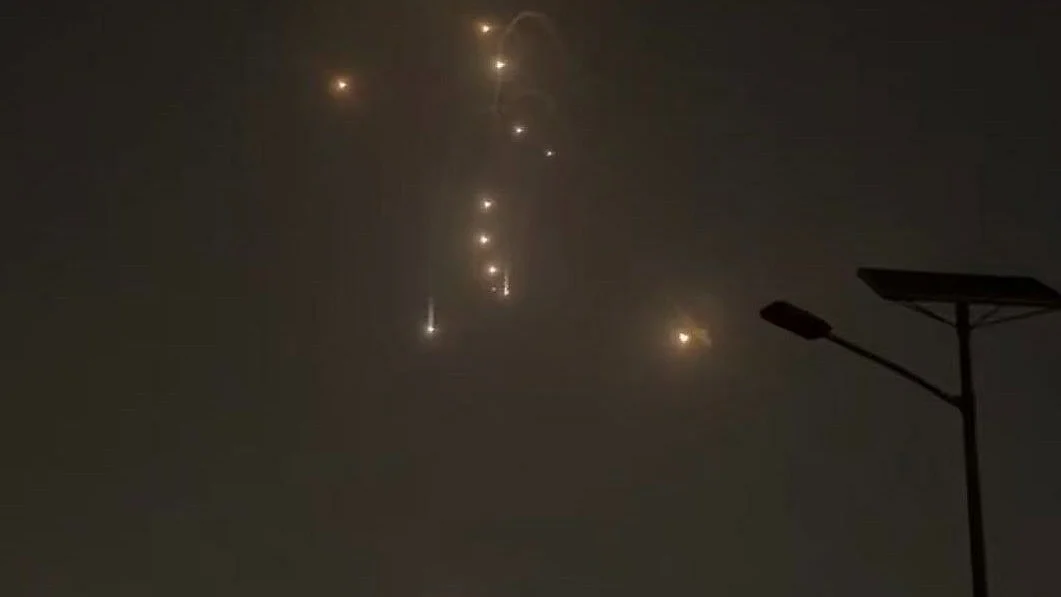


A pall of fire and fear now hangs heavy over the Gulf, as Iran’s relentless volleys of missiles and drones carve fiery arcs across the night sky — an almost ritualistic escalation in the nearly three-week-long United States–Israel war on Tehran that has engulfed the Middle East in a storm of death, destruction, and deepening economic peril.
From the shimmering skylines of the UAE to the desert expanses of Saudi Arabia, air defence systems have become sentinels of survival, lighting up the darkness with bursts of interception. In the early hours of Tuesday, Qatar’s Ministry of Defence confirmed that its forces had successfully neutralised an incoming missile, even as Kuwait’s National Guard shot down a hostile drone at dawn — mere hours after its military engaged a barrage of aerial threats, the Al Jazeera reported.
Across the region, a tense choreography of attack and defence continues unabated. Saudi Arabia reported destroying a drone over its Eastern Province, while the UAE’s skies reverberated with the thunder of countermeasures as air defences sprang into action against successive waves of Iranian projectiles. In Dubai, a city more accustomed to the hum of commerce than the echoes of conflict, a loud explosion pierced the air — another stark reminder of a war that now feels uncomfortably close.
Observers on the ground describe a nightscape transformed: streaks of light, the glow of defensive fire, and the distant rumble of explosions have become hauntingly familiar across Gulf cities. Reports suggest that thousands of missiles and drones have been launched in this widening confrontation, with a significant share directed at the UAE, making it one of the hardest-hit theatres of Iran’s retaliation, the Al Jazeera reported.
Tehran insists its strikes target military installations linked to US operations, but Gulf nations have firmly rejected this claim, condemning the attacks as unjustified aggression. Meanwhile, the human and economic toll continues to mount. Lives have been lost, and the engines of prosperity that once powered the region are faltering.
The strategic lifeline of global energy — the Strait of Hormuz — has been choked, sending shockwaves through oil markets. Within days of the conflict’s onset, production across Middle Eastern exporters plunged dramatically, underscoring the fragility of a region once synonymous with energy stability.
As the war grinds on, its consequences ripple far beyond the battlefield—disrupting travel, unsettling markets, and raising the spectre of an economic crisis not seen since the Gulf War of 1990–91. What began as a confrontation has now spiralled into a defining moment of uncertainty, with the Gulf caught in the crossfire of a conflict that shows little sign of abating.
Join our official telegram channel (@nationalherald) and stay updated with the latest headlines