


Iran confirms death of top security official Ali Larijani in attack
Larijani was killed early on Tuesday along with his son and senior aide Alireza Bayat in a strike on Iran’s security leadership
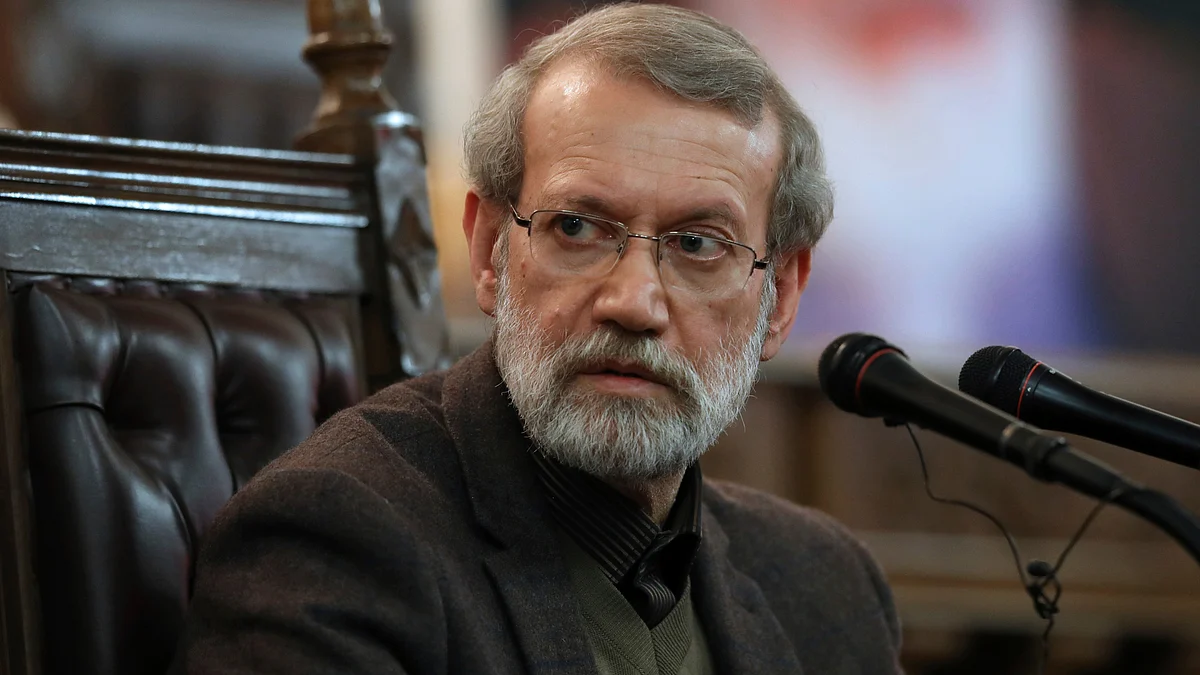


A pall of grief and defiance has descended over Tehran as Iran’s Supreme National Security Council confirmed the death of its secretary, Ali Larijani, in a deadly strike that has further inflamed an already volatile region.
According to Iran’s Tasnim news agency, Larijani was killed in the early hours of Tuesday alongside his son, Morteza Larijani, and senior security official Alireza Bayat, among others — an attack that has struck at the very heart of Iran’s strategic establishment.
In a solemn statement, the council paid tribute to Larijani’s decades-long service to the nation, hailing his role in shaping Iran’s development and calling for unity in the face of what it described as mounting external threats.
The confirmation came shortly after Israeli Prime Minister Benjamin Netanyahu declared that Israel had eliminated Larijani in its ongoing campaign against Iranian targets — an assertion that underscores the widening scope and intensity of the conflict.
In a parallel blow, Iran’s Islamic Revolutionary Guard Corps (IRGC) announced the death of Gholamreza Soleimani, head of the Basij volunteer force, in what it described as a joint US-Israeli strike — further eroding the upper ranks of Iran’s security apparatus.
These high-profile losses unfold against the backdrop of escalating hostilities triggered by coordinated US-Israeli strikes on Iran since February 28, a campaign that has drawn swift retaliation from Tehran and its regional allies, targeting American and Israeli interests across West Asia.
Even as missiles and rhetoric intensify, diplomatic channels appear frozen. Iran’s Foreign Minister Seyed Abbas Araghchi has firmly denied any fresh engagement with US envoy Steve Witkoff, while reports suggest that Mojtaba Khamenei has rebuffed proposals aimed at de-escalation or ceasefire negotiations with Washington.
Amid this storm, Iran has signaled its resolve on the battlefield. The IRGC unveiled and deployed the “Haj Qasem” ballistic missile — named after the slain commander Qassem Soleimani — describing it as a precision-guided weapon, a symbol of both remembrance and retaliation.
As the region teeters on the edge of a wider conflagration, the deaths of key figures and the relentless exchange of fire paint a stark picture: a conflict deepening not only in scale, but in consequence, with each strike echoing far beyond the battlefield.
With IANS inputs
Join our official telegram channel (@nationalherald) and stay updated with the latest headlines