


Gulf tensions rise as Iran warns US, Bahrain intercepts attacks
Yemen's government seeks support against Houthis as its forces withdraw from Bab al-Mandeb
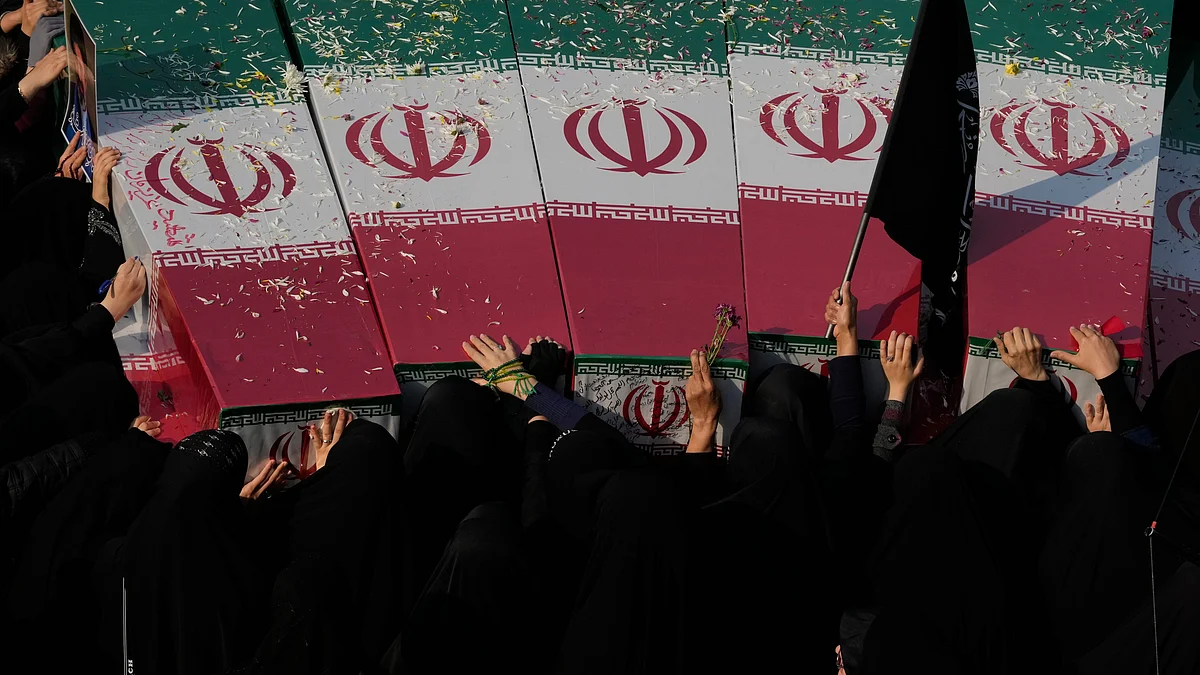


Bahrain intercepts Iranian attacks as Tehran warns the US against further escalation
Yemen's government seeks support against Houthis as its forces withdraw from Bab al-Mandeb
Iran reports two tankers catching fire after hitting naval mines in the Strait of Hormuz
Tensions across the Gulf region intensified on Sunday, 15 November, as Bahrain reported intercepting Iranian aerial attacks, Tehran issued fresh warnings to Washington, and explosions and fires were reported aboard oil tankers in the strategically important Strait of Hormuz, the Al Jazeera reported.
The developments come amid continuing military confrontations involving Iran, the United States and their regional allies, raising fresh concerns over maritime security and the risk of a wider conflict across the West Asia.
Bahrain's military said its air defence systems intercepted and destroyed several Iranian aerial attacks before they could reach their targets. The kingdom condemned what it described as Tehran's "systematic hostile approach" and accused Iran of continuing its aggression against Bahrain.
The announcement followed nationwide security alerts issued by Bahrain's interior ministry, urging residents to remain calm and move to the nearest safe locations.
Iran's Islamic Revolutionary Guard Corps (IRGC), meanwhile, claimed it had launched six drones targeting a US air-defence radar facility at the Al-Rifaa helicopter base in Bahrain. The US military had not immediately confirmed the latest claim.
Iranian Parliament speaker Mohammad Bagher Ghalibaf warned that Tehran would not accept a prolonged situation of "neither war nor peace" with Washington.
He said Iran remained open to negotiations but warned that any further US military action would invite a response from Iranian forces.
Ghalibaf also threatened to expand the geographical scope of the conflict if Washington "makes a mistake", signalling Tehran's readiness to widen its response to further military escalation.
The conflict has also intensified in Yemen, where the internationally recognised government has called on the international community to support efforts to push back the Iran-aligned Houthi rebels and restore control over strategic territory around the Bab al-Mandeb Strait.
In the latest development, however, Yemeni forces aligned with the Saudi-backed government announced on Sunday that they were withdrawing from Dhubab Airport and the Bab al-Mandeb area, redeploying towards Aden.
The withdrawal leaves the Houthis in control of territory overlooking the strategic shipping corridor, increasing their influence over one of the world's most important maritime trade routes. The development comes after weeks of fighting and a government campaign to recapture the coastal areas.
Meanwhile, Iran's Revolutionary Guards Navy said two oil tankers caught fire after striking naval mines while attempting to navigate an unauthorised route through the Strait of Hormuz.
According to Iranian state media, the vessels had switched off their navigation and positioning systems before attempting to cross the restricted route. The identities and nationalities of the tankers were not disclosed.
The reports could not be independently verified. Iranian forces have reported several similar ship fires and explosions in the waterway in recent weeks, adding to concerns over the safety of commercial shipping.
The latest developments highlight growing security concerns across two critical maritime chokepoints – the Strait of Hormuz and the Bab al-Mandeb Strait – both vital to international energy supplies and global trade.
Saudi Arabia has also reported intercepting Houthi-launched ballistic missiles and drones targeting its territory, adding another dimension to the escalating regional confrontation.
With diplomatic efforts between Washington and Tehran yet to produce a breakthrough, continued military exchanges and growing threats to commercial shipping are keeping the wider Gulf region on edge.
Join our official telegram channel (@nationalherald) and stay updated with the latest headlines