


Iran stands firm on nuclear stockpile as Trump seeks ‘total victory’
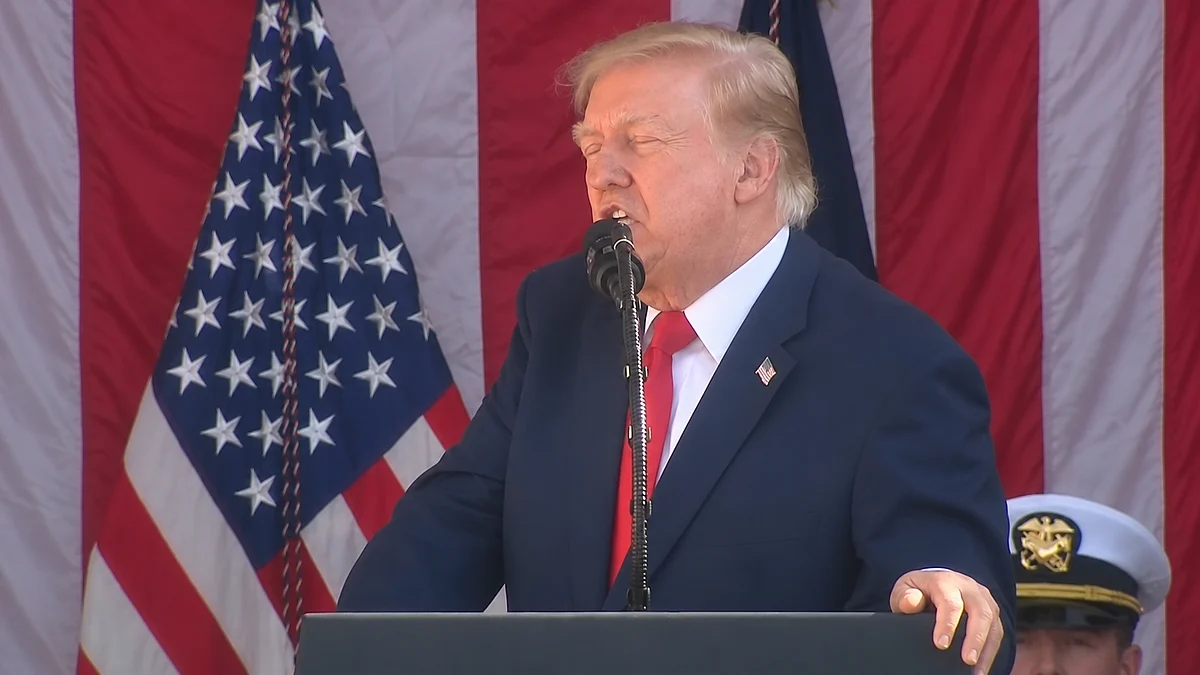
Speaking at Arlington, Trump claims Iran faces decades of rebuilding but offers no supporting assessment


Iran refuses to send enriched uranium abroad and insists its conditions must be met before reopening the Strait of Hormuz and resuming talks
Trump predicts an early end to the conflict, but Tehran threatens US bases beyond the Middle East as Washington tightens economic pressure
Unresolved disputes over nuclear material, shipping and regional security underline the gap between battlefield gains and a diplomatic settlement
Iran has rejected transferring its enriched uranium abroad and insisted that its conditions for reopening the Strait of Hormuz must be met, challenging US President Donald Trump’s assertion that American forces have already won the war and that the conflict will end soon.
Tehran’s position, accompanied by threats against US military facilities beyond the West Asia, underscored the distance between Washington’s claims of battlefield success and the concessions it has secured from Iran.
Iranian Parliament Speaker Mohammad Bagher Ghalibaf said the country intended to end its prolonged state of “no war, no peace” through military deterrence, potentially without negotiations.
Speaking to Al Jazeera, Ghalibaf said Washington had yet to formally answer Tehran’s seven conditions for reopening the strait and restarting talks. Those conditions, he insisted, must be implemented in full before either could proceed.
His remarks followed President Masoud Pezeshkian’s statement that Supreme Leader Mojtaba Khamenei had ordered an end to the uncertainty surrounding the conflict. Pezeshkian said negotiations remained possible, but Iran would not submit to pressure.
Iran rules out uranium transfer
On the nuclear dispute, Mohsen Rezaei, secretary of Iran’s Supreme National Security Council, rejected a possible arrangement under which Russia would receive Iranian enriched material.
“We have informed our Russian friends that the enriched material will remain in Iran, and we will use it ourselves,” he told Al Mayadeen television.
Russia said its offer remained available, while stressing that the decision rested with Tehran.
Iran’s refusal leaves a central US objective unresolved. Trump has presented preventing Tehran from acquiring a nuclear weapon as a principal justification for the campaign, but military strikes have not produced agreement on the future of its uranium stockpile.
Speaking at a Veterans Day ceremony at Arlington National Cemetery on Wednesday, Trump nevertheless portrayed the outcome as being within Washington’s control.
“We won. It’s just a question of when we end it,” he said.
He insisted on a “total victory” and predicted that the conflict would end soon, without announcing a deadline or explaining what further conditions would have to be fulfilled.
Diplomacy faces competing demands
Pakistan continued efforts to bridge the divide. Prime Minister Shehbaz Sharif, meeting Pezeshkian on the sidelines of the COP31 climate summit in Turkey, urged restraint and sustained negotiations.
The Wall Street Journal reported that US Vice President JD Vance was considering direct talks with Rezaei, with Doha a possible venue. No date had been fixed.
However, Ghalibaf’s adviser Mehdi Mohammadi said Iran had rejected a request for direct negotiations before receiving Washington’s final response to its proposal.
The competing positions expose the limits of declaring victory through military superiority. Iran’s leadership remains in place, its nuclear material remains a subject of dispute, and passage through Hormuz continues to depend on a political and security settlement.
A broader agreement would also have to address missiles and regional armed groups. Carnegie Endowment senior fellow Karim Sadjadpour has questioned the feasibility of resolving such an extensive agenda within a short negotiating window, pointing to the years required for earlier nuclear diplomacy.
Economic pressure and military threats
Washington is also seeking tighter restrictions on Iran’s trade. The New York Times reported that US efforts to persuade Iraq, Turkey and Pakistan to curb cross-border commerce had encountered resistance from governments concerned about economic damage and unrest.
US Central Command’s Task Force Iron Gate aims to disrupt weapons movements, sanctioned goods and illicit revenue across Iran’s land borders and the Caspian Sea.
Tehran has warned that further pressure could bring military consequences. Rezaei said US bases involved in renewed attacks could be targeted even in Europe. Other Iranian officials issued similar warnings, while Mohammadi raised the possibility of pre-emptive action.
The confrontation also carries wider costs. Analysts have pointed to higher energy revenues benefiting Russia, the diversion of US military resources from Asia and strains within NATO over participation in the conflict.
Meanwhile, Hormuz remains a flashpoint. Reuters reported that Iran had attacked navigation infrastructure on Oman’s Didamar island, although the extent of damage was unclear. Iran’s navy separately said a tanker had caught fire after striking a mine east of the strait.
With nuclear concessions rejected and shipping security unsettled, Trump’s promised end to the war remains dependent on disputes that battlefield gains alone have not resolved.
With agency inputs