


Houthis claim fresh attacks on Saudi Arabia, advance along Yemen’s Red Sea coast
Iran-backed Houthis claim missile and drone strikes on Saudi targets as Yemen’s government vows to retake key positions captured by the rebels, raising fears of a renewed civil war
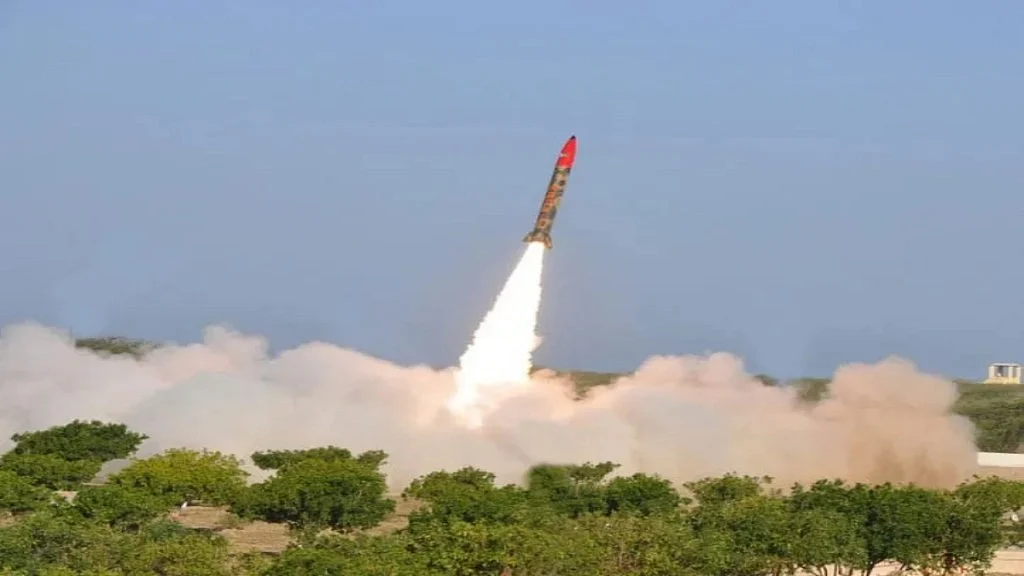


Iran-backed Houthi rebels in Yemen have claimed fresh missile and drone attacks on neighbouring Saudi Arabia, as the Saudi-backed Yemeni government vowed to regroup and fight back against the rebels’ rapid advance along the Red Sea coast.
The latest escalation follows the Houthis’ capture in recent days of a key port city and an island near the Bab el-Mandeb Strait, one of the world’s most important maritime chokepoints and an alternative shipping route to the Strait of Hormuz.
The advances have alarmed financial markets and civilians in Yemen, who fear that the latest fighting could reignite the country’s devastating civil war.
Houthi military spokesperson Brig Gen Yahya Saree said overnight that the rebels had targeted a military base in Sharurah province in Saudi Arabia’s Najran region with missiles and drones. He provided no evidence and did not specify when the attack took place.
Saudi civil defence authorities said a projectile landed in al-Tawwal governorate near the Yemeni border along the Red Sea, injuring two people and damaging a mosque and several other buildings. Saudi authorities blamed the Houthis for the attack.
The Saudi authorities also reported that sirens were activated in Sharurah province, although no casualties or damage were reported there.
There was no Saudi statement on Sunday about any new attacks against the Houthis. The rebels have been targeting Saudi oil infrastructure and shipping as part of a recently declared blockade.
Although the Houthis have said commercial shipping outside their targets is not under threat, markets remain cautious and oil prices have risen again amid concerns over the widening conflict.
Yemen government vows to fight back
A senior member of Yemen’s ruling presidential council has vowed that government forces will return to the Red Sea coast after suffering major setbacks.
Sultan al-Arada, who is also governor of Marib province, described the collapse of government forces in the port city of Mokha and elsewhere along Yemen’s western coast as “painful and regrettable”.
Speaking in a televised interview aired late Saturday, al-Arada said government forces were regrouping and would return to the fighting.
“[Forces] are currently regrouping and will return to the battle in one form or another,” he said.
A senior military official from Yemen’s internationally recognised government had earlier blamed a “lack of coordination” between the army and several allied militias for the rapid Houthi gains.
The official, who spoke anonymously because he was not authorised to speak to the media, said the breakdown had given the Houthis “a priceless opportunity”. He also expressed surprise that Saudi Arabia’s air force had not intervened to prevent the capture of Mokha, located about 80km from the Bab el-Mandeb Strait.
The latest Houthi advance represents a major setback for both Yemen’s internationally recognised government and Saudi Arabia, which has supported government forces in their conflict with the rebels for 12 years.
The escalation also threatens to undermine a ceasefire that had largely held since 2022.
The Houthis’ new positions bring them to within about 32km of the US military base in Djibouti, across the Bab el-Mandeb. Djibouti hosts several foreign military installations, including those of the US, China, France and Japan.
The fighting has also triggered a new movement of civilians across the strait. More than 2,000 Yemenis have reached Djibouti, according to the International Organisation for Migration.
Djibouti’s Economy and Finance Minister Ilyas M Dawaleh said the country’s navy, coast guard and other specialised agencies were carrying out rescue operations and providing emergency assistance to those making the perilous crossing.