


India among nations who sit out Trump’s 'Board of Peace' launch
Paris, London, Berlin, Beijing and other major capitals also chose not to attend the Board of Peace ceremony
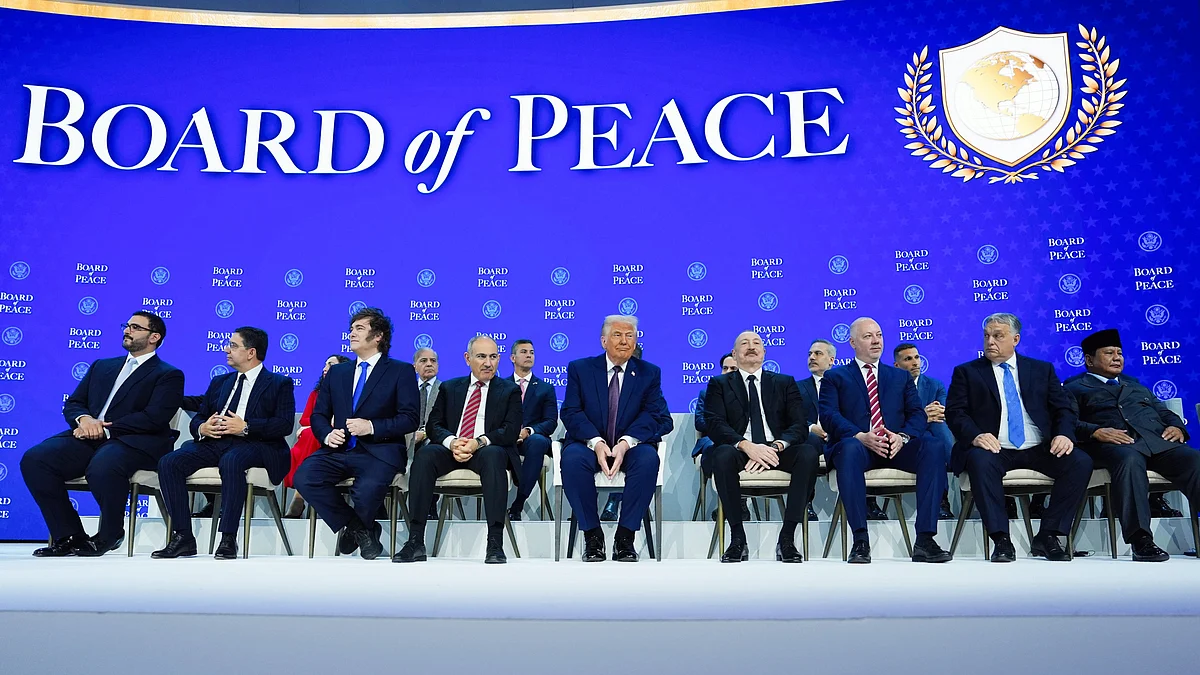


India was one of the notable absentees in Davos on Thursday, 22 January, when US President Donald Trump unveiled his self-styled 'Board of Peace' — a new global body he says will help secure lasting peace in Gaza and tackle wider conflicts. While Trump rolled out the red carpet for allied heads of state, New Delhi kept its distance, signalling a very careful — if not uncomfortable — diplomatic posture.
Prime Minister Narendra Modi was on Trump’s invitation list for the board. But insiders say India has yet to take a definitive position, citing the initiative’s sensitive geopolitical implications and its origins in the unpredictable Trump worldview.
This hesitancy comes amid broader friction between the two capitals: the Trump administration has slapped Indian exports with tariffs totalling about 50 per cent — among the highest levies imposed on any trading partner — largely tied to India’s energy choices (importing crude oil from Russia) and broader geopolitical positioning.
That punitive tariff, which began at 25 per cent and was doubled after Washington invoked national security grounds, has rattled exporters and amplified tensions in what was once a warm strategic partnership. It is a stark backdrop for Modi’s diplomatic balance act: being courted as Trump’s “friend” one day and facing steep economic penalties the next, without any clear mechanism to rein in Washington’s mercurial trade policy.
Paris, London, Berlin, Beijing and other major capitals also chose not to attend the Board of Peace ceremony — a collective shrug that underscored scepticism about Trump’s pet initiative and its potential to upend long-standing multilateral norms.
Trump’s pitch for the board — to “restore governance” and “secure enduring peace” with heads of state under his leadership — reads more like an exercise in presidential branding than a coherent diplomatic project. Many in the global policy community perceive it as a possible rival to established institutions like the United Nations, which Trump has routinely criticised.
A heterogeneous set of countries did join: Argentina, Azerbaijan, Bahrain, Egypt, Hungary, Kazakhstan, Morocco, Pakistan, the UAE, Saudi Arabia and Vietnam, among others. Several others, including Germany, Italy, Russia, Slovenia, Türkiye and Ukraine, offered only cautious responses or stayed non-committal.
India’s absence reflects both strategic caution and discomfort with the US approach. New Delhi has spent decades championing a two-state solution to the Israel–Palestine conflict, and it presumably remains wary of initiatives that might sidestep established diplomatic frameworks. At the same time, it is juggling economic pressure from the Trump tariffs with domestic concerns about industry and exporters facing sharply higher duties.
Modi’s reluctance to engage head-on with Trump on these issues — even as Trump oscillates between trade threats and friendly overtures — highlights a broader challenge: how to maintain an independent foreign policy without alienating the world’s most powerful partner. For now, India is taking its time — and the distance from Davos feels less like neutrality and more like a diplomatic sidestep around a headache it didn’t ask for.
With AP/PTI inputs
Join our official telegram channel (@nationalherald) and stay updated with the latest headlines