


India seeks US security for Middle East oil shipments
Government explores insurance-backed protection for tankers as Hormuz disruption threatens energy supplies
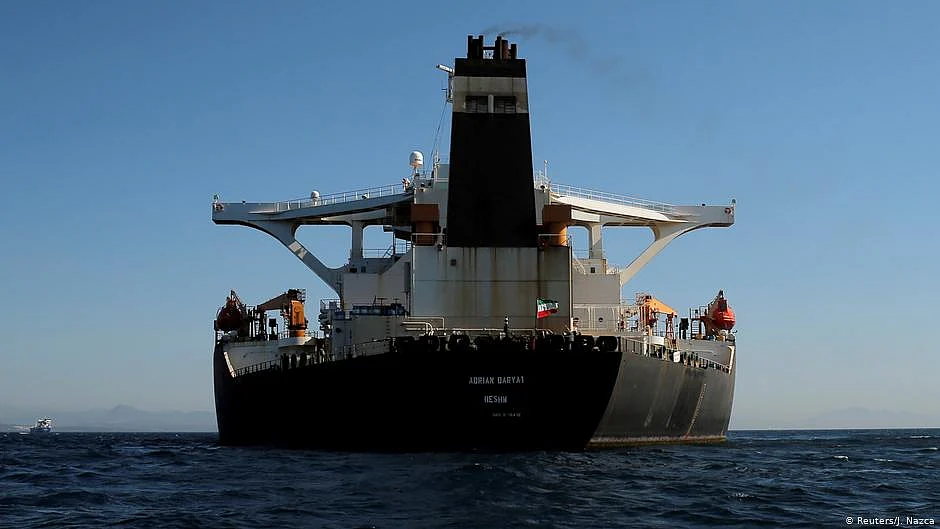


India is seeking support from the United States to secure marine cover for vessels carrying crude oil and gas from the Middle East as it prepares to safeguard energy supplies amid disruptions caused by the widening conflict in West Asia, a senior oil ministry official said.
The official said India is currently in discussions with US authorities to obtain protection for ships transiting the Strait of Hormuz, a key global shipping route that has been affected by the ongoing conflict in the region.
India presently holds crude oil reserves equivalent to 25 days of consumption, including stocks in storage tanks, pipelines and cargoes already in transit. The country also maintains a similar level of reserves of finished fuels such as petrol and diesel.
The crisis in West Asia has disrupted tanker movement through the Strait of Hormuz, a narrow sea lane that carries roughly one-fifth of the world’s oil supply and significant volumes of liquefied natural gas (LNG).
Hormuz disruption raises energy concerns
India imports about 88 per cent of its crude oil and nearly half of its LNG requirements.
Approximately 40–50 per cent of India’s crude oil imports and 50–60 per cent of LNG shipments normally pass through the Strait of Hormuz.
The corridor is about 21 nautical miles wide at its narrowest point, with two shipping lanes that are only two miles wide each, separated by a two-mile buffer zone.
Despite the disruption, the official said India currently remains in a stable position.
“We are in a comfortable position right now,” the official said, adding that oil supplies not routed through the strait continue to reach India.
New Delhi is also sourcing additional supplies from West Africa, Latin America and the United States to compensate for any potential supply disruptions.
Talks with US and global suppliers
The official said the oil ministry is holding discussions with global producers and traders to secure supplies of crude oil, liquefied petroleum gas (LPG) and LNG.
India has also approached the United States to secure protection for ships transporting energy cargo through the Strait of Hormuz.
“We are in touch with US authorities for getting a cover from the International Development Finance Corporation for vessels to transit the Strait of Hormuz,” the official said.
US President Donald Trump has directed the International Development Finance Corporation (IDFC) to provide political risk insurance and financial guarantees to support maritime trade in the region.
However, the official said a financial corpus worth hundreds of millions of dollars would need to be created before the institution could offer such coverage.
The cost of the insurance premium would be borne by companies contracting the cargo.
India is also exploring crude purchases from multiple sources, including Russia, to replenish its oil stockpiles.
The government is in discussions with energy producers such as Sonatrach and the Abu Dhabi National Oil Company (ADNOC), as well as global trading firms including TotalEnergies, Vitol, and Trafigura, to secure additional supplies of oil and gas.
Imports of crude oil and LPG from the United States have also increased, the official said.
LNG supplies affected
While India’s crude oil reserves remain comfortable, the disruption of shipping through the Strait of Hormuz has affected LNG supplies.
The supply disruption has already forced a reduction in gas supplies to certain industrial users.
India consumes roughly 195 million standard cubic metres per day (mmscmd) of natural gas, with about half of that demand met through imports.
The disruption in shipping and a force majeure declared by QatarEnergy, India’s largest LNG supplier, has cut the availability of around 60 mmscmd of gas, the official said.
To manage the shortfall, the government is considering reprioritising gas allocation to ensure that essential sectors continue to receive fuel supplies.
Oil Minister Hardeep Singh Puri has discussed the evolving global oil market situation with the IEA (International Energy Agency) and the OPEC (Organization of the Petroleum Exporting Countries), the official added.
Join our official telegram channel (@nationalherald) and stay updated with the latest headlines