


Iran braces for conflict as US military armada moves closer
IRGC has repeatedly shown it can withstand attacks and continue launching missiles at Israeli and US targets across the region
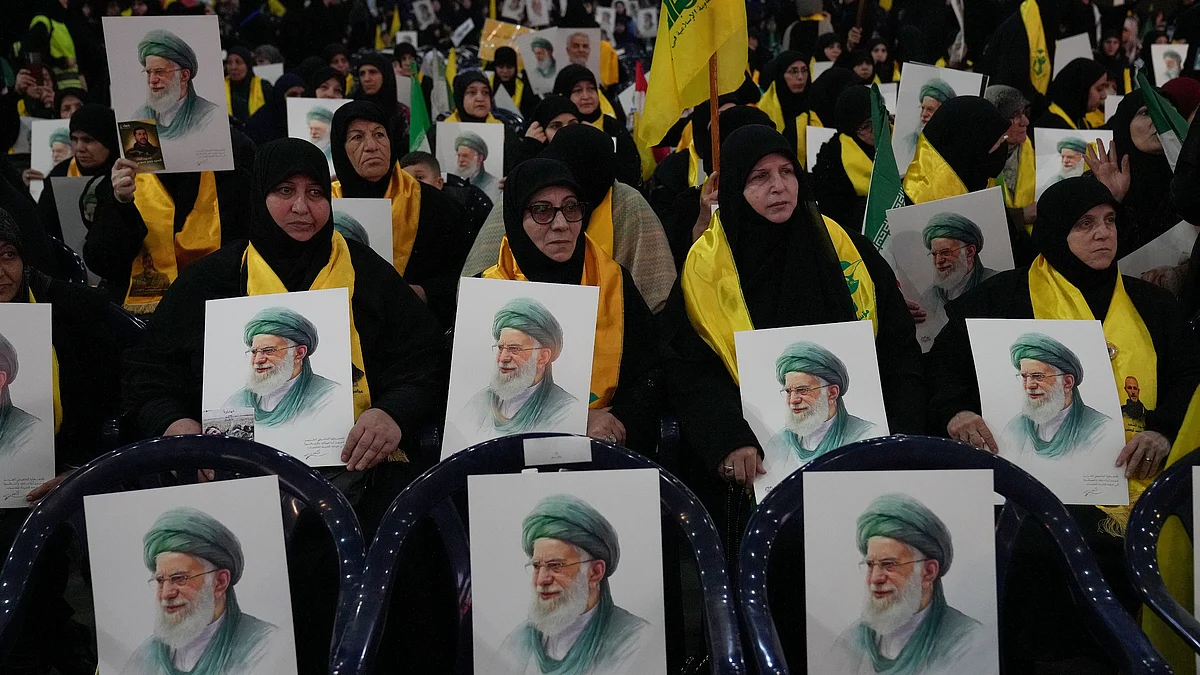


Iran is striking a defiant posture as the United States continues to hint at military action, even as regional diplomacy intensifies in a last-ditch effort to avert yet another devastating conflict in the Middle East, the Al Jazeera reported.
Tehran’s message has been unmistakable: it is preparing not for talks, but for war.
Iranian authorities have signalled that the country is on high alert, ready to defend itself as a formidable US military presence — described by President Donald Trump as an “armada” — edges closer to Iranian waters, the Al Jazeera reported. At the heart of that force is the USS Abraham Lincoln aircraft carrier, now positioned ominously near the region, a floating symbol of Washington’s military pressure.
Against this backdrop of mounting tension, Iran’s foreign minister Abbas Araghchi is set to travel to Turkiye on Friday for high-level talks, according to foreign ministry spokesperson Esmaeil Baghaei. Tehran, Baghaei said, is seeking to “constantly strengthen ties with neighbours based on shared interests,” as regional leaders scramble to de-escalate a crisis that many fear could spiral beyond control.
The diplomatic flurry reflects growing alarm across the region, with capitals working behind the scenes to persuade Washington to step back from the brink and urging both sides to find a narrow path toward compromise. Yet even as envoys shuttle between capitals, the drums of confrontation continue to beat louder.
Inside Iran, senior political, military and judicial officials have adopted a tone of unwavering resistance. “Tehran’s priority is currently not to negotiate with the US, but to have 200 per cent readiness to defend our country,” Kazem Gharibabadi, a senior member of Iran’s negotiating team, said this week, according to state media.
Gharibabadi acknowledged that messages have been exchanged with Washington through intermediaries, but stressed that Iran’s posture would remain unchanged — even if talks were theoretically possible. He pointed to last June, when Iran was struck first by Israel and then by the United States just as negotiations were about to begin, underscoring what Iranian officials view as the futility of diplomacy without deterrence.
Iran has spent recent days highlighting its military capabilities, building on months of exercises conducted since June’s 12-day war — a conflict that claimed the lives of several senior Iranian commanders and saw strikes on nuclear facilities.
On Thursday, the Iranian army announced that 1,000 new “strategic” drones had been inducted into its arsenal. The fleet includes one-way suicide drones, as well as combat, reconnaissance and cyberwarfare-capable aircraft designed to strike fixed and mobile targets across land, air and sea.
“Proportionate to the threats facing us, the agenda of the army includes maintaining and improving strategic advantages for fast combat and a decisive response to any aggression,” army commander Amir Hamati told Al Jazeera.
The Islamic Revolutionary Guard Corps (IRGC) has also repeatedly showcased its ability to absorb attacks and continue launching ballistic and cruise missiles at Israel and US assets across the region, projecting endurance as much as firepower.
Across Iran, citizens are closely following President Trump’s often contradictory rhetoric — alternating between threats of force and expressions of willingness to negotiate. While Washington claims that the Islamic Republic is at its weakest point since its founding nearly half a century ago — after protests this month rocked the country and left thousands dead — Tehran’s most ardent supporters remain resolute.
“America can’t do a damn thing,” a young woman told Al Jazeera in Tehran, echoing a refrain frequently used by supreme leader Ayatollah Ali Khamenei. “Even if, God forbid, they launch some kind of missile towards us, the Islamic Republic will respond decisively and level their bases to the ground.”
Yet beneath the rhetoric of resistance, fear simmers.
Many Iranians worry about what a second major conflict within a year would mean for ordinary people already battered by war, sanctions and internal unrest. “Another war would be totally terrible for both countries,” a young student in Tehran told Al Jazeera. “It’s the people of our country who will die in it.”
“If war breaks out, we will face destruction and devastation,” a man in his 50s told Al Jazeera. “I hope this doesn’t happen.” All those interviewed asked to remain anonymous for security reasons.
The government has begun preparing for the possibility of conflict. President Masoud Pezeshkian has delegated expanded powers to governors in Iran’s border provinces, allowing them to import essential goods—particularly food—in anticipation of wartime shortages.
Attention has also turned to the glaring lack of civilian shelters. Tehran’s hardline mayor Alireza Zakani announced that the city would prioritise the construction of underground parking shelters. But he conceded that the project would take years to complete, leaving millions exposed should air raids begin in the near term.
Another war would almost certainly bring a return of widespread communications blackouts. During the June conflict — and again amid the latest wave of protests — the government cut off internet and mobile services nationwide. On 8 January, at the height of unrest, Iran plunged into one of the most severe shutdowns in its history, disconnecting more than 90 million people for nearly three weeks.
Although authorities have since restored limited internet access, communication remains heavily disrupted for much of the population. Those who have managed to reconnect are now confronting images of recent bloodshed — videos and photographs of protesters killed in the streets — fuelling anxiety about what may lie ahead.
“I’m afraid that soon we’ll again wake up at night to the sound of explosions,” a young woman in Tehran told Al Jazeera. “But even without a war, death already feels like it’s all around us.”
As diplomacy falters and military forces gather, Iran stands at a crossroads — caught between defiant preparation and the quiet dread of another war whose cost, many fear, will once again be borne by its people.
Join our official telegram channel (@nationalherald) and stay updated with the latest headlines