


Iran crosses Trump’s ‘Red Line’, strikes Gulf US bases
In 48 hours, US strikes hit Iranian infrastructure, while Tehran withdrew from the Pakistan-brokered MoU and targeted US bases in the Gulf
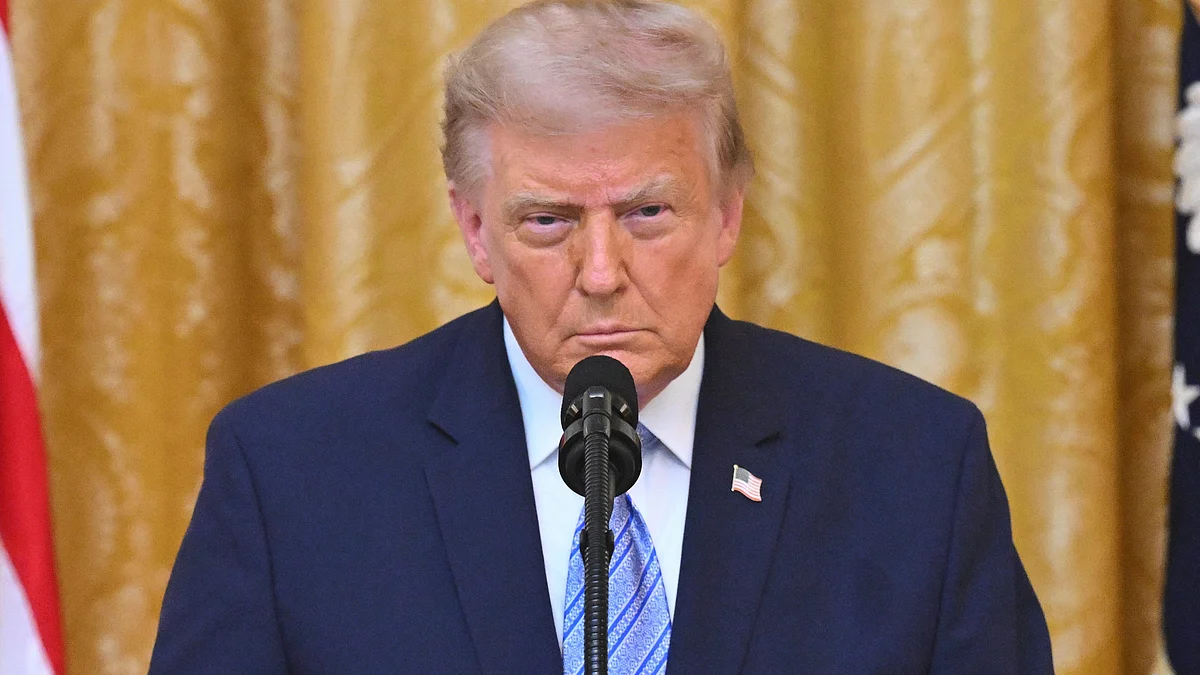


Even as the United States confirmed that Iranian strikes killed two soldiers in Jordan, Iranian commentators claimed the toll could be much higher and warned of a fresh escalation in the coming days.
Media reports from the region said US fighter jets struck Qeshm Island at around 6:10 am local time on Sunday, 19 July 2026. The Associated Press reported that US strikes hit multiple locations across southern Iran overnight, including areas near Sirik on the Strait of Hormuz around 1:30 am local time, Hajiabad, Bandar Abbas, Qeshm Island and Shadegan in Khuzestan province. Iran also said US strikes destroyed a desalination plant and pipeline in Jask county, southern Iran, disrupting drinking water supplies to 20 villages with a combined population of more than 10,000 people.
Meanwhile, in a written statement, Iran’s supreme leader Mojtaba Khamenei said US President Donald Trump’s signature was “worthless and invalid”, accusing Washington of repeatedly violating agreements with Tehran. He said the US breaches of the memorandum of understanding — referring to the United States as the “Great Satan” — showed that the US president’s commitments could not be trusted.
Besides the CENTCOM naval headquarters in Bahrain and the US air base in Jordan, Iran also targeted one of Kuwait’s key oil facilities, according to Kuwait Petroleum Corporation. Ebrahim Azizi, chairman of Iran’s National Security and Foreign Policy Committee, issued a direct warning to US forces on social media, urging them to leave the region. “If US troops truly understood what our wise Supreme Leader meant by ‘unforgettable lessons,’ they would not waste a single second before fleeing,” Azizi was quoted as saying.
In another sign of escalation, Iran’s judiciary is reported to have issued a formal indictment against the US president and the Israeli prime minister as part of a legal effort to prosecute alleged aggressors under international law. A judiciary spokesman said all damages from recent conflicts had been documented, adding that international law requires aggressors to be prosecuted and pay compensation.
Several commentators accused the US president of risking American lives and the global economy in pursuit of what they described as ‘victory’. They alleged that, within days of signing the MoU with Iran, Washington began ‘whittling down’ Tehran’s control over the Strait of Hormuz, encouraging tankers to avoid coordination with Iran and instead use the southern channel of the waterway.
They claimed that after Iran drew a red line, the US responded with a major escalation, targeting missile and drone capabilities in an effort to gain greater control over the strategic strait. The commentators also alleged that Washington brokered an agreement between Israel and the Lebanese government to disarm Hezbollah and continued to withhold frozen Iranian funds. They further claimed that the US began preparing for a potential conflict soon after signing the MoU, with military assets deployed to the region as a show of strength and readiness.
Analyst Trita Parsi said Trump appears to have concluded that Tehran’s hard-line stance was driven by the United States not hitting Iran hard enough. According to Parsi, the US president is betting that a few more weeks of conflict could weaken Iran’s ability to close the Strait of Hormuz and push Tehran towards a more accommodating negotiating position.
Analysts believe the recent US strikes on both military targets and infrastructure are aimed at degrading Iran’s ability to defend itself and respond to attacks. They also suggest the strikes could be laying the groundwork for a possible ground operation in Iran, though most analysts consider such a move unlikely due to the region’s extreme summer heat and humidity.
The bottom line: With an unconventional, unpredictable and often hard-to-forecast US president in the White House, few outcomes can be ruled out. Significantly, Joe Kent, the former director of the US Counterterrorism Center who resigned in March 2026, said in a post on X that US military bases in the Persian Gulf region had become liabilities. He suggested that a US military withdrawal from the region could remove Iran’s justification for targeting Gulf countries while leaving Tehran vulnerable to American strikes.
There are few signs of the stalemate ending soon, with hardliners on both sides appearing prepared for another cycle of conflict and destruction.
Join our official telegram channel (@nationalherald) and stay updated with the latest headlines