


Iran draws a red line in Hormuz, warns West against ‘military show’
British and French leaders say Oman is working with both countries to ensure its sovereign territorial waters remain safe for navigation
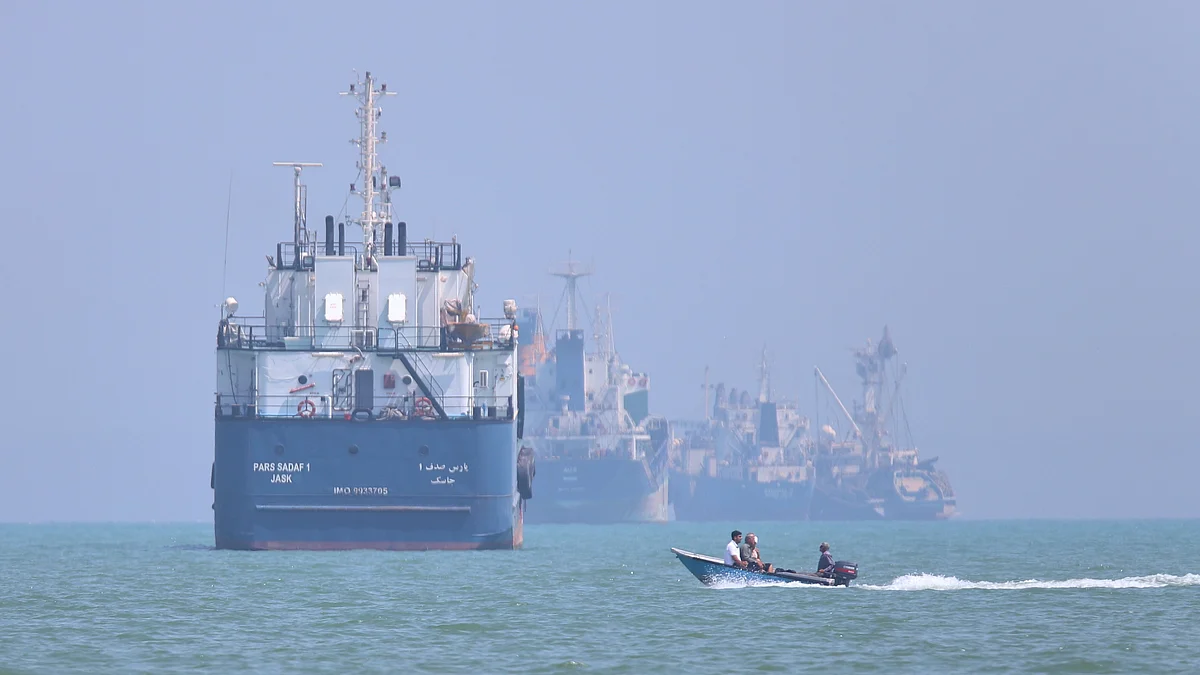


Iran has issued a sharp warning to Western powers against any military deployment in the strategically vital Strait of Hormuz, declaring that the narrow waterway is "not a theater for transregional powers' military display" and insisting that safeguarding its security rests solely with Tehran and Muscat.
Escalating its rhetoric amid growing geopolitical tensions, Iran's deputy foreign minister for legal and international affairs, Kazem Gharibabadi, said the Islamic Republic would not tolerate foreign military manoeuvres in one of the world's most critical energy corridors.
"Iran, as the responsible authority and guarantor of security in the strait, warns against any military movement in the sensitive waterway," Gharibabadi wrote on social media platform X.
He rejected a joint statement issued on Friday by British Prime Minister Keir Starmer and French President Emmanuel Macron, who described the Strait of Hormuz as a "vital artery" for the global economy and called for ensuring the uninterrupted passage of commercial shipping.
The British and French leaders said Oman had agreed to work with both countries to ensure that "its sovereign territorial waters are safe for navigation". They further stated that Britain and France stand ready to deploy the broader Multinational Military Mission to uphold freedom of navigation through the strategic chokepoint.
Tehran, however, dismissed the proposal, asserting that the security of the Strait of Hormuz is the exclusive responsibility of Iran and Oman, leaving no room for what it views as external military interference.
The diplomatic sparring unfolded against the backdrop of fresh disruptions to maritime traffic. According to Iran's semi-official Fars news agency, citing maritime tracking data, eight vessels attempting to transit the strait along Oman's coastline were turned back on Saturday.
A report by Bloomberg echoed the development, saying several ships had reached the tip of Oman's Musandam Peninsula, which overlooks the narrow chokepoint, before abruptly reversing course.
"One crude tanker, two product tankers and one bulk carrier then sailed northward to take an outbound route," Bloomberg reported, adding that the course changes came under Iranian direction.
Iran has steadily tightened its control over the Strait of Hormuz since 28 February, when it prohibited the safe passage of vessels owned by or linked to Israel and the United States following joint US-Israeli strikes on Iranian territory.
The Strait of Hormuz remains one of the world's most strategically significant maritime routes, carrying a substantial share of global oil and liquefied natural gas exports. Any disruption to navigation through the narrow passage has the potential to reverberate across international energy markets, making the latest standoff a fresh flashpoint in an already volatile region.
With IANS inputs
Join our official telegram channel (@nationalherald) and stay updated with the latest headlines