


Iran on high alert as week-long funeral ceremonies commence in Tehran
Indian delegation returns after paying tributes to Iranian Supreme Leader, killed in February in US-Israel airstrikes
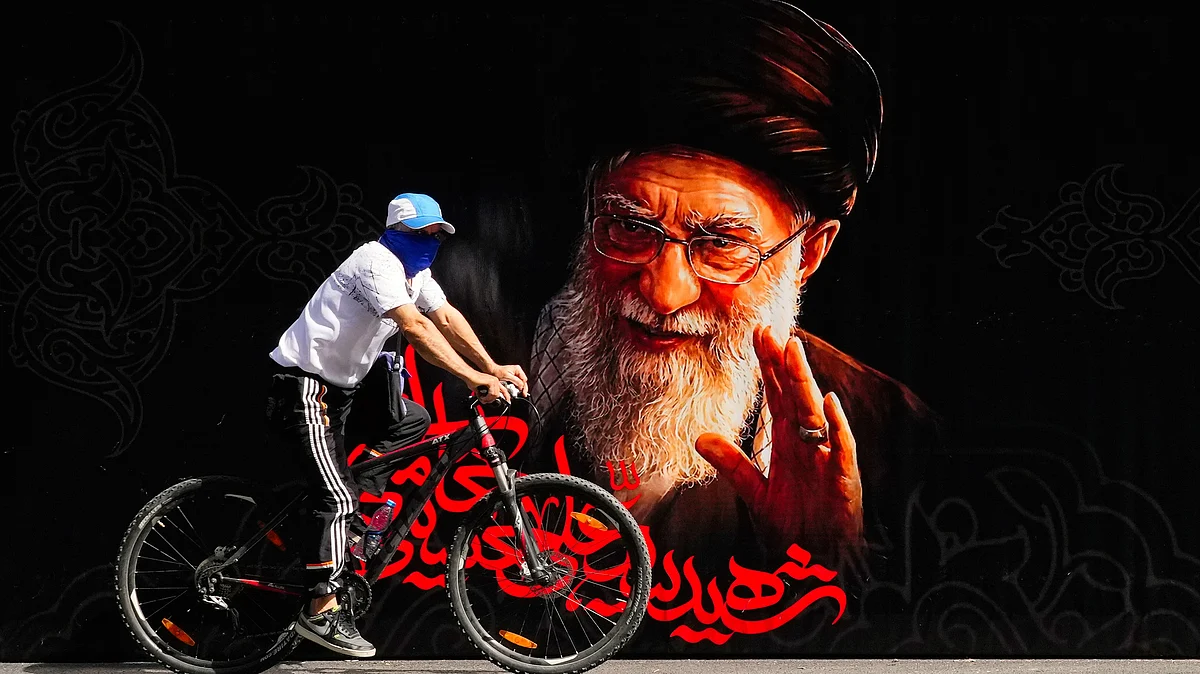


Mojtaba Khamenei, Iran's third Supreme Leader and son of the slain Supreme Leader Ayatollah Ali Khamenei, was conspicuous by his absence in public as Iran commenced week-long funeral ceremonies for the late leader on Friday, 3 July. He was reportedly advised to stay away because of security concerns.
Iranian armed forces have been placed on high alert following reports in the New York Times that Israel planned to assassinate Iranian negotiators flying back from Geneva. Statements by Israeli leaders, including Israel Katz, that Mojtaba Khamenei was "under a death sentence" also heightened security threats. Iran suspects another attack soon after US vice-president J.D. Vance admitted in an interview that the ceasefire with Iran was meant to be a breather for the US and its allies to stockpile oil and arms.
Iran also claimed on Friday that the United States had pressured countries not to attend the funeral ceremonies in Tehran. Quoting Iranian officials, Tasnim news agency claimed that US Secretary of State Marco Rubio issued a classified directive on 26 June instructing US embassies worldwide to tell governments that participation would be considered an "unfriendly" act. The news agency added that at least 13 countries declined to attend due to US pressure, including three eastern European countries, five African countries, two Gulf Arab nations and two major east Asian countries.
The claim comes even as representatives of more than 100 countries attended prayers at the Grand Mosalla prayer hall in Tehran. The casket carrying Khamenei's body lay in state as the week-long ceremonies began on Friday. Russia sent former president Dmitry Medvedev as President Vladimir Putin's personal envoy, China sent senior parliamentary leaders, while Pakistan's prime minister attended with all-powerful Army chief Field Marshal Asim Munir.
Saudi Arabia's deputy foreign minister made a surprise appearance. Representatives from Tajikistan, Armenia, Georgia, Azerbaijan, Iraq, Afghanistan's Taliban deputy prime minister and Oman were also present. Conspicuous by their absence were European countries, which, Iran said, were not invited because they were on the "wrong side of history".
From Tehran, Khamenei's body will be taken to the holy city of Qom, a centre of religious learning, and then to Karbala and Najaf in Iraq before returning to Mashhad, his hometown, where he will be buried on Thursday, 9 July, at a shrine devoted to Imam Reza, one of the most important figures in Shia Islam.
Tehran's streets were tightly controlled, with military and police vehicles lining the major roads and police personnel and members of the black-shirted volunteer Basij paramilitary force patrolling on motorbikes. Iran warned the United States and Israel against carrying out any attacks during the funeral.
The coffins of Khamenei and other family members killed in airstrikes on 28 February were laid in the prayer hall on a dais before a high, intricately tiled arched recess, flanked by national and black mourning flags. A black turban, worn by clerics claiming descent from Islam's Prophet Mohammed, rested on Khamenei's coffin atop a folded chequered scarf, a symbol in Iran of militant revolutionary ideals and solidarity with Palestinians. Killed alongside Khamenei, and displayed in coffins next to his, were his daughter, son-in-law and baby granddaughter, as well as the wife of his son Mojtaba.
The burials, which are generally conducted within a day of death, were postponed because of the risks of holding a large funeral during the war. Hotels are offering a 50 per cent discount, while schools, mosques and sports halls have been prepared to house mourners, and bus and rail networks are being diverted to serve the main events. After what authorities are billing as a massive procession through central Tehran on Monday, the remains will be taken to Qom on Tuesday and Najaf and Karbala on Wednesday.
"We do not consider the funeral procession, farewell and burial of the martyred leader of the revolution to be the end of the road," Imam Attarzadeh, spokesman for the funeral planning committee, said. "Rather, we view it as the beginning of a new era in the Islamic Republic."
Join our official telegram channel (@nationalherald) and stay updated with the latest headlines