


Defiance to the end: The life and legacy of Ayatollah Ali Khamenei
Iran’s Supreme Leader dies amid US–Israel strikes, leaving behind a contested but consequential legacy
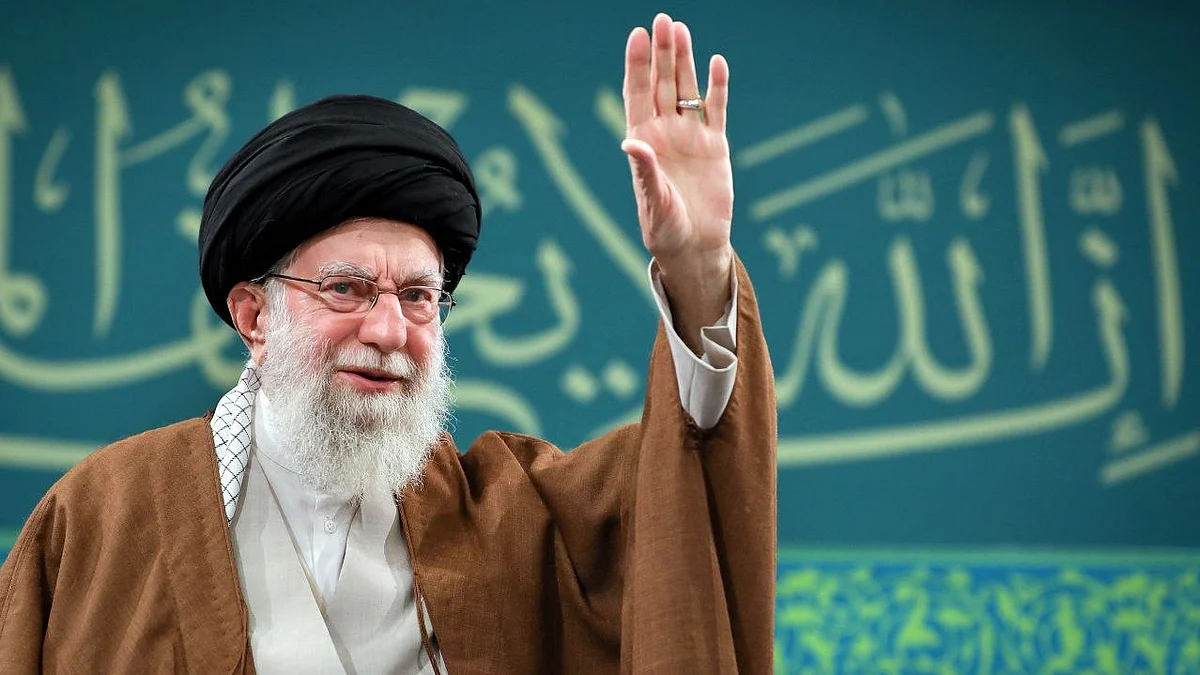


Girte hain shahsawar hi maidan-e-jung mein,
Woh tifl kya gire jo ghutno ke bal chale
(Only the seasoned horseman falls in the battlefield/ How can a child fall who merely crawls on his knees?)
The now confirmed killing of Iran’s Supreme Leader Ayatollah Ali Khamenei in US–Israeli airstrikes on Sunday, 28 February marks the dramatic end of one of the most consequential political careers in the modern Middle-East (West Asia to us). For more than three decades, Khamenei stood at the apex of Iran’s political and ideological system, guiding the Islamic Republic through wars, sanctions, internal dissent, and intensifying confrontation with the West.
According to multiple international media reports and Iranian state sources, Khamenei died during the latest round of coordinated military strikes carried out by Israel with support from the United States, amid a rapidly escalating regional conflict.
In what would become his final public message, delivered shortly before the attack, Khamenei rejected a demand for “unconditional surrender” issued by US President Donald Trump. His words, broadcast on Iranian state television, carried the tone of a leader accustomed to confrontation.
“Intelligent people who know Iran and its history will never speak to this nation in threatening language,” he declared. “The Iranian nation will not surrender.” He warned that any direct American intervention would bring “irreparable damage”. Within hours, the strikes ended his life, his death closing an era in Iranian politics.
Khamenei’s story began far from the corridors of power. He was born in 1939 in Mashhad, one of Iran’s most important religious centres. His father Sayyid Jawad Khamenei was a modest cleric who raised his children in a deeply religious household steeped in Shia scholarship.
Yet the family’s history stretched beyond Iran’s borders. The Khamenei lineage traces back to Kintoor in Barabanki, a historic seat of Shia learning in northern India. Their ancestor, Syed Ahmad Musavi Hindi, migrated to Najaf in the 19th century to visit the shrine of Imam Ali and eventually settled in Iran. The epithet 'Hindi', reflecting Indian origin, remained attached to the family’s genealogical records.
Khamenei grew up immersed in the study of theology, Islamic jurisprudence, and revolutionary ideas that were circulating among clerical circles in mid-20th-century Iran.
The turning point in his life came during the upheavals of the late 1970s. A close disciple of Ruhollah Khomeini, he became actively involved in the movement that overthrew the Shah and established the Islamic Republic in 1979.
The revolution transformed Iran’s political landscape, placing clerics at the helm of a new ideological state. Khamenei quickly rose within the revolutionary hierarchy, serving in various roles, including as President from 1981-89 during the tumultuous years of the Iran–Iraq War.
Following Khomeini’s death in 1989, the clerical establishment elevated Khamenei to the position of Supreme Leader — the highest authority in the Islamic Republic. The office granted him sweeping powers over Iran’s military, judiciary, and key political institutions.
At the time, few observers expected him to wield such enduring influence. Yet Khamenei would remain in power for nearly four decades, becoming the longest-serving leader in the Islamic Republic’s history.
Khamenei’s tenure was marked by persistent tensions between Iran and the West. Under his leadership, Iran navigated crippling economic sanctions, diplomatic isolation, and repeated accusations regarding its nuclear ambitions.
To supporters, he embodied resistance against foreign domination and defended Iran’s sovereignty against Western pressure. To critics, he presided over an authoritarian political system that restricted dissent and curtailed civil liberties.
Domestically, his rule saw periodic waves of unrest — from student protests in the late 1990s to large-scale demonstrations in the 21st century. Each time, the state’s security apparatus moved decisively to restore control.
Internationally, Khamenei framed Iran’s posture as a struggle against what he saw as Western hegemonic designs in the Middle East.
The most intense rivalry of Khamenei’s era was with Israel. For years, tensions simmered through proxy conflicts, cyber operations, and covert actions. Israeli officials frequently accused Iran of pursuing nuclear weapons, a claim Tehran denied while insisting its nuclear programme was peaceful.
In June 2025, the confrontation escalated dramatically when Israeli forces launched airstrikes targeting Iranian nuclear facilities and senior military commanders. Among the sites reportedly hit was the uranium enrichment facility at Natanz nuclear facility.
The strikes triggered a wave of anger in Iran and hardened Khamenei’s rhetoric. In speeches and statements, he framed the conflict as a struggle against aggression and regional domination.
The crisis reached its climax in February as the US joined Israel in direct military action against Iranian targets. Khamenei’s response was characteristically defiant. Despite threats from Israeli leaders and warnings from Washington, he refused to retreat from his position.
At one point, Israeli officials invoked the fate of Saddam Hussein as a cautionary example. Yet the Iranian leader remained unmoved. His final message emphasised national resolve. Even critics of his domestic policies acknowledged that his words helped rally a country facing external attack. Within hours of that broadcast, the airstrikes reportedly struck the location where he had been sheltering.
Khamenei’s legacy will remain fiercely debated. To his admirers, he was the custodian of the Islamic Revolution, a leader who defended Iran’s independence against overwhelming pressure. To detractors, he symbolised the rigid ideological framework that limited political freedoms and the rights of women within the country.
Yet few dispute his historical significance. Over nearly 40 years at the helm, Khamenei shaped Iran’s strategic posture, its ideological narrative, and its place in the global order.
His death has opened a profound moment of uncertainty for Iran. The Islamic Republic’s political system was designed with the Supreme Leader at its centre. With that position suddenly vacant amid war and international pressure, the country faces a delicate transition.
Beyond Iran, the consequences may reverberate across the Middle East. The conflict that claimed Khamenei’s life threatens to redraw regional alignments and further destabilise an already volatile geopolitical landscape.
For now, the passing of Ayatollah Ali Khamenei marks the end of a chapter that began with the revolutionary fervour of 1979 and concluded in the flames of a regional war.
Whether history ultimately remembers him as a defender of national sovereignty or an architect of ideological rigidity, his imprint on Iran — and on the politics of the Middle East — will endure for decades to come.
Hasnain Naqvi is a former member of the history faculty at St Xavier’s College, Mumbai. More of his writing may be read here
Join our official telegram channel (@nationalherald) and stay updated with the latest headlines