


Iran promises to plunge region into darkness, if Donald Trump strikes
In 48 hours, Donald Trump claimed victory, rejected talks, shifted goals, and issued fresh threats — lesson: watch actions, not words
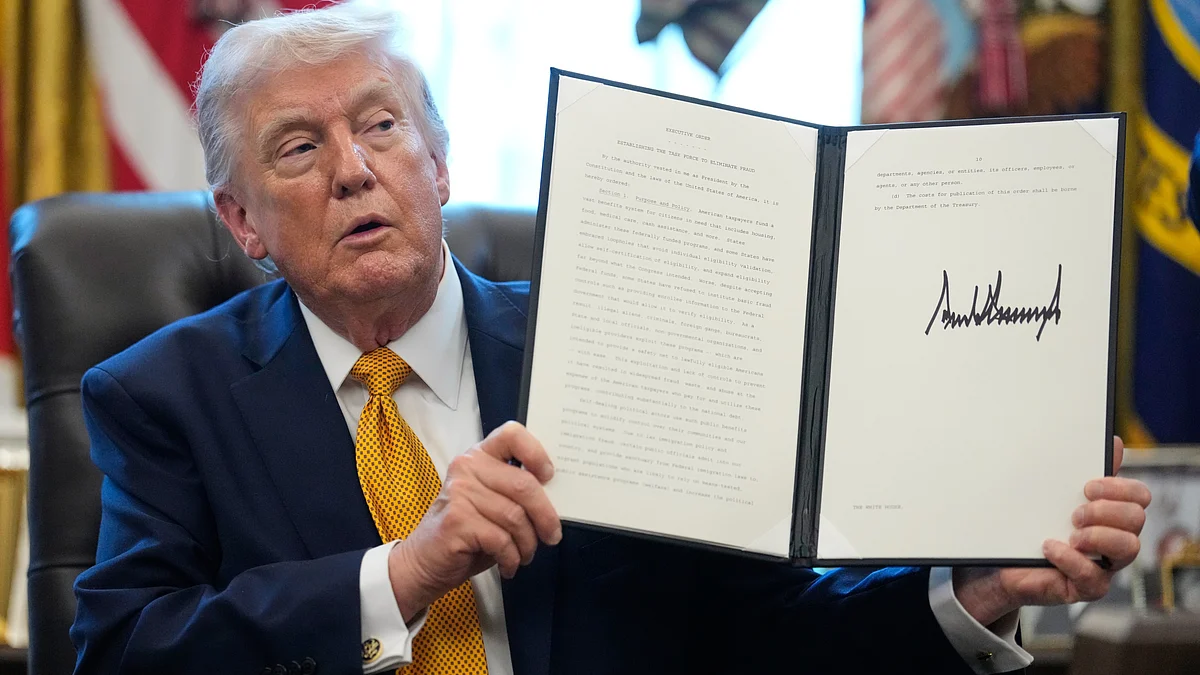


“If Iran doesn’t fully open, without threat, the Strait of Hormuz, within 48 hours from this exact point in time, the United States of America will hit and obliterate their various power plants, starting with their biggest one,” declared US President Donald Trump on Truth Social on Saturday evening (US time). How does one make sense of what the US president says and what he may actually have meant?
On Friday, he first declared, “I don’t want to do a ceasefire with Iran.” Within hours on the same day, he posted that the US is “considering winding down” military operations. On Saturday the Trump administration indicated that groundworks were being laid for peace talks through envoys Steve Witkoff and Jared Kushner. Within hours came the threat from
Trump that the US would obliterate the power plants in Iran if the 48-hour deadline is not met to open the Strait of Hormuz. In just two days the US president has sent out contradictory messages: no ceasefire... winding down the war... peace talks...followed by the 48-hour ultimatum.
Those who credit the US president with brilliant strategising ability believe the messages were all meant for different audiences and with different objectives. On the one hand the US president is trying to reassure the market that he is in command and that the war is on course; on the other hand, he is signalling to allies in the Gulf and elsewhere, and also Israel, that he is being tough with Iran. He is also messaging the domestic audience, increasingly spooked by the possibility of a Vietnam-like endless war, a national draft and inflationary pressure that the war is almost over.
Some analysts, however, cite reports that the US is rushing marines to the Persian Gulf region, that US Navy has diverted USS Boxer to the Middle East and that the 82nd Airborne Division of the US army, paratroopers, have also been deployed to the region. They all point to preparations for a ground invasion, plans to occupy the South Pars gas field on the Kharg island and open up the Strait of Hormuz by force. Other pointers that the war against Iran is not about to be abandoned are the visits of Egyptian President to Riyadh and both Saudi Arabia and the UAE expelling Iranian diplomats. Both Saudis and the Emiratis apparently want the US to continue with the attacks on Iran and are ready to join the war, if needed.
They also refer to reports in the US media, leaked by the administration, that Iran had fired two missiles at the US base in Diego Garcia, an island 4000 kilometres from Iran. While Iran has denied firing the missiles, the report is being cited to bolster the argument that Iran has the capability of striking European capitals and also the United States, if necessary. The threat perception is being used to justify the ongoing war. Iran’s foreign minister Araghchi, pointedly asked on Saturday whether Iran has missiles with a range of over 2000 km, said, “No, no. We don't have those. We have intentionally kept the range of our missiles below 2,000 kilometres, so we don't have that capability. And we don't want to do that, because we don't have any hostility against the United States or its people and, you know, or Europeans or whatsoever.”
Significantly, this is not the first time the US president has spoken of striking at Iran’s power plants. The assassinated Iranian leader, Ali Larijani, on 12 March had reacted on X by posting, ‘Trump has said "we can take apart Iran's electric capacity within one hour, but we have not done it." Well, if they do that, the whole region will go dark in less than half an hour and darkness provides ample opportunity to hunt down US servicemen running for safety.’
The response from Iranians on Saturday to Trump’s renewed threat has been similar. A spokesman for the Khatam al-Anbiya headquarters of the Iranian Armed
Forces reiterated, "following previous warnings, should Iran's fuel and energy infrastructure be violated by the enemy, all energy, information technology, and desalination infrastructure belonging to the US and the [Israeli] regime in the region will be targeted." Iranian spokesperson Seyed Mohammad Marandi also reacted by posting: “Meaning: Arab family dictatorships in the Persian Gulf are finished. No more oil. No more gas. Global depression.”
The threat from the US president came in the wake of Iran hitting at Dimona, where Israel is believed to have its nuclear plant, after the US attacked Iran’s Natanz nuclear facility. "We could have struck the Dimona nuclear plant if we wanted to. This was a warning shot. If our nuclear facilities are attacked again, Dimona will be destroyed," said Iran in a statement soon thereafter. Iranians weren't apparently joking when they said they were waiting for Ramadan to end before escalating.
Amidst credible reports that Israel has been pounded by Iranian missiles on Saturday, the threat of a nuclear escalation has increased as the war entered its fourth week and by far its most dangerous phase.
Join our official telegram channel (@nationalherald) and stay updated with the latest headlines