


Iran pushes US to honour peace MoU as Trump signals talks may resume
Every threat strengthens our preparedness and deterrence, says Iran's acting defence minister Seyed Majid Ebn Al-Reza
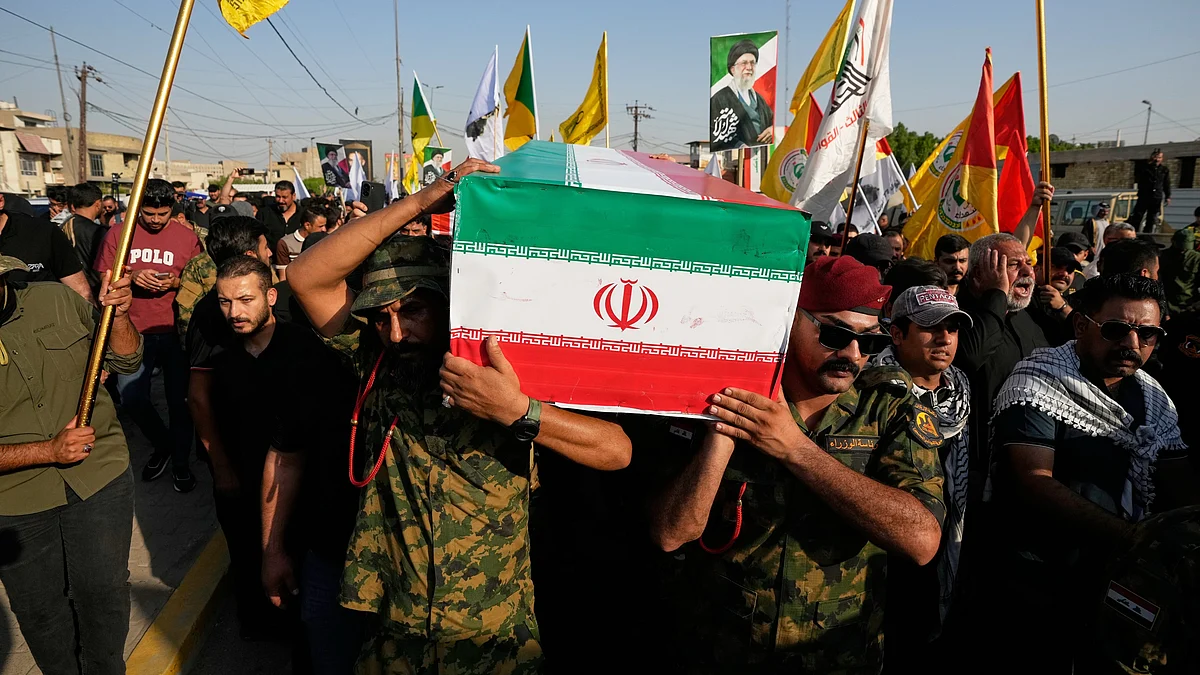


As US President Donald Trump declared that a fresh agreement with Iran was within reach and said negotiations would resume on Monday, Tehran responded with a message of cautious resolve, insisting that Washington must first demonstrate its commitment to the peace memorandum of understanding (MoU) signed between the two countries.
Iranian President Masoud Pezeshkian said Tehran's priority was to ensure that the United States honoured the commitments it had already made. In a post on X, he said there was broad consensus within Iran's Supreme National Security Council that the MoU should serve as the cornerstone of the country's future foreign policy.
"We must strive to compel the enemy to adhere to what it has signed. The security of the country, the region and our allies will improve with this MoU," Pezeshkian said, portraying the agreement as both a diplomatic framework and a pathway to greater regional stability.
Trump, meanwhile, struck an optimistic tone, saying an agreement with Iran was imminent and that talks were set to begin on Monday. In a post on Truth Social, he claimed the United States had been "locked and loaded" for military action against Iran but had paused after appeals from Tehran and other Middle Eastern countries, citing prospects for a deal that would include the reopening of the Strait of Hormuz and an end to Iran's nuclear threat.
Despite the renewed diplomatic signals, Tehran maintained that it would not lower its guard.
Iran's acting defence minister Seyed Majid Ebn Al-Reza said every threat from its adversaries was treated as "real and noteworthy", dismissing suggestions that they amounted to mere psychological warfare.
"We will neither be surprised nor remain passive. We use threats as a basis to increase our preparedness, strengthen our deterrence and develop our power," he wrote on X.
His remarks came after reports that the United States and Israel had considered fresh strikes on Iranian energy infrastructure over the weekend, underscoring the fragile security environment even as diplomatic channels appear to be reopening.
The MoU, signed on 18 June, envisaged Iran and the United States holding negotiations within 60 days to reach a comprehensive agreement. However, the process was thrown into uncertainty after a sharp military escalation last month.
The United States launched multiple waves of strikes on Iranian targets, saying the attacks were aimed at degrading Iran's ability to threaten commercial shipping following attacks on vessels in the Strait of Hormuz. Iran retaliated with missile and drone strikes targeting US military bases and facilities across the region, deepening fears of a wider conflict.
Even amid the tensions, Tehran has continued to pursue parallel diplomatic efforts over the strategically vital Strait of Hormuz.
Iranian foreign minister Seyed Abbas Araghchi said negotiations with Oman over the waterway were in their final stages and moving steadily towards completion. Iranian Foreign Ministry spokesman Esmaeil Baghaei clarified that the discussions were not about reopening or closing the strait but about establishing a new traffic separation route that safeguards Iran's sovereign rights, national interests and security while ensuring safe maritime navigation.
As Washington projects optimism about renewed negotiations, Tehran's message remains consistent: diplomacy is welcome, but only if it is matched by credible adherence to commitments already made. For Iran, the success of any future agreement will depend less on promises of fresh talks than on whether the United States proves willing to honour the one it has already signed.
With agency inputs
Join our official telegram channel (@nationalherald) and stay updated with the latest headlines