


Iran says its expelled ambassador won't leave Lebanon as political tensions soar
Tehran insists envoy will remain in Beirut despite persona non grata declaration amid pressure to curb Hezbollah influence


Iran on Monday rejected Lebanon’s order expelling its ambassador, saying the envoy would remain in Beirut despite being declared persona non grata, in a development that has heightened tensions in a country already caught in the crossfire of the ongoing conflict between Hezbollah and Israel.
Lebanon had declared Iranian ambassador Mohammad Reza Shibani persona non grata in an apparent attempt to scale down Tehran’s diplomatic footprint, seeking instead to deal with a lower-ranking charge d'affaires at the embassy. The deadline for the envoy to leave expired on Sunday.
“Our embassy in Lebanon is active,” Iranian foreign ministry spokesman Esmail Baghaei told journalists. “Our ambassador, following remarks made by relevant Lebanese bodies and the conclusions reached, will continue his mission in Beirut and he is still there.”
Lebanese officials did not immediately respond to requests for comment. It remains unclear what steps Beirut may take next or how the standoff could affect diplomatic relations between the two countries. The ambassador is believed to remain inside the embassy premises, where he would typically enjoy diplomatic immunity under international law.
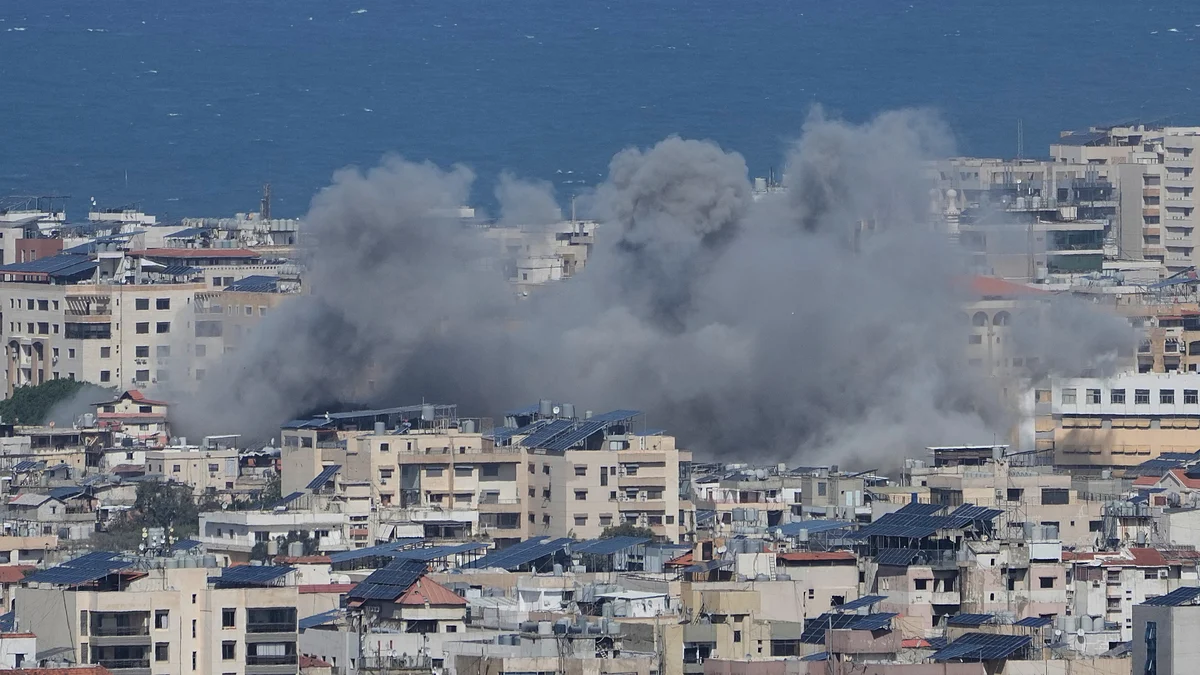
The dispute comes as Lebanon faces renewed strain from escalating hostilities between Israel and Hezbollah, the Iran-backed armed group that has opened a front against Israel during the wider regional conflict. Israel has responded with military operations in southern Lebanon and air strikes in parts of Beirut.
Lebanese health authorities say more than 1,200 people have been killed and over one million displaced since the fighting intensified, worsening the country’s already fragile political and economic situation.
Israeli foreign minister Gideon Sa’ar criticised Lebanon’s handling of the matter in a post on X, saying, “This morning, the Iranian ambassador is drinking his coffee in Beirut and making a mockery of the host country. Lebanon is a virtual country that is effectively occupied by Iran.”
Lebanon under pressure to curb Hezbollah influence
Lebanon has come under increasing international pressure to restrict Hezbollah’s military role and reduce the influence of Iran’s Islamic Revolutionary Guard Corps in the country.
Earlier this month, Lebanese authorities announced a ban on military activities linked to Hezbollah as well as those associated with Iran’s Revolutionary Guard. The decision was followed by the expulsion order for the Iranian ambassador, signalling an attempt by Beirut to demonstrate greater autonomy in foreign and security policy.
Hezbollah condemned the move as a “reckless and reprehensible measure” and “a clear capitulation to external pressures and dictates”. Supporters of the group organised a rally near the Iranian embassy in Beirut in a show of solidarity with the ambassador.
A Lebanese diplomatic official said Iran had exerted strong pressure on the government and parliament speaker Nabih Berri, a key Hezbollah ally, in an effort to reverse the decision.
According to the official, Beirut is concerned that Iran’s attempt to include developments in Lebanon as part of its broader conditions for dialogue with Washington could complicate domestic efforts to reduce Hezbollah’s military role. The official spoke on condition of anonymity due to diplomatic sensitivities.
Hezbollah maintains that Iran remains a crucial ally that provides military support and social services, particularly to Lebanon’s Shiite Muslim population. Critics argue that Hezbollah’s independent military capability undermines Lebanese sovereignty and strains relations with other Arab states and Western countries.
Diplomatic efforts risk derailment
The dispute threatens to undermine Lebanon’s fragile efforts to navigate a path out of the conflict.
President Joseph Aoun and Prime Minister Nawaf Salam have both criticised Israel’s military actions in Lebanon while also expressing concern about Hezbollah’s rocket fire towards Israel in support of Iran, which triggered the latest escalation.
Even before the current hostilities, Aoun and Salam had been attempting to build political consensus for gradually disarming Hezbollah and other non-state armed groups. Hezbollah’s weakening after its previous war with Israel in 2024 was seen by some observers as creating an opening for such a process.
However, tensions have intensified following the expulsion order announced by foreign minister Youssef Rajji, a vocal critic of Hezbollah and a cabinet nominee of the Christian Lebanese Forces party, a long-time political rival of the group.
“Don’t play with fire because this fire will burn you, your people, and those behind you,” Mahmoud Qamati, a senior official in Hezbollah’s political bureau, said in a recent speech directed at Rajji.
The standoff highlights the delicate balance Lebanon is attempting to maintain between internal political pressures, regional alliances and ongoing conflict dynamics, as diplomatic space narrows amid intensifying hostilities.
Join our official telegram channel (@nationalherald) and stay updated with the latest headlines