


Iran to reopen Hormuz after Trump’s 2-week ceasefire announcement
Iran’s foreign minister says ships can pass through the strait for two weeks, subject to coordination with Iranian authorities
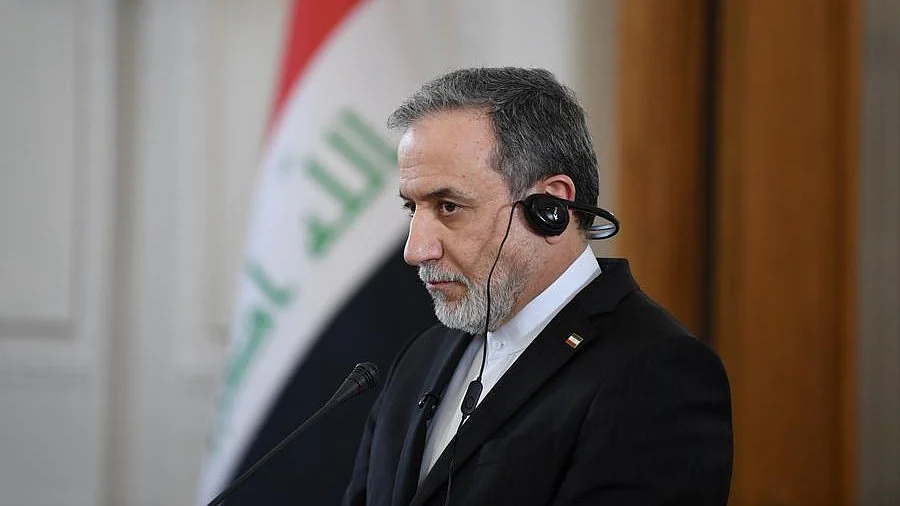


In a significant step toward easing tensions in the Gulf, Iran on Wednesday signalled its willingness to halt military retaliation — provided attacks against it cease — while announcing a temporary, two-week reopening of the strategically critical Strait of Hormuz.
The announcement came amid ongoing ceasefire negotiations with the United States, indicating a tentative move away from what had been rapidly escalating hostilities in the region.
Iranian foreign minister Seyed Abbas Araghchi said Tehran would permit safe maritime passage through the strait for a limited two-week period, subject to coordination with Iranian authorities and adherence to operational conditions. The move, he explained, reflects a conditional de-escalation framework tied to parallel commitments from Washington.
“If attacks against Iran are halted, our Powerful Armed Forces will cease their defensive operations,” Araghchi said, citing the position of Iran’s Supreme National Security Council. “For a period of two weeks, safe passage through the Strait of Hormuz will be possible… with due consideration of technical limitations.”
He further clarified that the decision was influenced by Washington’s outreach for negotiations based on a 15-point proposal, alongside what he described as US acceptance of the broader contours of Iran’s own 10-point framework as a basis for talks. However, Tehran has underscored that its commitments remain conditional and reversible, depending on reciprocal actions.
On the other side, Donald Trump confirmed that the United States would suspend planned military strikes on Iran for the same two-week period, framing the move as part of a “double-sided ceasefire.”
“Subject to the Islamic Republic of Iran agreeing to the complete, immediate, and safe opening of the Strait of Hormuz, I agree to suspend the bombing and attack of Iran for a period of two weeks,” Trump said in a post on Truth Social.
The announcement, made less than 90 minutes before a self-imposed 8 pm EST deadline, marked a sharp pivot from earlier rhetoric, when Trump had warned Iran of severe consequences if it failed to reach a deal.
Trump asserted that US military objectives had already been achieved and indicated that diplomacy was now within reach. “We have already met and exceeded all military objectives, and are very far along with a definitive agreement concerning long-term peace,” he said.
He revealed that Washington had received a “10-point proposal from Iran”, which he described as a “workable basis” for negotiations, adding that “almost all” key points of contention between the two sides had been resolved.
“A two-week period will allow the Agreement to be finalised and consummated,” Trump said, portraying the pause as a crucial window to secure a broader settlement and stabilise the region.
The coordinated announcements suggest a fragile but significant pause in a crisis that had threatened to spiral into a wider regional conflict. The Strait of Hormuz — through which a substantial portion of global oil shipments passes — remains central to the standoff, with its reopening offering immediate relief to energy markets and global trade flows.
However, with both sides emphasising conditional commitments and unresolved issues still looming, the two-week ceasefire is widely seen as a narrow and uncertain opportunity — one that could either pave the way for a diplomatic breakthrough or unravel if mutual trust falters.
With IANS inputs
Join our official telegram channel (@nationalherald) and stay updated with the latest headlines