


Iran warns of fresh war as US talks stall, economic shockwaves deepen
Araghchi says Tehran remains ready for war if diplomacy fails to deliver “acceptable results”, amid rising tensions over stalled US talks
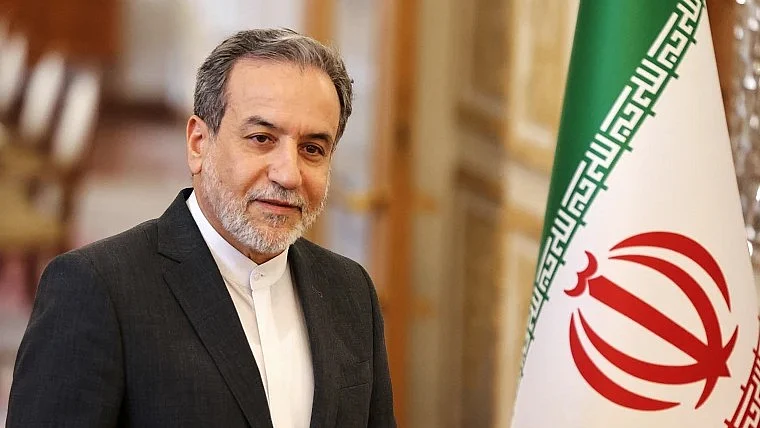


Iran has warned it is prepared to return to direct military confrontation with the United States if ongoing negotiations collapse, while simultaneously blaming the conflict and the closure of the Strait of Hormuz for spiralling economic pain in both countries.
Foreign minister Seyed Abbas Araghchi said Tehran remained ready for war if diplomacy failed to secure “acceptable results”, underscoring growing tensions after talks with Washington faltered.
In a series of strongly worded posts and statements aimed at both domestic and international audiences, Araghchi argued that ordinary Americans were already paying the price of the conflict through rising inflation, higher fuel prices and mounting borrowing costs.
“Americans are told that they must absorb rocketing costs of war of choice on Iran,” Araghchi wrote on X, alongside an image showing rising US Treasury bond yields.
“Put aside gas price hike and stock market bubble, real pain begins when US debt and mortgage rates start to jump. Auto loan delinquencies are already at 30+-year high.”
The remarks came as the effective closure of the Strait of Hormuz — a critical waterway through which roughly one-fifth of the world’s oil and gas supplies normally pass — continued to rattle global markets. Traders fear prolonged disruption could force the US Federal Reserve to keep interest rates elevated or even raise them further to combat inflation.
On Friday, benchmark 10-year US Treasury yields climbed to their highest levels in nearly a year, while the US government earlier this week sold $25 billion worth of 30-year bonds at a five percent yield, levels unseen in almost two decades.
Iranian Parliament speaker Mohammad Bagher Ghalibaf took an even sharper tone, mocking US defence secretary Pete Hegseth in a post on X.
“So, you’re funding Hegseth the failed TV host at rates unheard of since 2007, so he can cosplay as Secretary of War in our backyard in Hormuz?” Ghalibaf wrote.
“You know what’s crazier than $39 trillion in debt? Paying a pre-GFC premium to fund a LARP and all you’ll get is a brand new GFC.”
A major sticking point in the negotiations remains the future status of the Strait of Hormuz. Tehran insists any agreement with Washington must recognise Iranian sovereignty over the strategic corridor — a demand firmly opposed by Gulf nations that maintain the strait is an international waterway.
Ebrahim Azizi said Iran had prepared a “professional mechanism” to regulate maritime traffic through Hormuz.
“In this process, only commercial vessels and parties cooperating with Iran will benefit,” Azizi said, adding that ships would be charged fees while countries backing Washington’s “Project Freedom” would be denied access.
While Iranian officials focused heavily on the economic toll facing Americans, the crisis has battered Iran’s own economy even more severely.
Official figures show food inflation surged to 115 percent during the first Persian calendar month ending in late April. Prices of essential goods such as rice, cooking oil and chicken have tripled over the past year, while medicine, electronics, vehicles and petrochemical products have all seen steep increases.
The Iranian rial weakened further to nearly 1.8 million against the US dollar in Tehran’s open market on Saturday, hovering near record lows reached earlier this month.
Iranian leaders continue to accuse Washington of undermining trust during negotiations, particularly after talks in Islamabad last month failed to end the conflict. However, amid signs of renewed diplomatic manoeuvring following Donald Trump’s meetings with Chinese President Xi Jinping, Araghchi said Tehran would welcome mediation efforts from Beijing.
Even as a fragile ceasefire remains in place, Iranian authorities have intensified wartime mobilisation rhetoric at home.
State television on Friday aired multiple programmes featuring presenters carrying assault rifles and discussing combat preparedness. One broadcast on the state-run Ofogh channel featured a masked commander from the Islamic Revolutionary Guard Corps demonstrating how to load an AK-47 variant before encouraging viewers to attend pro-government rallies offering weapons training.
The segment ended with the host firing into the ceiling before aiming a shot at a UAE flag, highlighting simmering tensions between Tehran and the Gulf state.
Elsewhere, Channel 3 presenter Mobina Nasiri appeared on air holding an assault rifle while declaring she was prepared to “sacrifice” her life for Iran.
Major public squares across Iranian cities remain heavily militarised, with checkpoints staffed by masked armed personnel guarding nightly demonstrations organised in support of the government.
The security crackdown follows months of unrest after anti-government protests in January, during which thousands were reportedly killed. Authorities characterised those demonstrations as a US- and Israel-backed “coup attempt”.
Iran has also enforced a near-total internet shutdown for more than two months while promoting a state-controlled limited-access network. The judiciary has announced near-daily executions of alleged dissidents throughout the conflict, signalling an increasingly hardline response against opposition voices.
Join our official telegram channel (@nationalherald) and stay updated with the latest headlines